Dr. Jitendra Singh attends BRICS 2026 Space Heads Meet in Bengaluru
Synopsis
Union Science and Technology Minister Dr. Jitendra Singh attended the BRICS 2026 Heads of Space Agencies Meeting in Bengaluru on June 24, received by ISRO Chairman Dr. V. Narayanan and IN-SPACe Chairman Dr. Pawan Kumar Goenka, as India hosts the multilateral space diplomacy forum.
Key Takeaways
Jitendra Singh , Union Minister for Science and Technology, attended the BRICS 2026 HOSA Meeting in Bengaluru on June 24, 2026 .
He was received by ISRO Chairman Dr.
Narayanan and IN-SPACe Chairman Dr.
Pawan Kumar Goenka .
BRICS Heads of Space Agencies meetings have been held since 2011 , focusing on satellite data sharing and capacity building.
IN-SPACe was established in 2020 to facilitate private-sector participation in India's space sector.
India's Space Policy 2023 underpins its international space collaboration framework, including BRICS engagements.
Bengaluru hosts ISRO's headquarters and is India's primary aerospace hub, making it the natural venue for the meeting.
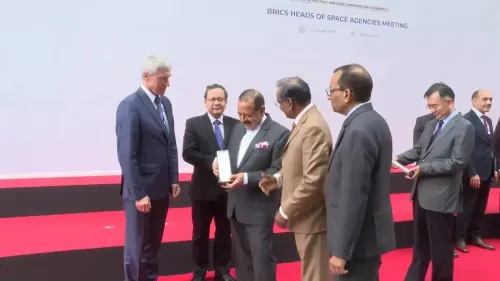
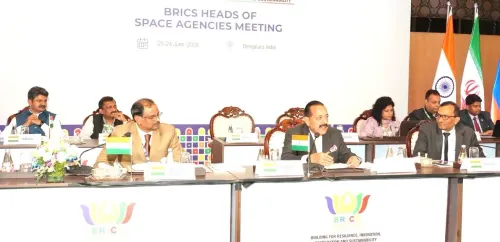
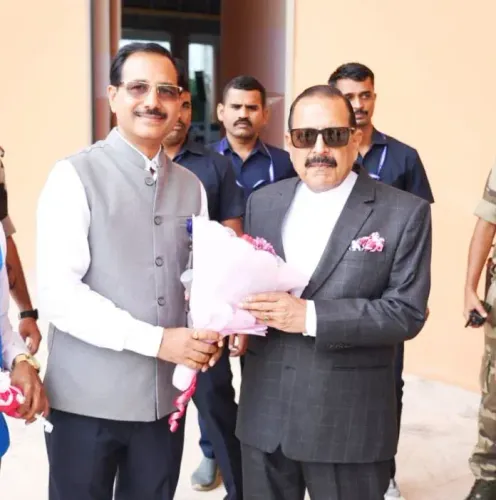
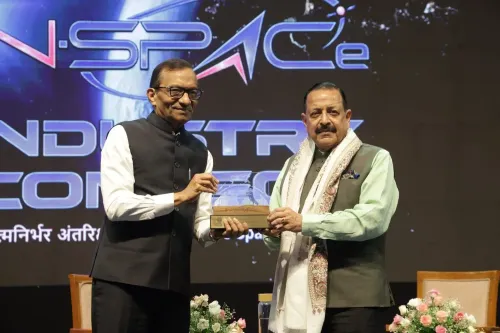
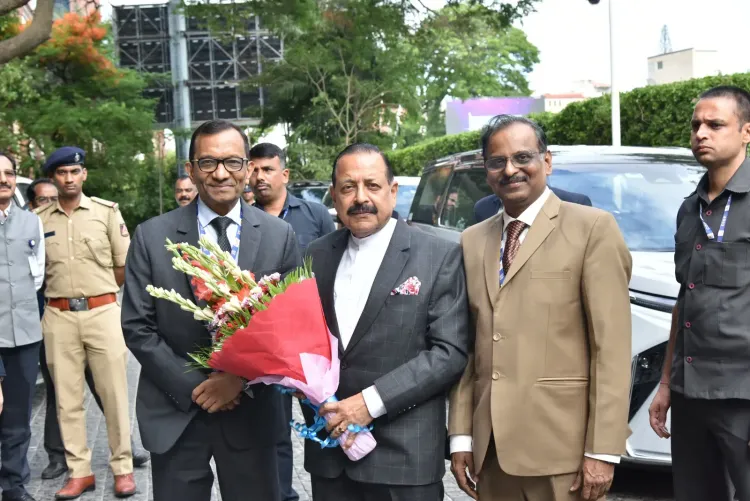
Union Minister of State (Independent Charge) for Science and Technology Dr. Jitendra Singh arrived at the venue of the BRICS 2026 'Heads of Space Agencies' (HOSA) Meeting in Bengaluru on Wednesday, June 24, 2026, where he was received by ISRO Chairman Dr. V. Narayanan, IN-SPACe Chairman Dr. Pawan Kumar Goenka, senior faculty, officials, and distinguished dignitaries.
Context
The HOSA meeting is a flagship diplomatic engagement under the BRICS framework, bringing together the heads of space agencies from member nations to discuss cooperation on satellite data, earth observation, and capacity building. Bengaluru, home to ISRO's headquarters and a dense cluster of public and private aerospace facilities, serves as the natural host city for such a gathering. India holds the BRICS 2026 chair, making this meeting a significant moment for New Delhi's multilateral space diplomacy.
Dr. Jitendra Singh's presence at the venue underscores the political weight the government attaches to the BRICS space agenda. His portfolio spans both Science and Technology and Earth Sciences, placing him at the intersection of the policy decisions that shape India's engagement in forums like HOSA.
Policy Backdrop
BRICS Heads of Space Agencies meetings have been held since 2011, with a focus on data sharing from remote-sensing satellite constellations — a cooperation framework that was formally agreed at the 2015 Ufa summit. India's Space Policy 2023 further streamlined the country's international collaboration architecture, creating clearer pathways for joint projects with partner nations.
IN-SPACe, established by a Cabinet decision in 2020, was designed to open India's space sector to private players while maintaining regulatory oversight. Its chairman, Dr. Pawan Kumar Goenka, who brings a background in the automotive industry, has been central to building the commercial space ecosystem that now complements ISRO's state-led missions. The presence of both ISRO and IN-SPACe leadership at the reception signals a whole-of-sector approach to the BRICS engagement.
Stakeholders and Impact
The HOSA meeting directly concerns ISRO scientists, private space startups operating under the IN-SPACe framework, and the space agencies of fellow BRICS nations. For India's growing commercial space sector, BRICS data-sharing agreements can open new markets and collaborative research opportunities with Global South partners.
Capacity-building programmes for newer BRICS members — a recurring agenda item at such meetings — also position India as a knowledge-exporting nation in space technology, reinforcing its broader foreign-policy posture. Earth-observation data exchange, in particular, has practical applications in agriculture, disaster management, and climate monitoring across member states.
What's Next
Attention will now turn to the formal agenda of the BRICS 2026 HOSA Meeting and any joint statements or agreements that emerge from the deliberations. Possible outcomes include new protocols on satellite-data sharing, announcements on training programmes for BRICS partners, or expanded frameworks for joint missions.
India's active stewardship of the BRICS space agenda in 2026, with the minister personally attending the reception in Bengaluru, suggests New Delhi intends to use this platform to consolidate its standing as a leading space power among emerging economies.
Point of View
Not merely a bureaucratic exercise. With India holding the BRICS chair in 2026, hosting the Heads of Space Agencies meeting allows New Delhi to shape the agenda on satellite data sharing and capacity building — areas where ISRO's track record gives India credible convening authority. The joint presence of both ISRO and IN-SPACe leadership at the reception also reflects a maturing 'Team India' posture that integrates state and commercial space actors in multilateral forums. How the meeting's outcomes are packaged — whether as a joint statement, a data-sharing protocol, or a training pledge — will indicate how ambitiously India is leveraging its BRICS chairmanship in the space domain.
NationPress
23 Sept 2026
Frequently Asked Questions
What is the BRICS 2026 Heads of Space Agencies Meeting?
The BRICS Heads of Space Agencies (HOSA) Meeting is a multilateral forum where the chiefs of space agencies from BRICS member nations meet to discuss cooperation on satellite data sharing, earth observation, and capacity building. It has been held since 2011 and is being hosted by India in Bengaluru in 2026.
Who received Dr. Jitendra Singh at the BRICS HOSA meeting in Bengaluru?
Dr. Jitendra Singh was received by ISRO Chairman Dr. V. Narayanan, IN-SPACe Chairman Dr. Pawan Kumar Goenka, senior faculty members, officials, and distinguished dignitaries at the venue in Bengaluru.
What is IN-SPACe and what role does it play in India's space sector?
IN-SPACe, or the Indian National Space Promotion and Authorisation Centre, was established in 2020 to regulate and facilitate private-sector participation in India's space activities. Its chairman, Dr. Pawan Kumar Goenka, oversees India's commercial space ecosystem alongside ISRO's state-led missions.
Why is Bengaluru hosting the BRICS space agencies meeting?
Bengaluru is India's primary aerospace and technology hub and hosts ISRO's headquarters along with numerous public and private space research facilities, making it the natural venue for a high-level international space diplomacy event like the BRICS HOSA Meeting.
What could come out of the BRICS 2026 Heads of Space Agencies Meeting?
Possible outcomes include joint statements on satellite-data sharing protocols, new capacity-building programmes for BRICS member nations, and expanded frameworks for collaborative space missions, particularly in earth observation and remote sensing.