BRICS Space Economy: Jitendra Singh calls for collective push at HOSA meet

Synopsis
India is using its BRICS Chairship 2026 to push a bold idea: a unified 'BRICS Space Economy' that pools the bloc's scientific muscle, industrial capacity and emerging-market scale. With the proposed BRICS Space Council on the table and ten nations in the room at Bengaluru, this is less a talking-shop moment and more a structural bid to reshape who leads the global space order.
Key Takeaways
Jitendra Singh pitched the 'BRICS Space Economy' as the next frontier of global growth at the BRICS HOSA meeting in Bengaluru on 24 June 2026 .
The two-day meeting was hosted by ISRO under India's BRICS Chairship 2026 , with officials from 10 nations including Brazil, China, Russia, UAE and Egypt.
Key agenda items included space sustainability, debris-free missions, the BRICS Remote Sensing Satellite Constellation (RSSC) and the proposed BRICS Space Council .
Singh stressed that BRICS collectively holds the scale, scientific expertise and industrial capacity to become a leading force in the global space economy.
Outcomes from the meeting are expected to be formalised through India's BRICS Chairship before the end of 2026 .
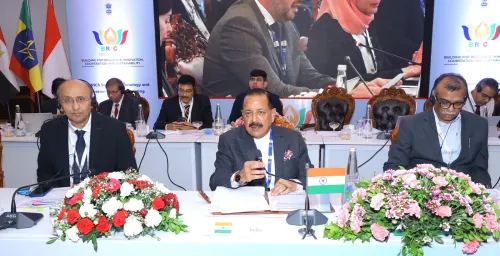
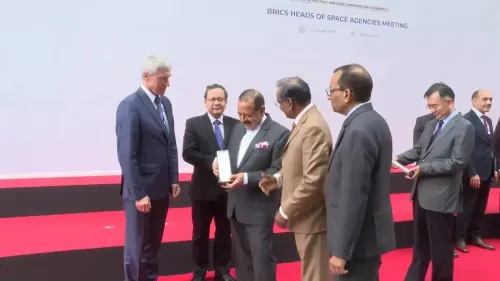
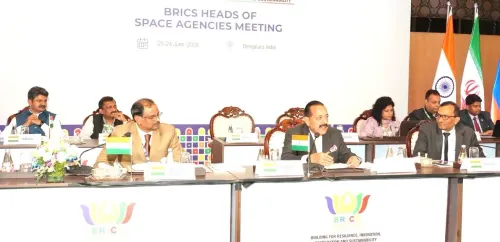
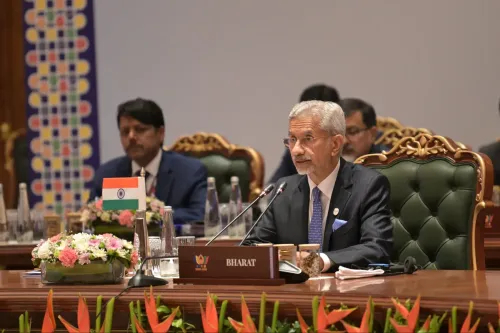
Union Minister Dr. Jitendra Singh on Wednesday, 24 June urged BRICS nations to collectively build a 'BRICS Space Economy' as the next major frontier of global growth, speaking at the BRICS Heads of Space Agencies (HOSA) meeting in Bengaluru. He called for coordinated action among member states to unlock fresh opportunities in innovation, investment, entrepreneurship and sustainable development.
Key Developments at the HOSA Meeting
The two-day meeting, hosted by the Indian Space Research Organisation (ISRO) under India's BRICS Chairship 2026, brought together Heads of Space Agencies and senior officials from Brazil, China, Egypt, Ethiopia, Indonesia, Iran, Russia, South Africa and the United Arab Emirates. Delegates reviewed progress on BRICS space cooperation and deliberated on space sustainability, debris-free missions and the proposed BRICS Space Council.
The gathering also examined ways to strengthen the BRICS Remote Sensing Satellite Constellation (RSSC) and expand participation of newer BRICS members in existing cooperation frameworks — a signal that the bloc is moving beyond dialogue toward operational integration.
What the Minister Said
'The future of the space economy will not be shaped by nations working in isolation. It will be shaped by partnerships, shared innovation and collective ambition. BRICS countries have the potential to become one of the strongest pillars of this emerging global space ecosystem,' Dr. Singh told the gathering.
He reaffirmed India's commitment to working closely with all BRICS partners to translate shared aspirations into concrete outcomes, emphasising that space must continue to serve development, resilience and international cooperation.
Why Space Technology Matters for BRICS
Dr. Singh noted that space technology has become one of the most powerful enablers of economic transformation, strengthening communication networks, navigation systems, disaster preparedness, agriculture, healthcare, education and environmental monitoring. He argued that BRICS collectively represents a significant share of the world's population, economic output, scientific expertise and technological capacity — making it uniquely positioned to shape the global space order.
Deeper cooperation among member nations, he said, can generate new avenues for industrial partnerships, technology transfer and investment while addressing shared developmental priorities. This comes amid a broader global race to commercialise space, with private players and state agencies competing for orbital slots, launch contracts and satellite data markets.
India's Role and What Comes Next
As chair of BRICS 2026, India is positioning ISRO as a convening force within the bloc's space architecture. The HOSA meeting's agenda — including the proposed BRICS Space Council — suggests the grouping is working toward a more formalised institutional structure for space collaboration. Notably, the inclusion of newer members such as Egypt, Ethiopia, Indonesia and the UAE widens the bloc's collective launch and earth-observation capabilities considerably.
Concrete outcomes from the Bengaluru meeting, including any agreements on the RSSC or the Space Council framework, are expected to be formalised through India's BRICS Chairship before the year's end.
Point of View
If it materialises, would be the first formal multilateral space governance body outside Western-led frameworks. That matters in a world where orbital slots, satellite data and launch contracts are increasingly geopolitical assets. The real test is whether the bloc's newer members — Egypt, Ethiopia, Indonesia — can integrate meaningfully into the RSSC, or whether the council becomes a China-Russia-India trilateral with a larger letterhead.
NationPress
22 Sept 2026
Frequently Asked Questions
What is the BRICS Space Economy initiative?
The BRICS Space Economy is a proposed framework championed by India at the BRICS Heads of Space Agencies meeting in Bengaluru on 24 June 2026, aimed at pooling the scientific, technological and industrial strengths of BRICS nations to jointly lead the global space economy. It covers areas such as innovation, investment, technology transfer and sustainable development.
What is the BRICS Heads of Space Agencies (HOSA) meeting?
The BRICS HOSA meeting is a gathering of space agency chiefs and senior officials from BRICS member nations to review and advance space cooperation. The 2026 edition was hosted by ISRO in Bengaluru under India's BRICS Chairship and included representatives from ten countries.
What is the proposed BRICS Space Council?
The BRICS Space Council is a proposed institutional body that would formalise multilateral space cooperation among BRICS nations. Discussions on its structure and mandate were on the agenda at the Bengaluru HOSA meeting, with concrete outcomes expected before the end of India's BRICS Chairship in 2026.
What is the BRICS Remote Sensing Satellite Constellation (RSSC)?
The BRICS RSSC is a cooperative satellite network among BRICS nations designed to share earth-observation and remote sensing data. The Bengaluru meeting reviewed progress on strengthening the constellation and expanding participation of newer BRICS members.
Why is India hosting the BRICS space meeting in 2026?
India holds the BRICS Chairship in 2026, which gives it the responsibility of hosting key BRICS meetings, including the HOSA summit. India is using this platform to advance its vision of a collective BRICS Space Economy and to position ISRO as a central player in the bloc's emerging space architecture.