Dr. Jitendra Singh hosts BRICS 2026 Space Agency Heads in Bengaluru
Synopsis
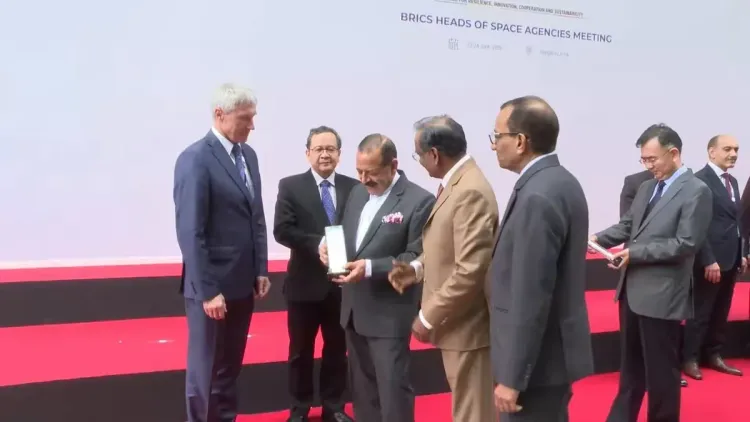
Union Science and Technology Minister Dr. Jitendra Singh hosted the BRICS 2026 Heads of Space Agencies meeting in Bengaluru on 25 June, personally felicitating representatives from nine nations under India's BRICS chairship. The gathering at ISRO's home city signals India's ambition to lead space diplomacy among emerging economies.
Key Takeaways
Jitendra Singh hosted the BRICS 2026 HOSA meeting in Bengaluru on 25 June 2026 .
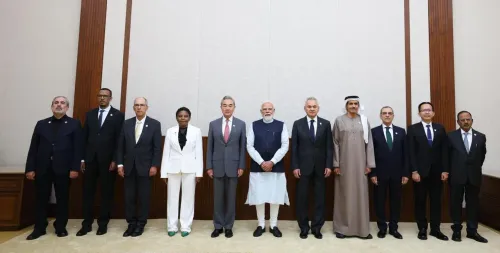
Space agency heads from nine countries — Brazil, China, Egypt, Ethiopia, Indonesia, Iran, Russia, South Africa and UAE — attended.
The meeting is held under India's chairship of BRICS 2026 , making India the convening authority.
Bengaluru was chosen as the venue because it is the seat of ISRO headquarters .
The HOSA meeting is expected to inform the agenda of the broader 2026 BRICS Summit .
The 2024 expansion of BRICS added Egypt, Ethiopia, Iran, UAE and Indonesia, widening the scope of space cooperation.
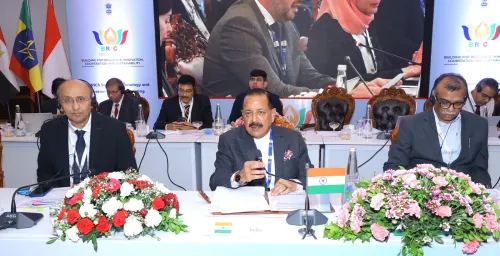
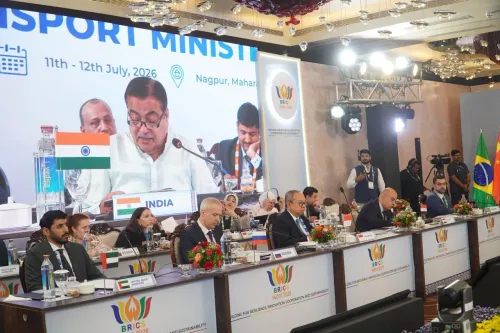
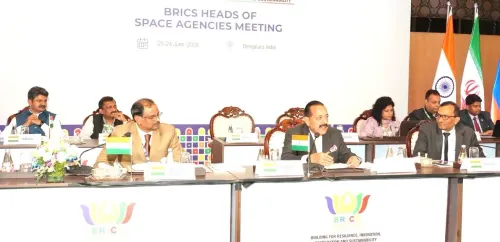
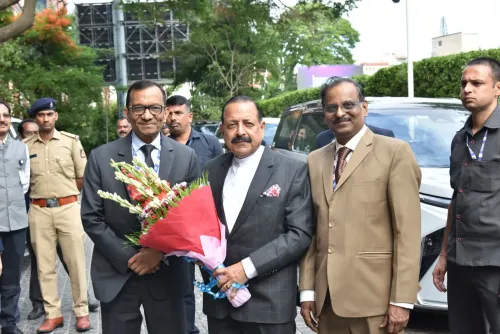
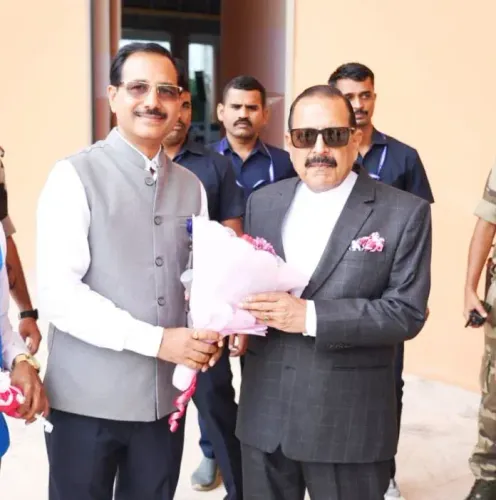
Union Science and Technology Minister Dr. Jitendra Singh on Thursday, 25 June 2026 personally greeted the heads of space agencies from nine BRICS nations at a meeting hosted in Bengaluru, citing the city's standing as the seat of ISRO headquarters as the ideal venue for the gathering under India's chairship of BRICS 2026.
Context
The BRICS 2026 'Heads of Space Agencies' (HOSA) meeting brought together senior representatives from the space programmes of Brazil, China, Egypt, Ethiopia, Indonesia, Iran, Russia, South Africa and the United Arab Emirates. Dr. Jitendra Singh described it as 'a pleasant experience, individually greeting and felicitating each of the visiting Heads of Space Agencies.' The gathering reflects India's active use of its BRICS chairship to advance multilateral space diplomacy.
Bengaluru, the capital of Karnataka and India's foremost technology hub, is home to the Indian Space Research Organisation (ISRO) headquarters, making it a symbolically and logistically fitting host for the meeting. Holding the event at an ISRO site underscores India's established infrastructure for space-sector diplomacy.
Policy Backdrop
BRICS, originally comprising Brazil, Russia, India, China and South Africa, underwent a significant expansion in 2024, adding Egypt, Ethiopia, Iran, UAE and Indonesia as full members. This widened the geographic and programmatic scope of potential space cooperation among emerging economies. India has consistently used its BRICS chairmanships to position science and technology — particularly space — as a pillar of South-South multilateral engagement.
ISRO has in recent years deepened bilateral space ties with several BRICS members, including joint satellite projects, data-sharing arrangements and astronaut training discussions. The HOSA format provides a structured platform for these bilateral threads to be woven into a collective agenda.
Stakeholders and Impact
The meeting directly involves the space agencies of all nine attending BRICS nations, covering a combined population of several billion people and a substantial share of global space-launch capacity. For India, hosting the HOSA meeting reinforces ISRO's role not merely as a national agency but as a convening institution for the broader Global South.
India's private space sector, which has grown rapidly since the liberalisation of the space economy, also stands to benefit from the diplomatic visibility that such multilateral engagements generate. Agreements or working groups emerging from the HOSA meeting could open pathways for commercial and scientific collaboration between member-state agencies and their private-sector partners.
What's Next
The BRICS 2026 HOSA meeting is expected to feed into the broader agenda of the 2026 BRICS Summit, with possible joint project announcements or the formation of technical working groups in areas such as Earth observation, satellite navigation and space situational awareness. As chair, India will shape the outcomes document and any cooperative framework that emerges. The ministerial-level attention signalled by Dr. Jitendra Singh's personal participation suggests that space cooperation will be a visible deliverable of India's BRICS presidency this year.
Point of View
Designed to project the organisation's credibility as a convening hub for the Global South. With BRICS now spanning ten nations across four continents, the space-cooperation agenda has grown considerably more complex — and more strategically valuable — than when the grouping was a five-member club. Dr. Jitendra Singh's personal presence at the felicitation signals that New Delhi views this chairship as an opportunity to cement India's leadership in multilateral space governance. The outcomes of the HOSA meeting will be a useful early indicator of how substantive India's BRICS presidency will prove to be on the science and technology front.
NationPress
24 Sept 2026
Frequently Asked Questions
What is the BRICS 2026 HOSA meeting?
The BRICS 2026 'Heads of Space Agencies' (HOSA) meeting is a gathering of the chiefs of space agencies from BRICS member nations, held under India's chairship of BRICS in 2026, aimed at advancing multilateral space cooperation among emerging economies.
Why was Bengaluru chosen to host the BRICS space agencies meeting?
Bengaluru was chosen because it is the seat of ISRO headquarters, making it a symbolically and logistically appropriate venue for a meeting of space agency heads from BRICS nations.
Which countries participated in the BRICS 2026 HOSA meeting?
Space agency heads from Brazil, China, Egypt, Ethiopia, Indonesia, Iran, Russia, South Africa and the United Arab Emirates participated in the meeting alongside India.
What is India's role in BRICS 2026?
India holds the chairship of BRICS in 2026, giving it the authority to set the agenda, host key meetings and shape cooperative frameworks for the grouping during this period.
What could come out of the BRICS HOSA meeting?
The meeting could lead to joint project announcements, data-sharing arrangements or technical working groups in areas such as Earth observation and satellite navigation, feeding into the agenda of the 2026 BRICS Summit.