CM Fadnavis: Maharashtra to host urban co-op banking HQ

Synopsis
Union Minister Amit Shah announced the National Urban Cooperative Finance and Development Corporation — aimed at reviving urban cooperative banks — will be headquartered in Maharashtra. Separately, CM Devendra Fadnavis presided over a land-transfer and bhoomi pujan for the Meghalaya Bhawan, marking a cultural and developmental bridge between the two states.
Key Takeaways
The National Urban Cooperative Finance and Development Corporation will be headquartered in Maharashtra , announced by Union Minister Amit Shah on 8 August 2026 .
The corporation is designed as an 'umbrella' institution to provide financial stability and development support to urban cooperative banks across India.
The Ministry of Cooperation, created in 2021 , has been the policy driver behind this institutional push for the cooperative sector.
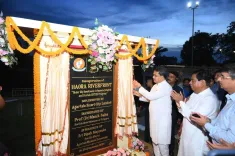
Chief Minister Devendra Fadnavis participated in a land-transfer ceremony and bhoomi pujan for Meghalaya Bhawan in Maharashtra, attended by the chief ministers of both states.
The Meghalaya Bhawan is envisioned as a hub of development, culture, and unity linking Maharashtra and Meghalaya.
Both announcements reflect active inter-governmental coordination between the Union government, Maharashtra, and Meghalaya.
Two landmark decisions landed in Maharashtra on Saturday, 8 August 2026 — one reshaping the future of urban cooperative banking across India, the other stitching a northeastern state closer to the country's financial heartland. The Chief Minister's Office of Maharashtra shared both developments in its end-of-day bulletin, signalling a day dense with governance and inter-state cooperation.
A 'lifeline' for urban cooperative banks — and Maharashtra gets the address
Union Home and Cooperation Minister Amit Shah declared that the urban cooperative banking sector would receive a 'new lease of life' — nvasanjivani — through an 'umbrella' institution designed to provide systemic support to a sector long seen as financially fragile. The institution in question, the National Urban Cooperative Finance and Development Corporation, will have its headquarters in Maharashtra, placing the state at the centre of what the Centre is positioning as a structural overhaul of cooperative finance.
The move traces its roots to 2021, when the Ministry of Cooperation was carved out as a standalone portfolio — precisely to give focused, undivided attention to cooperative institutions that had historically operated without a strong national anchor. Urban cooperative banks, which serve millions of small depositors and micro-entrepreneurs in cities and towns, have faced recurring crises of governance and liquidity. An umbrella corporation with dedicated financing and development mandates is the Centre's answer to that structural gap.
Maharashtra's selection as the headquarters state is both symbolic and strategic — the state hosts one of the largest concentrations of urban cooperative banks in the country, making it a natural administrative home for the new body.
Meghalaya Bhawan: where the Northeast meets the West
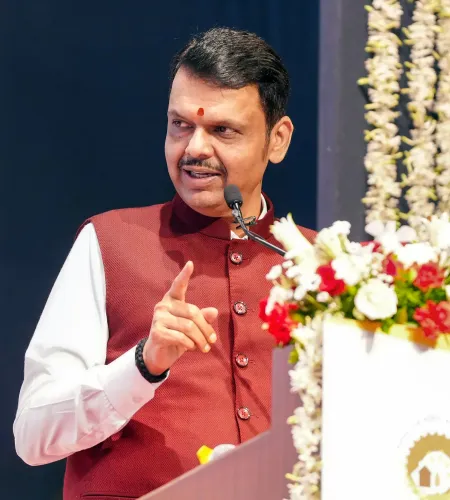
The second headline of the day was quieter in register but equally significant in what it represents. Chief Minister Devendra Fadnavis described the Meghalaya Bhawan project as a confluence of 'development, culture, and unity' — vikas, sanskriti aani ekatmata. A land-transfer ceremony and bhoomi pujan (foundation-laying ritual) were conducted in the presence of the chief ministers of both Maharashtra and Meghalaya, formalising the start of a project that will serve as a cultural and administrative hub linking the two states.
Inter-state Bhawans — residential and cultural centres that states maintain in each other's capitals or major cities — are a long-standing instrument of federal cooperation in India. The Meghalaya Bhawan in Maharashtra extends that tradition to a pairing that is geographically distant but increasingly connected through policy and migration corridors.
One day, two signals
Read together, Saturday's announcements illustrate the dual track on which Maharashtra's government is operating: pulling national institutional weight toward the state while simultaneously building bridges with India's Northeast. The cooperative banking headquarters anchors economic infrastructure; the Meghalaya Bhawan anchors cultural and diplomatic ties. Both outcomes required active inter-governmental negotiation — and both landed on the same day.
The next test is execution — whether the National Urban Cooperative Finance and Development Corporation moves swiftly from headquarters announcement to operational lending and oversight, and whether the Meghalaya Bhawan rises on schedule to become the living symbol its foundation ceremony promised.
Point of View
Visibility, and policy proximity. The umbrella corporation for urban cooperative banks also signals that the Centre's 2021 bet on a standalone Cooperation Ministry is now producing structural outcomes, not just rhetoric. The Meghalaya Bhawan ceremony, meanwhile, is part of a broader BJP-led effort to normalise and deepen ties between India's western industrial states and the Northeast — a region that has historically felt peripheral to the national mainstream. Together, the two events suggest a deliberate strategy: anchor economic institutions in Maharashtra while building federal goodwill across India's most politically sensitive frontier.
NationPress
23 Sept 2026
Frequently Asked Questions
What is the National Urban Cooperative Finance and Development Corporation?
It is a proposed national-level 'umbrella' institution announced by Union Minister Amit Shah to provide financial support and developmental oversight to urban cooperative banks across India, with its headquarters to be located in Maharashtra.
Why is Maharashtra chosen as the headquarters for the urban cooperative banking body?
Maharashtra hosts one of the largest concentrations of urban cooperative banks in India, making it a natural and strategically significant base for the new national corporation.
What is Meghalaya Bhawan in Maharashtra?
Meghalaya Bhawan is an inter-state infrastructure project — a cultural and administrative hub — whose land transfer and foundation-laying ceremony was conducted on 8 August 2026 in the presence of the chief ministers of both Maharashtra and Meghalaya.
What is the Ministry of Cooperation and when was it created?
The Ministry of Cooperation was established in 2021 as a dedicated central ministry to strengthen cooperative institutions in India, including urban cooperative banks, which had previously lacked a focused national policy anchor.
What did CM Devendra Fadnavis say about the Meghalaya Bhawan?
CM Fadnavis described the Meghalaya Bhawan as a confluence of 'development, culture, and unity,' underscoring its role in deepening ties between Maharashtra and the northeastern state of Meghalaya.