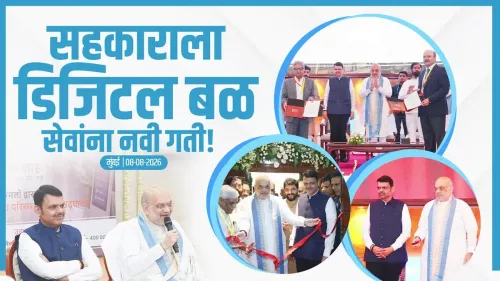
Amit Shah launches Sahakar Nav-Kranti in Mumbai with CM Fadnavis
Synopsis
Union Home and Cooperation Minister Amit Shah launched the Sahakar Nav-Kranti programme in Mumbai on 8 August 2026, alongside CM Devendra Fadnavis and senior ministers, marking a fresh push to modernise India's cooperative sector with Maharashtra as the flagship state.
Key Takeaways
Sahakar Nav-Kranti was inaugurated in Mumbai on 8 August 2026 by Union Minister Amit Shah .
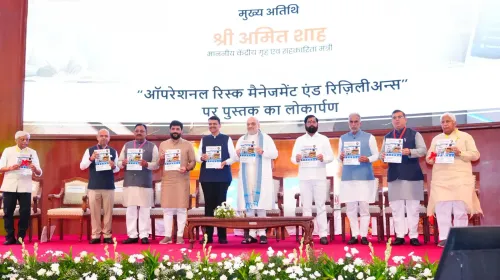
CM Devendra Fadnavis , DCM Eknath Shinde , and multiple Union and state ministers were present at the launch.
NUCFDC Chairman Jyotindra Mehta attended, signalling a strong urban cooperative finance focus.
The programme builds on the Ministry of Cooperation established in July 2021 and PACS computerisation from 2022 .
Maharashtra's historically strong cooperative network makes it the key state for piloting central cooperative initiatives.
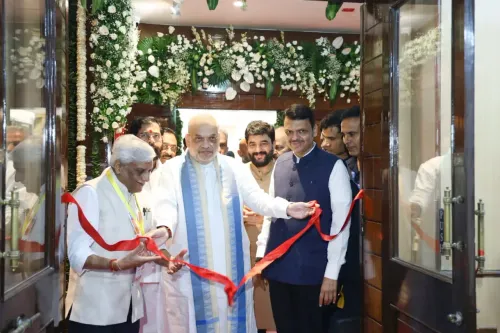
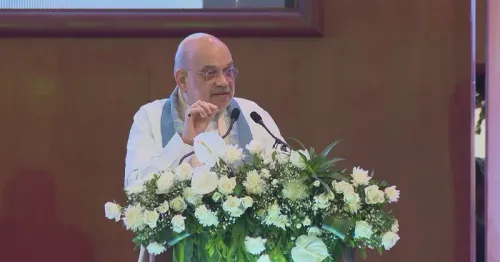
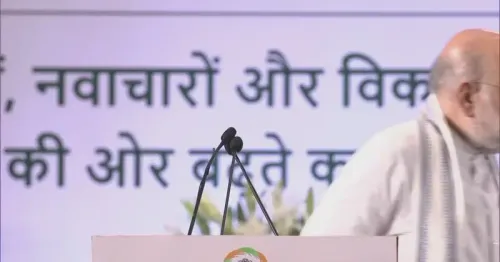
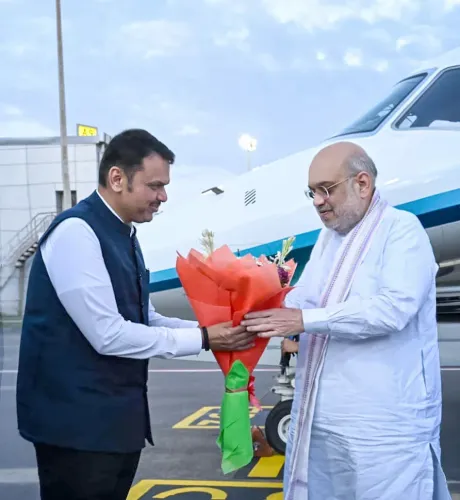
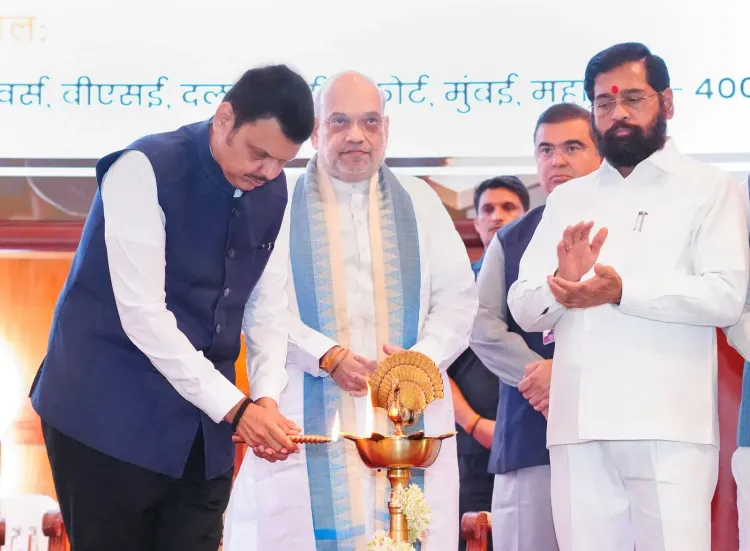
A new chapter in India's cooperative movement opened in Mumbai on 8 August 2026, as Union Home and Cooperation Minister Amit Shah formally inaugurated the Sahakar Nav-Kranti programme — a drive aimed at modernising and expanding the country's cooperative sector — in the presence of Maharashtra Chief Minister Devendra Fadnavis.
A high-table launch in Maharashtra's cooperative heartland
The inauguration brought together a dense gathering of central and state leadership. Deputy Chief Minister Eknath Shinde, Union Ministers of State Krishan Pal Gurjar and Murlidhar Mohol, state ministers Babasaheb Patil and Jaykumar Rawal, and Jyotindra Mehta — Chairman of the National Urban Cooperative Finance and Development Corporation (NUCFDC) — were among those on the dais. The Chief Minister's Office described the event as the 'Sahakar Nav-Kranti karyakramachi shubharambh' — the auspicious beginning of a cooperative new revolution.
Maharashtra is no coincidental venue. The state carries one of India's richest cooperative traditions, from its sugar cooperatives in the western districts to its dense network of urban cooperative banks. Launching a national cooperative initiative here sends a deliberate signal about scale and ambition.
Five years of building the cooperative pillar
The Sahakar Nav-Kranti programme arrives on the back of a sustained central push that began in July 2021, when the Union government carved out a dedicated Ministry of Cooperation — with Amit Shah at its helm — to give the sector a standalone institutional identity for the first time. Since then, the ministry has driven computerisation of Primary Agricultural Credit Societies (PACS) and introduced model bye-laws to standardise governance across cooperative institutions from 2022 onwards.
The NUCFDC, whose chairman was present at today's launch, sits at the centre of this architecture — tasked with financing and building capacity for urban cooperative institutions nationwide. Its presence on the dais underlines that the Nav-Kranti programme has a strong urban cooperative finance dimension.
What the programme signals for cooperatives nationwide
The Union government's broader intent has been to position cooperatives as a distinct third pillar of the Indian economy, alongside the public and private sectors. Maharashtra's cooperative network makes it the natural proving ground for that ambition. The specific rollout timeline, funding mechanisms, and programme components are expected to become clearer in the weeks ahead as implementation begins on the ground.
For urban cooperative banks and cooperative societies across the country, the question now is how quickly the Nav-Kranti framework translates into tangible credit access, governance reform, and digital infrastructure — the areas where the sector has historically lagged.
Point of View
With the full Maharashtra government on display, reinforces the Centre-state alignment that the ruling coalition is keen to project. The real test will be whether the Nav-Kranti framework delivers measurable improvements in credit access and governance for urban cooperative banks, which have historically suffered from weak regulation and periodic financial stress.
NationPress
22 Sept 2026
Frequently Asked Questions
What is the Sahakar Nav-Kranti programme?
Sahakar Nav-Kranti is a central government initiative launched on 8 August 2026 to modernise and expand India's cooperative sector, with a focus on urban cooperatives and financial infrastructure.
Who launched the Sahakar Nav-Kranti programme?
Union Home and Cooperation Minister Amit Shah inaugurated the programme in Mumbai, in the presence of Maharashtra Chief Minister Devendra Fadnavis and other senior ministers.
What is the National Urban Cooperative Finance and Development Corporation?
The NUCFDC is a central body chaired by Jyotindra Mehta, established to provide financing and capacity-building support to urban cooperative institutions across India.
Why was the Sahakar Nav-Kranti launched in Maharashtra?
Maharashtra has one of India's strongest cooperative traditions, making it a natural and symbolically significant venue for piloting and showcasing central cooperative initiatives.
What is the background of India's Ministry of Cooperation?
The Ministry of Cooperation was created in July 2021 to give the cooperative sector dedicated central-level institutional focus, with Amit Shah appointed as its minister.