Amit Shah, CM Fadnavis launch cooperative banking books in Mumbai
Synopsis
Union Minister Amit Shah and Maharashtra CM Devendra Fadnavis launched two cooperative banking books by former RBI official G. P. Mistry in Mumbai, underscoring the central government's sustained push to professionalise urban cooperative banks since the Ministry of Cooperation's creation in 2021.
Key Takeaways
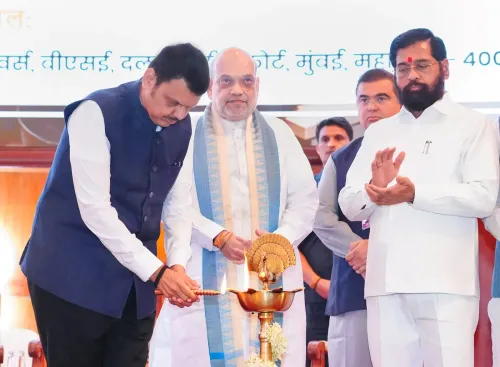
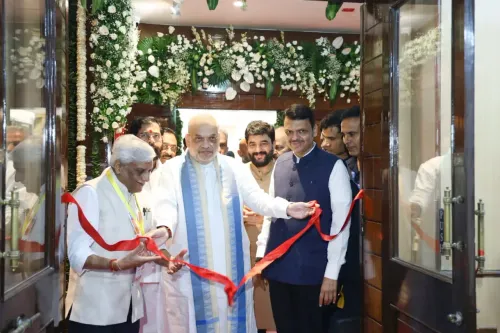
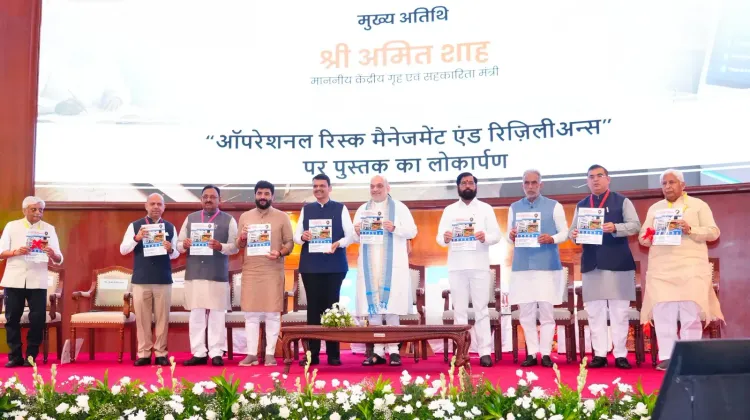
Amit Shah and CM Devendra Fadnavis jointly launched two cooperative banking books in Mumbai on 8 August 2026 .
Both books are authored by G.
Mistry , a former Deputy General Manager of the Reserve Bank of India .
One title is a practical operational risk management guide for urban cooperative banks; the other is a pictorial history of cooperative banking in India.
The event was attended by Deputy CM Eknath Shinde and Union Ministers of State Krishnapal Gurjar and Murlidhar Mohol .
The launch aligns with the Ministry of Cooperation , created in July 2021 under Shah, to professionalise India's cooperative sector.
Maharashtra hosts one of India's largest concentrations of urban cooperative banks, making it a key focus for sector reform.
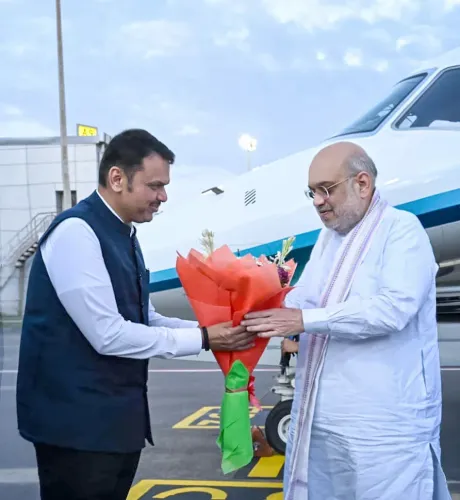
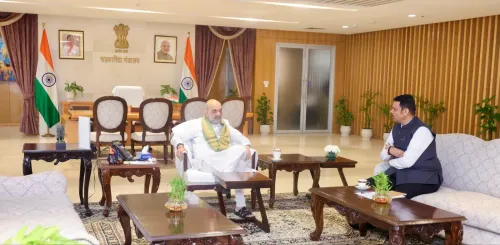
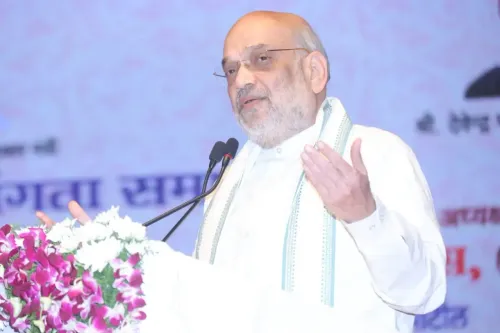
Two books on cooperative banking — one a practical risk guide for urban lenders, the other a pictorial history of India's cooperative banking journey — were released in Mumbai on Saturday, 8 August 2026, with Union Home and Cooperation Minister Amit Shah and Maharashtra Chief Minister Devendra Fadnavis jointly doing the honours. Both volumes are authored by G. P. Mistry, a former Deputy General Manager of the Reserve Bank of India.
The first title, 'Operational Risk Management – A Practical Guide to Urban Co-operative Banks', is positioned as a hands-on manual for the thousands of urban cooperative banks that operate across India under RBI oversight. The second, a coffee-table booklet titled 'Bharat Mein Sahkari Banking Ki Aitihasik Yatra' ('The Historic Journey of Cooperative Banking in India'), traces the sector's evolution in a visual format.
A Ministry of Cooperation moment — four years in the making
The event carries weight beyond a routine book launch. When the Government of India carved out a dedicated Ministry of Cooperation in July 2021 and handed it to Amit Shah, the stated goal was to professionalise and strengthen the cooperative movement from the grassroots up. Saturday's release — with both central and state leadership sharing a stage — is a visible marker of that ongoing push.
Deputy Chief Minister Eknath Shinde, Union Ministers of State Krishnapal Gurjar and Murlidhar Mohol, and Maharashtra Minister Babasaheb Patil were among the dignitaries present, signalling the breadth of political attention the cooperative sector commands across party lines in Maharashtra.
Why urban cooperative banks need this conversation now
Urban cooperative banks have long occupied a complicated space in India's financial architecture — serving millions of small depositors and micro-businesses, yet historically prone to governance lapses and operational risk failures. The RBI has steadily tightened its supervisory grip on the sector over the past several years, making a practical risk-management guide authored by a former RBI official particularly timely.
Mistry's dual contribution — one technical, one historical — mirrors that dual challenge: the sector needs both a clearer understanding of where it came from and sharper tools for where it must go.
With the Ministry of Cooperation watching closely, training programmes and possible regulatory updates for urban cooperative banks remain the logical next step from an event of this kind.
Point of View
Home to one of India's densest networks of urban cooperative banks, is the natural arena for this message.
NationPress
22 Sept 2026
Frequently Asked Questions
What books were launched by Amit Shah and Devendra Fadnavis in Mumbai?
Two books authored by former RBI Deputy General Manager G. P. Mistry were launched: 'Operational Risk Management – A Practical Guide to Urban Co-operative Banks' and a coffee-table booklet titled 'Bharat Mein Sahkari Banking Ki Aitihasik Yatra' (The Historic Journey of Cooperative Banking in India).
Who is G. P. Mistry?
G. P. Mistry is a former Deputy General Manager of the Reserve Bank of India who has authored books on cooperative banking, including a practical risk management guide for urban cooperative banks.
When was India's Ministry of Cooperation created and who heads it?
The Ministry of Cooperation was created in July 2021 and is headed by Union Home Minister Amit Shah, with the aim of strengthening and professionalising India's cooperative movement.
Why are urban cooperative banks under regulatory focus in India?
Urban cooperative banks serve millions of small depositors but have historically faced governance and operational risk challenges. The RBI has progressively tightened supervision of the sector, making risk management guidance from former RBI officials particularly relevant.
Who else attended the cooperative banking book launch in Mumbai?
Deputy Chief Minister Eknath Shinde, Union Ministers of State Krishnapal Gurjar and Murlidhar Mohol, and Maharashtra Minister Babasaheb Patil were among the dignitaries present at the event.