Dr. Jitendra Singh launches India's first Engineering Biology degree
Synopsis
Union Science and Technology Minister Dr. Jitendra Singh unveiled India's first Engineering Biology undergraduate course at NITI Aayog's Bioeconomy 2035 event on 16 July 2026, aiming to build a sovereign domestic talent pipeline in synthetic biology, AI-driven research and bio-manufacturing.
Key Takeaways
Jitendra Singh announced India's first-ever Engineering Biology undergraduate course on 16 July 2026 at a NITI Aayog event.
The course aims to create an independent, sovereign biotechnology workforce at the intersection of engineering, biology, medicine and emerging technologies.
The initiative is anchored by the Department of Biotechnology (DBT) and forms part of the Bioeconomy 2035 roadmap.
Singh projected that the second half of the 21st century will be defined by Bio Technology (BT) , paralleling the IT boom of the first half.
Future focus areas include synthetic biology, AI-enabled biological research, bio-manufacturing, clean fuels and sustainable food systems .
The move aligns with India's Atmanirbhar Bharat strategy and mirrors bioeconomy policies pursued by the US, EU and China.
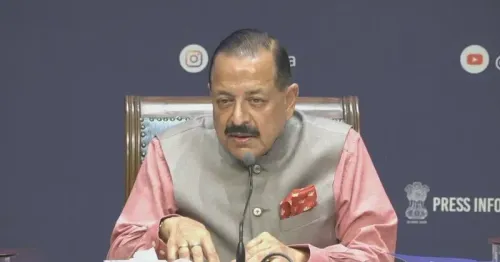
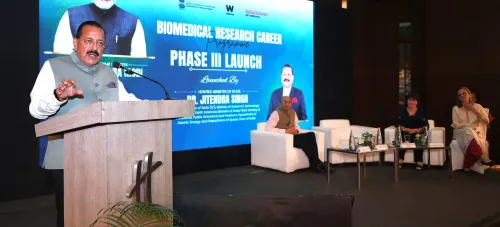
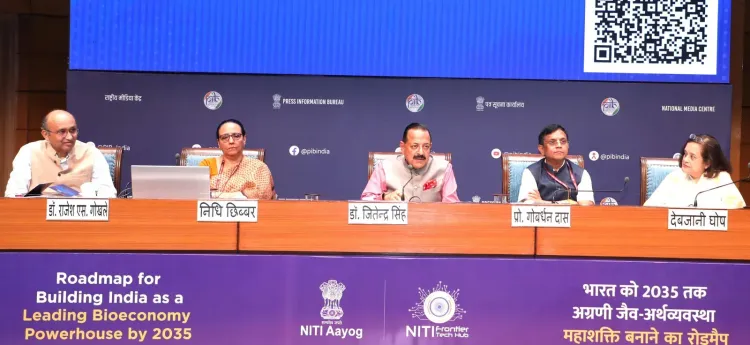
Union Science and Technology Minister Dr. Jitendra Singh announced on Thursday, 16 July 2026 the introduction of India's first-ever Engineering Biology undergraduate course, unveiling the landmark initiative at NITI Aayog's roadmap event on 'Building India as a Leading Bioeconomy Powerhouse by 2035.' The course is designed to build an independent, sovereign biotechnology and biology engineering workforce capable of supporting the country's long-term healthcare and economic ambitions.
Context
Speaking at the NITI Aayog event, Dr. Singh drew a sweeping historical parallel: 'Just as the first half of the 21st century was known as the IT century, the second half will be known as the BT — Bio Technology — century.' The Engineering Biology graduation course, he said, would be 'the first of its kind in the country,' preparing a new generation of professionals to work at the intersection of engineering, biology, medicine and emerging technologies.
The announcement was made under the hashtag #DBT, signalling the active role of the Department of Biotechnology — the Ministry of Science and Technology body founded in 1986 — in anchoring the initiative within the broader national bioeconomy strategy.
Policy Backdrop
The move builds on a decade of policy groundwork. The Department of Biotechnology released its National Biotechnology Development Strategy 2015–2020 to position India as a global biotech hub, while NITI Aayog — the policy think tank established in 2015 — published its National Strategy for AI (#AIforAll) in 2018, which outlined integration of artificial intelligence with sectors including biology and healthcare.
The new Engineering Biology course is positioned as the educational cornerstone of this larger ecosystem. Dr. Singh highlighted that future biotechnology would be 'increasingly driven by synthetic biology, AI-enabled biological research and bio-manufacturing' — technologies capable of designing new proteins, developing living-cell-based medicines, clean fuels and sustainable food systems that 'would fundamentally transform healthcare, agriculture and industry over the coming decades.'
The emphasis on a sovereign, independent ecosystem echoes the wider Atmanirbhar Bharat framework that the government has applied to semiconductors, defence and space — and is now extending to biotechnology as a strategic domain.
Stakeholders and Impact
The initiative directly targets biotech students and early-career researchers who would enrol in the new undergraduate programme, equipping them with skills that span synthetic biology, AI-driven research and bio-manufacturing. The healthcare industry, agriculture sector and bio-manufacturing firms are the primary downstream beneficiaries, as the course is explicitly designed to supply a domestic talent pipeline for these sectors.
India's ambition mirrors comparable national strategies pursued by the United States, European Union and China, all of which treat the bioeconomy as strategic infrastructure on a par with defence and digital technology. A domestically trained Engineering Biology cohort would reduce dependence on foreign expertise in areas ranging from cell-based therapeutics to clean energy bio-fuels and sustainable food production.
What's Next
Attention will now turn to the rollout of the Engineering Biology curriculum in select universities and its linkage with DBT-funded laboratories across the country. The release of the full NITI Aayog Bioeconomy 2035 roadmap — and any related budget provisions in the next Union Budget — will be closely watched by the academic community, industry and investors as indicators of the government's financial commitment to the initiative.
If the programme scales as envisioned, India could replicate in biotechnology the self-reliant talent ecosystem it built in information technology after liberalisation — this time with sovereignty in biology as the explicit strategic goal.
Point of View
Dr. Singh is positioning DBT as the new-age equivalent of the IT ministry that seeded India's software boom. The NITI Aayog platform lends the initiative cross-ministerial weight, suggesting coordinated policy intent rather than a departmental announcement. The real test, however, will be whether curriculum design, university partnerships and research funding follow at the pace the rhetoric demands.
NationPress
16 Jul 2026
Frequently Asked Questions
What is India's new Engineering Biology course announced by Dr. Jitendra Singh?
It is India's first-ever undergraduate degree programme in Engineering Biology, announced on 16 July 2026, designed to train students at the intersection of engineering, biology, medicine and emerging technologies such as synthetic biology and AI-driven research.
Which ministry or body is behind the Engineering Biology graduation course?
The course is being introduced under the Department of Biotechnology (DBT), which operates under the Ministry of Science and Technology, in coordination with the NITI Aayog Bioeconomy 2035 roadmap.
What is the NITI Aayog Bioeconomy 2035 roadmap?
It is a NITI Aayog initiative aimed at positioning India as a global bioeconomy leader by 2035 through integrated policies covering education, research and bio-manufacturing.
Why is the government calling the second half of the 21st century the 'BT century'?
Dr. Jitendra Singh used the term to argue that biotechnology will define the second half of the 21st century the way information technology defined the first half, making sovereign biotech capabilities a national priority.
Which sectors will benefit from India's Engineering Biology programme?
The primary beneficiaries are the healthcare industry, agriculture sector and bio-manufacturing firms, with downstream impact expected in areas such as cell-based medicines, clean fuels and sustainable food systems.