SC orders Rajasthani in schools, calls mother tongue an 'existential right'
Synopsis
The Supreme Court has ruled that language in education is not an administrative convenience but an 'existential right' — and has ordered Rajasthan to introduce Rajasthani in schools in a phased manner. The bench's sharp rebuke of the state's 'myopic' reliance on the Eighth Schedule could set a precedent for dozens of unrecognised regional languages across India.
Key Takeaways
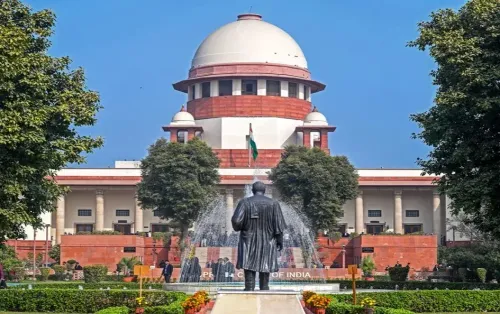
The Supreme Court on 12 May 2025 directed the Rajasthan government to progressively introduce Rajasthani as a subject in all government and private schools.
A bench of Justices Vikram Nath and Sandeep Mehta set aside a Rajasthan High Court order that had dismissed the original PIL.
The court termed the state's reliance on the Eighth Schedule as the sole criterion for teaching languages 'myopic' and 'pedantic' .
Rajasthani is already taught at universities including the University of Rajasthan , Jai Narain Vyas University , and Maharaja Ganga Singh University .
The Rajasthan government must file a compliance affidavit by 25 September 2026 ; the next hearing is on 30 September 2026 .
The judgment invokes Article 21A , Article 19(1)(a) , Article 350A , the RTE Act 2009 , and the NEP 2020 to ground its directions.
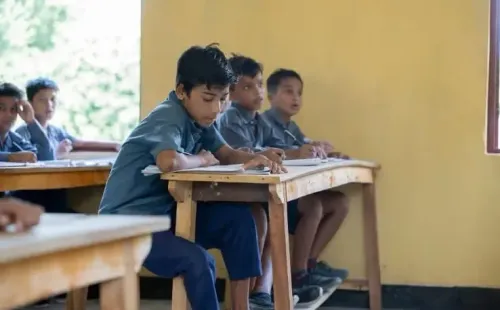
The Supreme Court of India on Tuesday, 12 May 2025, directed the Rajasthan government to formulate a comprehensive policy for implementing mother tongue-based education and to progressively introduce Rajasthani as a subject in schools across the state. A bench of Justices Vikram Nath and Sandeep Mehta held that the ability to understand and be understood in one's own language is an
Point of View
The bench appears aware of this risk — but whether the Rajasthan government treats this as a genuine mandate or a box-ticking exercise will determine whether this judgment moves the needle for the estimated 8 crore Rajasthani speakers.
NationPress
26 Sept 2026
Frequently Asked Questions
What has the Supreme Court ordered regarding Rajasthani in schools?
The Supreme Court has directed the Rajasthan government to introduce Rajasthani as a subject in all government and private schools in a phased manner, beginning at the foundational and preparatory stages. The state must also formulate a comprehensive policy for mother tongue-based education and file a compliance affidavit by 25 September 2026.
Why did the Supreme Court intervene in the Rajasthani language case?
The court was hearing a PIL that originally sought inclusion of Rajasthani in the REET 2021 syllabus. While that specific relief had become infructuous, the bench held that the broader constitutional questions on language in education required adjudication, leading to the wider directions on mother tongue-based schooling.
What constitutional provisions did the Supreme Court rely on?
The bench cited Article 21A (right to education), Article 19(1)(a) (freedom of speech and expression, including the right to receive comprehensible education), and Article 350A (instruction in mother tongue at primary level), alongside the RTE Act 2009 and the NEP 2020.
Why did the court criticise the Rajasthan government's position?
The Rajasthan government had argued that only languages listed in the Eighth Schedule of the Constitution are taught in government primary schools. The Supreme Court termed this stance 'myopic' and 'pedantic', saying it sidesteps the constitutional imperative of meaningful access to education.
Is Rajasthani already taught anywhere in the formal education system?
Yes. Rajasthani is already taught as a subject at several universities in Rajasthan, including the University of Rajasthan, Jai Narain Vyas University, and Maharaja Ganga Singh University. The Supreme Court said this academic recognition at the higher education level contradicts any claim that the language lacks institutional acceptance.