Supreme Court directs Rajasthan govt to frame mandatory Rajasthani language policy
Synopsis
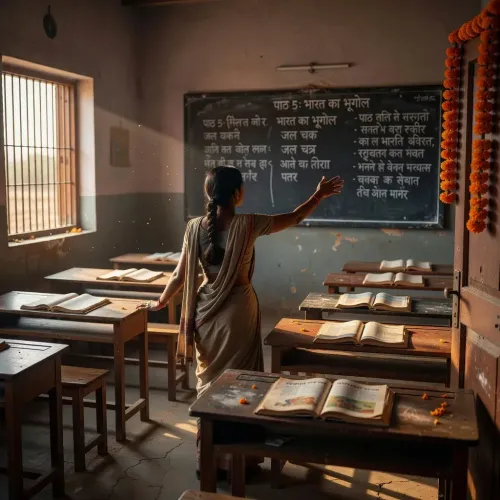
The Supreme Court has done what the Rajasthan High Court refused to — direct the state government to actually frame a policy for mandatory Rajasthani language teaching in all schools. With 4.36 crore speakers and a 2003 Assembly resolution still gathering dust, the bench's compliance deadline of 30 September puts real pressure on a government that has long deferred action as a policy matter.
Key Takeaways
The Supreme Court directed the Rajasthan government to formulate a policy making Rajasthani language teaching mandatory in all schools — government and private.
A compliance report has been sought by 30 September .
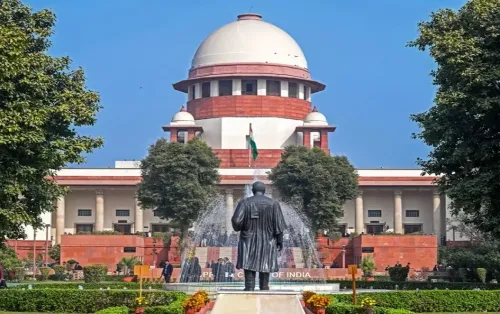
The bench of Justice Vikram Nath and Justice Sandeep Mehta noted Rajasthani's rich historical, literary, and cultural significance.
Approximately 4.36 crore people speak Rajasthani, according to the 2011 Census , yet the language is absent from school curricula and the REET syllabus.
The Rajasthan Legislative Assembly passed a resolution on 25 August 2003 recommending Rajasthani's inclusion in the Eighth Schedule of the Constitution — still pending after over two decades.
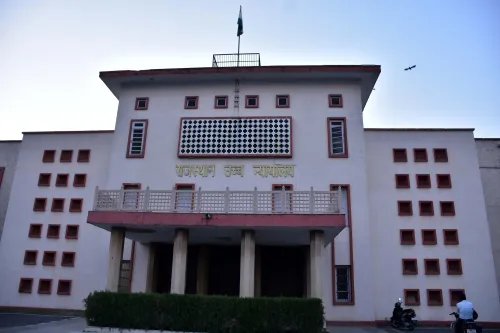
The ruling overturns the Rajasthan High Court's position that courts cannot issue directions on educational policy matters.
The Supreme Court of India has directed the Rajasthan government to formulate a policy for making the teaching of the Rajasthani language mandatory in schools across the state — covering both government and private institutions at the primary, secondary, and higher education levels. The bench also sought a compliance report from the state government by 30 September.
What the Court Ordered
A bench comprising Justice Vikram Nath and Justice Sandeep Mehta delivered the ruling while hearing a Special Leave Petition filed by Padma Mehta and others. The petition was filed against a Rajasthan High Court judgment that had rejected the petitioners' plea, holding that it could not issue a writ of mandamus on a matter of educational policy.
The apex court observed that Rajasthani carries rich historical, literary, and cultural significance and has already received recognition in several universities and higher educational institutions across India. It directed the state government to formulate a clear policy integrating Rajasthani into the state's educational framework.
The Petitioners' Case
The petitioners argued that approximately 4.36 crore people speak Rajasthani, according to the 2011 Census, and that the language possesses a substantial literary and cultural heritage. Despite this, Rajasthani has not been included either as a medium of instruction or in the structure of the Rajasthan Eligibility Examination for Teachers (REET).
The petitioners also reminded the court that on 25 August 2003, the Rajasthan Legislative Assembly had passed a resolution recommending the inclusion of Rajasthani in the Eighth Schedule of the Constitution — a step that has not been acted upon at the national level in over two decades.
What the State Government Said
Additional Advocate General Shiv Mangal Sharma, representing the state government, submitted that the issue falls within the domain of government policy and that an appropriate decision would be taken at the right time. The state clarified that it had never opposed the inclusion of Rajasthani in the education system.
In its earlier response, the government stated that Rajasthani was not part of the approved curriculum framework for primary and upper primary schools and was therefore not included in the REET syllabus. The state also informed the court that implementation of the National Education Policy (NEP) is under consideration and that measures related to mother-tongue education and inclusion of regional languages are being examined in a phased manner.
Broader Context
Although Hindi remains the official language of Rajasthan under the Rajasthan Official Language Act of 1956, Rajasthani's exclusion from formal education has long been a grievance among linguistic rights advocates. This is not the first legal attempt to secure official recognition for the language — the 2003 Assembly resolution and repeated petitions to include it in the Eighth Schedule reflect a decades-long campaign.
Notably, the Supreme Court's intervention marks a significant departure from the High Court's position that courts cannot direct educational policy. The apex court's direction to submit a compliance report by September 30 suggests it intends to monitor implementation closely. How the Rajasthan government frames and enforces this policy — particularly in private schools — will be the decisive test of whether the order translates into meaningful change on the ground.
Point of View
' the compliance deadline of September 30 is a meaningful test. The deeper question is whether mandatory teaching translates into quality instruction — trained teachers, textbooks, and examination recognition — or becomes another box-ticking exercise that leaves 4.36 crore speakers no better served.
NationPress
6 Oct 2026
Frequently Asked Questions
What has the Supreme Court directed regarding the Rajasthani language?
The Supreme Court has directed the Rajasthan government to formulate a policy making Rajasthani language teaching mandatory in all schools — both government and private — at the primary, secondary, and higher education levels. The court has sought a compliance report by 30 September.
Why is the Rajasthani language not currently taught in schools?
The Rajasthan government had stated that Rajasthani is not part of the approved curriculum framework for primary and upper primary schools and is therefore not included in the Rajasthan Eligibility Examination for Teachers (REET). The state said NEP implementation, including regional language inclusion, is being examined in a phased manner.
How many people speak Rajasthani?
According to the 2011 Census, approximately 4.36 crore people speak Rajasthani. Despite this significant speaker base, the language has not been formally included in the state's school education system or teacher eligibility examinations.
What is the Eighth Schedule connection to Rajasthani?
On 25 August 2003, the Rajasthan Legislative Assembly passed a resolution recommending that Rajasthani be included in the Eighth Schedule of the Constitution, which lists India's officially recognised languages. The recommendation has not been acted upon at the national level in over two decades.
Why did the Rajasthan High Court reject the original petition?
The Rajasthan High Court held that it could not issue a writ of mandamus directing the inclusion of Rajasthani as a language of education because it was an educational policy matter falling within the government's domain. The Supreme Court has now overridden that position by directing the state to frame a concrete policy.