Marathi Language Made Mandatory in Maharashtra Schools: Education Minister Bhuse

Synopsis
In a significant move, Maharashtra's Education Minister Dadaji Bhuse announced that the Marathi language will now be a compulsory subject in all schools across the state. Strict actions will be taken against non-compliant schools, ensuring every child learns the state's official language.
Key Takeaways
Marathi is now mandatory in all schools across Maharashtra.
Strict actions will be taken against non-compliance.
International schools must teach Marathi as a language option.
New law ensures quality in pre-primary education.
Registration for pre-primary schools is now compulsory.
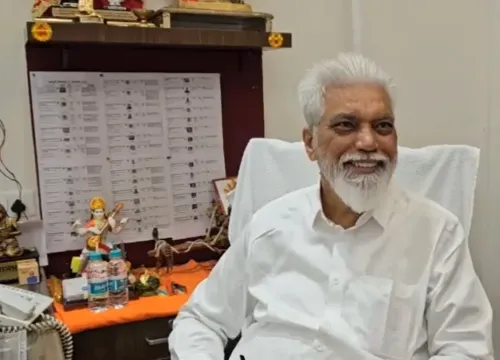
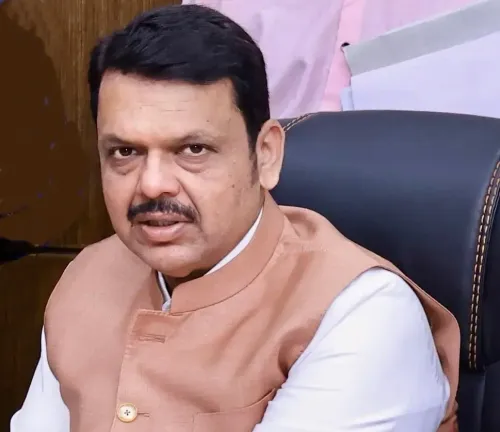
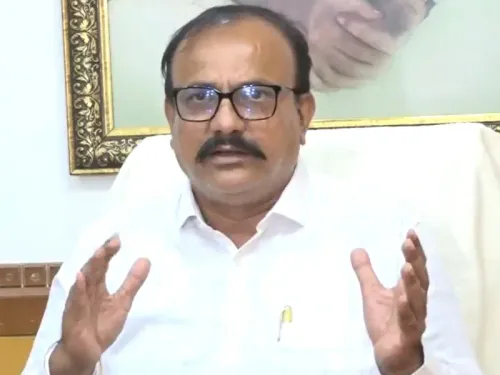
Mumbai, March 13 (NationPress) The School Education Minister, Dadaji Bhuse, announced in the Legislative Assembly on Friday that a new notification has been issued making it mandatory for all schools across Maharashtra to include the Marathi language as a compulsory subject, irrespective of the medium of instruction or management board. He emphasized that strict measures would be enforced against any schools that do not comply with this regulation, responding to a query from MLA Harun Khan.
According to Minister Bhuse, Marathi must be taught as a 'second language' or 'third language' in schools, including those following international or national syllabi, as per the notification dated March 1, 2020. He stated, “Marathi cannot be excluded under any circumstances.”
Following a complaint lodged by MLA Khan, the minister affirmed that the Education Department will carry out immediate inspections of the concerned schools. “If Marathi is not being taught, necessary actions will be taken after informing the school management about the legal obligations,” he added.
This ruling is applicable to government, private, unaided, and all foreign board schools. “Given that Marathi is the official language of the state, the government is committed to ensuring that the younger generation learns it,” said Minister Bhuse. Non-compliant institutions will initially receive a warning, and repeated violations could result in the cancellation of the school's recognition.
Additionally, Minister Bhuse revealed that to guarantee quality and safe pre-primary education for children aged three to six years, the government is working on a law that will require mandatory portal registration, regulation, and quality assurance for private pre-primary schools. This initiative was prompted by a concern raised by member Manisha Chaudhary. A government circular dated April 24, 2025, has already made registration on the 'Pre-School Registration Portal' compulsory to create a centralized database for the state, district administration, and parents.
As per the minister, schools are expected to provide comprehensive details regarding their location, number of classrooms, management structure, student enrollment, infrastructure facilities, playgrounds, sanitation, drinking water access, CCTV provisions, and staff qualifications.
“So far, 12,733 private pre-primary centers have registered. Remaining institutions are urged to finalize their registration. A proposal for a dedicated law has been drafted, incorporating feedback from the Women and Child Development Department, and is nearing completion with the Law and Judiciary Department,” he stated.
The proposed law will include requirements for mandatory renewal of registration every three years, specified teacher qualifications, a student-teacher ratio of 20:1, a child-centric curriculum, availability of educational toys and materials, and safe child-friendly infrastructures including classroom sizes and transport regulations.
He also noted that the government is contemplating restrictions on the distance of schools as per the Right to Education (RTE) Act. While it was suggested that schools should be within 1 km of students' residences, the government is considering extending this to 3 km in areas lacking local school options.
Point of View
The mandating of Marathi as a compulsory subject reflects the government's commitment to preserving regional languages and cultures. This move aims to ensure that future generations remain connected to their linguistic heritage, promoting inclusivity in education across various school types.
NationPress
29 Sept 2026
Frequently Asked Questions
When was the notification for mandatory Marathi implemented?
The notification was implemented on March 1, 2020.
Will international schools also be required to teach Marathi?
Yes, international schools must also teach Marathi as a second or third language.
What actions will be taken against non-compliant schools?
Schools failing to comply will receive warnings, and repeated violations may lead to cancellation of their recognition.
What is the purpose of the new law for pre-primary schools?
The new law aims to ensure quality and safety in pre-primary education through mandatory registration and regulation.
How many private pre-primary centers have registered?
So far, 12,733 private pre-primary centers have completed their registration.