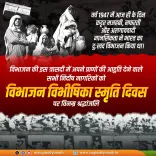
Gadkari marks Partition Horrors Remembrance Day, calls 1947 division 'inhuman'
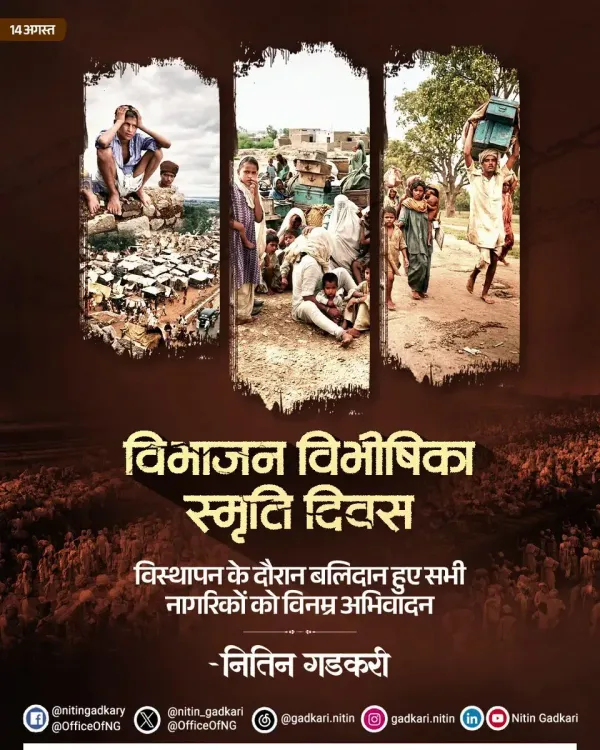
Synopsis
On Partition Horrors Remembrance Day, Union Minister Nitin Gadkari called the 1947 religious division of India 'an inhuman and dark chapter,' paying tribute to all who lost their lives during the upheaval. The day has been observed annually since the government designated 14 August for this purpose in 2021.
Key Takeaways
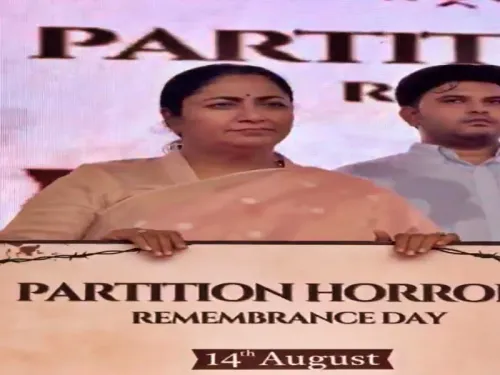
Nitin Gadkari , Union Minister of Road Transport and Highways, paid tribute on Partition Horrors Remembrance Day, 14 August .
He described the 1947 partition of India on religious lines as 'an inhuman and dark chapter of Indian history.' Gadkari honoured all those who lost their lives during the partition and stated the country will never forget its horrors.
The Government of India formally designated 14 August as Partition Horrors Remembrance Day via a Ministry of Home Affairs notification in August 2021 .
The observance has since become an annual occasion for senior Union ministers to issue formal tributes, institutionalising remembrance of partition's human cost.
Every year on 14 August, India pauses to remember a wound that never fully healed — the religious partition of 1947 that cleaved a subcontinent and cost hundreds of thousands their lives. Union Road Transport and Highways Minister Nitin Gadkari joined that solemn remembrance on Friday, calling the division 'an inhuman and dark chapter of Indian history.'
Posting in Hindi on the occasion of Partition Horrors Remembrance Day, Gadkari wrote: 'Dharma ke aadhar par 1947 mein hua desh ka vibhajan Bharatiya itihaas ka ek amaanviya aur kaala adhyaay hai' — 'The partition of the country in 1947 on the basis of religion is an inhuman and dark chapter of Indian history.' He offered tribute to all those who lost their lives during the upheaval, adding: 'The country will never forget the horrors of this partition.'
A day born from the silence around partition's human cost
The observance itself is relatively new. In August 2021, the Ministry of Home Affairs formally designated 14 August — the eve of Independence Day — as Partition Horrors Remembrance Day through an official notification. The choice of date is deliberate: the same calendar moment that marks liberation also marks the violence, mass displacement, and grief that accompanied it.
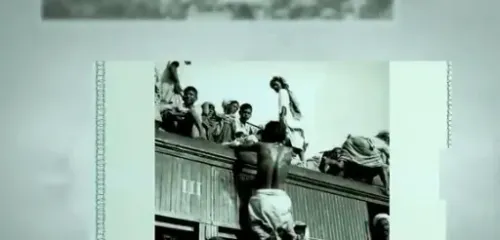
The 1947 Partition of British India into India and Pakistan along religious lines triggered one of the largest forced migrations in human history. Estimates of those killed range into the hundreds of thousands; millions more were uprooted from homes their families had occupied for generations. The trauma cut across Punjab, Bengal, and Sindh most severely — communities fractured overnight by a line drawn on a map.
Ministers' voices and the pattern of official remembrance
Gadkari's statement fits a consistent pattern that has emerged since 2021: senior Union ministers and the Prime Minister issue formal tributes on this date each year, weaving the partition's human cost into the fabric of official national memory. The institutionalisation of such remembrance reflects a broader government effort to anchor pre- and post-independence historical events in the public calendar — ensuring that the scale of suffering is neither minimised nor forgotten as living witnesses become fewer.
For the families of survivors — many of whom still carry partition's grief across generations — the annual observance is both validation and vigil. The country, as Gadkari put it, will not forget.
Point of View
Instituted in 2021, represents a deliberate effort by the ruling dispensation to embed the trauma of 1947 into the official national calendar — a form of historical reclamation that carries both commemorative and political resonance. Gadkari's tribute, consistent with statements from senior colleagues on this date, signals that the government views partition's memory not as a closed chapter but as active national consciousness. The framing of partition as 'inhuman' and 'dark' reinforces a narrative that centres the suffering of displaced communities, particularly those who migrated from what is now Pakistan. As living survivors diminish in number, the institutionalisation of this remembrance will increasingly shape how younger generations engage with the subcontinent's most painful modern rupture.
NationPress
14 Aug 2026
Frequently Asked Questions
What is Partition Horrors Remembrance Day?
Partition Horrors Remembrance Day is observed every year on 14 August to remember the victims of the 1947 partition of India . The Government of India formally designated this date through a Ministry of Home Affairs notification in August 2021 .
Why is Partition Horrors Remembrance Day observed on 14 August?
14 August is the eve of India's Independence Day, making it a historically significant date to acknowledge that the freedom of 1947 came alongside the violence, mass displacement, and loss of life caused by the partition of British India on religious lines.
What did Nitin Gadkari say about the 1947 partition?
Nitin Gadkari called the 1947 partition of India on religious lines 'an inhuman and dark chapter of Indian history.' He paid tribute to all those who lost their lives during the upheaval and said the country would never forget the horrors of partition.
When did India officially start observing Partition Horrors Remembrance Day?
The Government of India officially instituted Partition Horrors Remembrance Day in August 2021 through a notification by the Ministry of Home Affairs , designating 14 August as the annual date of observance.
What was the human cost of the 1947 partition of India?
The 1947 partition of British India into India and Pakistan triggered one of the largest forced migrations in history. Hundreds of thousands of people were killed and millions were displaced from their homes, with the worst violence concentrated in Punjab , Bengal , and Sindh .