Pralhad Joshi Launches Seva First Innovation Challenge at IISc
Synopsis
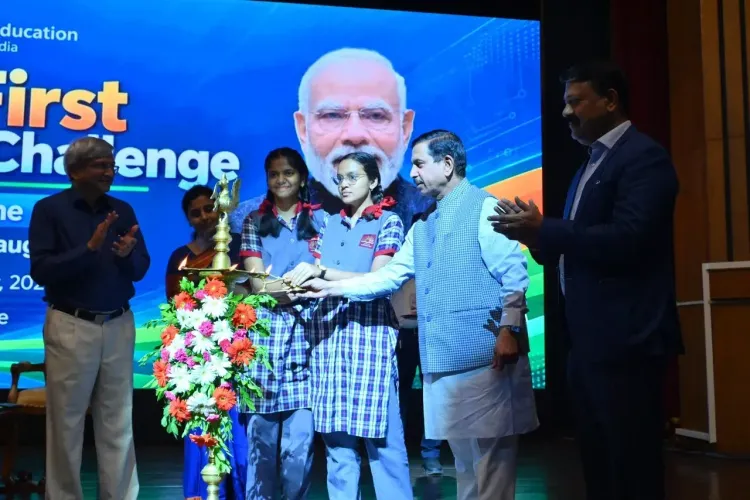
Union Minister Pralhad Joshi launched the Seva First Innovation Challenge portal at IISc Bengaluru on 25 September 2026, calling on startups to mentor young innovators and linking the initiative to India's Viksit Bharat 2047 development goal.
Key Takeaways
Union Minister Pralhad Joshi launched the Seva First Innovation Challenge website and registration portal at IISc Bengaluru on 25 September 2026 .
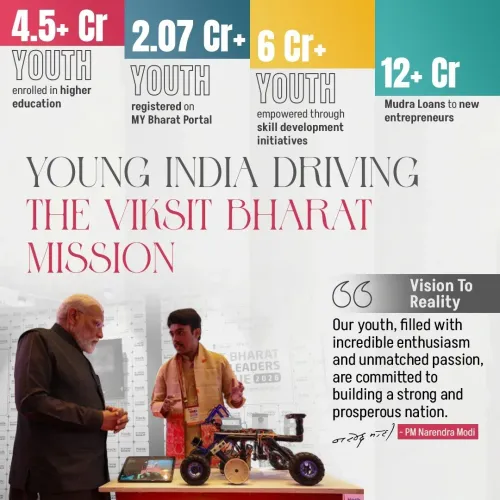
The government cited more than 10,000 Atal Tinkering Labs and over 17,300 Institutions Innovation Councils as pillars of India's existing innovation infrastructure.
Joshi called on startups and industry partners to mentor young innovators and help move prototypes to real-world deployment.
The challenge is framed as part of the broader Viksit Bharat 2047 vision of making India a developed nation by its centenary of independence.
The Smart India Hackathon and Atal Innovation Mission , launched from 2016 onwards, form the policy lineage behind the new challenge.
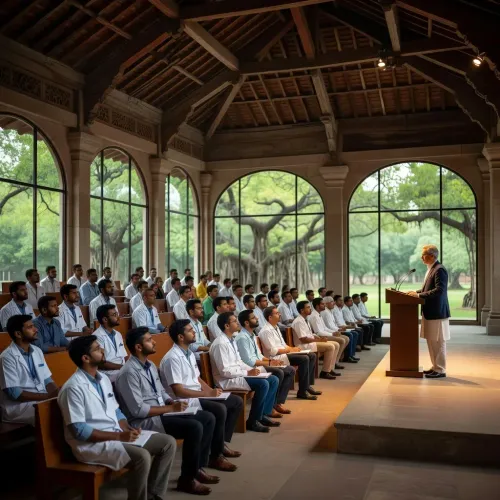
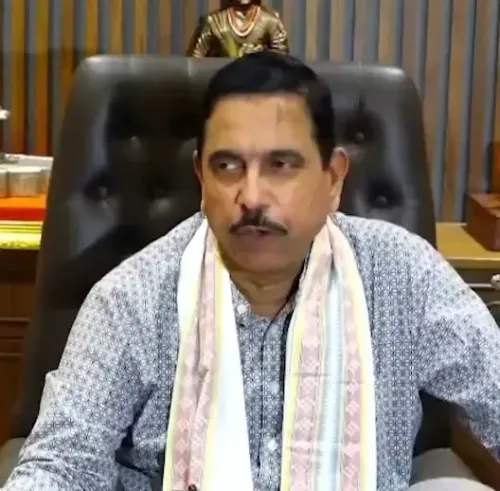
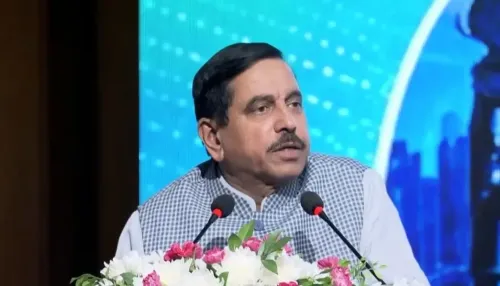
A minister walking into one of India's most prestigious research campuses to tell students their ideas can change the country — that is the signal Union Consumer Affairs and New and Renewable Energy Minister Pralhad Joshi sent on Friday, 25 September 2026, when he launched the website and registration portal for the Seva First Innovation Challenge at the Indian Institute of Science (IISc), Bengaluru.
Addressing an audience of students, young innovators, faculty members, startups and industry representatives, Joshi framed the challenge around a single, pointed idea: that innovation divorced from service is incomplete. 'Seva,' he argued, must be the animating force behind practical solutions to real-world problems — not an afterthought.
A three-layer innovation scaffolding already in place
Joshi did not arrive at IISc with only rhetoric. He pointed to an infrastructure that has been quietly assembled over nearly a decade. More than 10,000 Atal Tinkering Labs — school-based workshops seeded under NITI Aayog's Atal Innovation Mission since 2016 — have been giving students screwdrivers and circuit boards where there were once only textbooks. Layered above them, more than 17,300 Institutions Innovation Councils, rolled out across universities and colleges from 2018 onwards, have been institutionalising the habit of problem-solving inside higher education. And threading it all together, the Smart India Hackathon — launched in 2017 by the Ministry of Education — gives the best of those ideas a national stage. Together, the three programmes form a pipeline: curiosity in school, structured ideation in college, competitive pressure at the national level. The Seva First Innovation Challenge, as Joshi positioned it, is the next node in that pipeline — one that plugs young innovators directly into startups and industry mentors who can shepherd a prototype all the way to deployment.The mentor gap: from garage prototype to real-world solution
The sharpest ask Joshi made on stage was directed not at students but at industry. He called upon startups and corporate partners to step in as mentors — to close the stubborn gap between a promising proof-of-concept and a product that actually works at scale. It is a gap that has swallowed countless bright ideas across India's innovation ecosystem, and naming it in front of the very people who can fix it carries weight. IISc Bengaluru, home to frontier research in engineering, materials science and deep technology, is a deliberate choice of venue. Hosting the launch here signals that the challenge is aimed at high-potential, research-grade innovation, not just entry-level tinkering.Seva First and the Viksit Bharat 2047 countdown
Joshi linked the challenge explicitly to #ViksitBharat2047, the government's overarching vision of India as a fully developed nation by the centenary of independence. With 2047 now little more than two decades away, initiatives like this carry the implicit argument that the students in that auditorium today are the engineers, founders and policymakers who will either deliver — or miss — that milestone. The portal is now open. The clock, in a very real sense, has started.Point of View
India's premier research university, elevates the initiative's credibility and targets deep-tech talent rather than entry-level participants. The explicit call to industry for mentorship reveals an honest acknowledgement that state-built infrastructure alone cannot cross the prototype-to-product chasm. Placed against the Viksit Bharat 2047 deadline, the challenge also puts a political clock on what has until now been a diffuse, long-horizon ambition.
NationPress
25 Sept 2026
Frequently Asked Questions
What is the Seva First Innovation Challenge?
The Seva First Innovation Challenge is a government-backed competition launched at IISc Bengaluru by Union Minister Pralhad Joshi on 25 September 2026, inviting students, startups and innovators to develop practical solutions to real-world problems with a focus on service-oriented innovation.
What are Atal Tinkering Labs?
Atal Tinkering Labs are school-based innovation workshops established under the Atal Innovation Mission by NITI Aayog from 2016, designed to nurture problem-solving and tinkering skills among students. The government cited more than 10,000 such labs across India.
What are Institutions Innovation Councils?
Institutions Innovation Councils are bodies set up in higher education institutions from 2018 onwards to promote innovation, entrepreneurship and intellectual property generation. The government has established more than 17,300 such councils.
How does the Seva First Challenge connect to Viksit Bharat 2047?
Minister Pralhad Joshi explicitly linked the challenge to Viksit Bharat 2047, the official vision for India to become a fully developed nation by the centenary of independence, framing young innovators as key contributors to that national goal.
What is the Smart India Hackathon?
The Smart India Hackathon is an annual national competition launched in 2017 by the Ministry of Education, providing students a platform to design solutions for real-world challenges identified by government ministries and industry partners.