Joshi flags Semiconductor Mission, rail electrification as youth opportunity
Synopsis
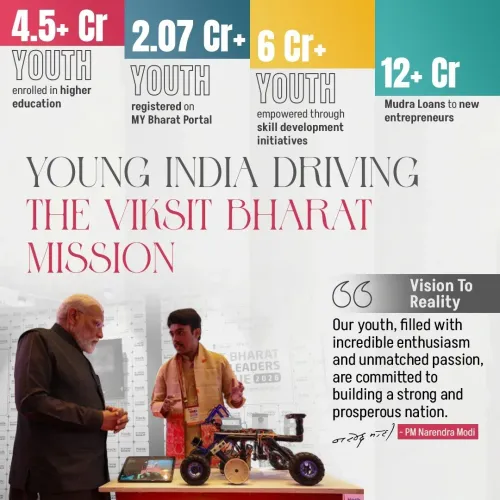
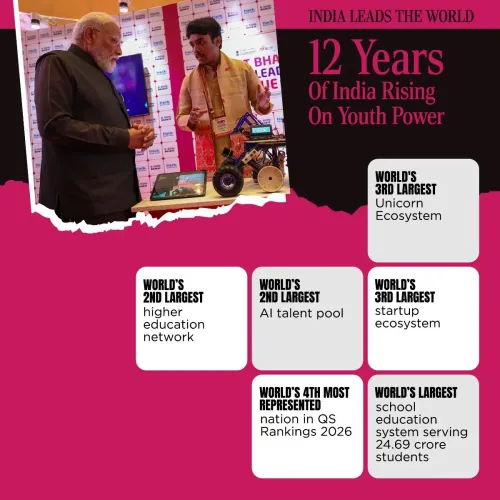
Union Minister Pralhad Joshi on 25 May 2026 cited the India Semiconductor Mission and 100% broad-gauge railway electrification as twin pillars of opportunity for India's youth, urging them to innovate and contribute to the Viksit Bharat 2047 vision under PM Modi's leadership.
Key Takeaways
Union Minister Pralhad Joshi posted on 25 May 2026 calling the current period 'a decade of unprecedented opportunity' for India's youth.
He highlighted the India Semiconductor Mission , with projects approved across multiple states, as a key driver of new possibilities in technology manufacturing.
The 100% broad-gauge railway electrification drive was cited alongside semiconductors as a transformative infrastructure achievement under PM Narendra Modi .
Both programmes are part of the Atmanirbhar Bharat self-reliance strategy, aimed at reducing import dependence on critical components and upgrading logistics infrastructure.
The India Semiconductor Mission was approved by the Union Cabinet in 2021 under the Production Linked Incentive framework for electronics.
Joshi's message is anchored to the government's official Viksit Bharat 2047 vision, linking policy milestones to aspirational calls for youth-driven innovation.
Union Consumer Affairs Minister Pralhad Joshi on Monday, 25 May 2026 invoked two of the government's flagship infrastructure and technology programmes — the India Semiconductor Mission and the 100% broad-gauge railway electrification drive — to call on India's youth to seize what he described as 'a decade of unprecedented opportunity.'
Context
Posting on X, Joshi pointed to semiconductor fabrication projects approved across multiple states and the near-complete electrification of the broad-gauge railway network as concrete proof that transformative change is under way. 'This is India's moment. And when it is India's time, it is your time,' he wrote, urging young Indians to 'innovate boldly' and contribute to building a #ViksitBharat — the government's official vision for a developed India by 2047.
The minister's message frames these two otherwise distinct infrastructure achievements as a unified signal: that the policy groundwork laid under Prime Minister Narendra Modi is now mature enough to absorb private enterprise, entrepreneurship, and youth-driven innovation at scale.
Policy Backdrop
The India Semiconductor Mission (ISM) was approved by the Union Cabinet in 2021 under the broader Production Linked Incentive (PLI) framework for electronics manufacturing. It was designed to attract semiconductor fabrication, display, and chip-design investments into India, reducing the country's dependence on imported chips — a vulnerability exposed sharply during the global semiconductor shortage of 2020–22.
On the railways front, the push for 100% broad-gauge electrification gained momentum in the late 2010s and has been tracked through successive railway budgets. Full electrification eliminates dependence on diesel traction, cuts operational costs, and enables faster, heavier freight movement — a logistics upgrade that directly supports manufacturing competitiveness.
Both initiatives are central planks of the Atmanirbhar Bharat self-reliance strategy that accelerated after 2019, aiming to build resilient domestic supply chains in critical sectors while modernising physical infrastructure.
Stakeholders and Impact
The primary audience Joshi addresses is India's large and growing youth population, particularly those in engineering, technology, and manufacturing disciplines who stand to benefit most directly from semiconductor industry jobs and the logistics efficiencies of an electrified rail network.
Electronics manufacturers and chip-design firms are also key stakeholders: state-level approvals under the ISM create land, power, and fiscal-incentive ecosystems that lower entry barriers for both domestic and foreign investors. An electrified, modernised rail grid, meanwhile, reduces input-logistics costs for factories spread across the country's interior.
The broader pattern mirrors industrial-policy moves by other large economies — notably the United States and members of the European Union — that have enacted legislation to onshore semiconductor capacity and reduce supply-chain fragility.
What's Next
Watchers of the semiconductor programme will look for further state-level project announcements and disbursement updates under the ISM as approved facilities move from planning to construction. On railways, parliamentary updates on the remaining unelectrified broad-gauge sections will indicate how close the network is to the stated 100% target.
Joshi's framing of both programmes as youth-opportunity platforms suggests the government intends to sustain a public communication push around Viksit Bharat 2047 — linking hard infrastructure data to aspirational messaging ahead of what promises to be a politically charged policy calendar.
Point of View
' the minister is signalling that the government believes its Atmanirbhar Bharat investments have crossed a threshold from policy announcement to visible delivery. The Viksit Bharat 2047 frame is increasingly the BJP's master narrative for the next electoral cycle, and posts like this serve to populate that frame with concrete, verifiable milestones. The broader arc is one of industrial-policy confidence: India positioning itself alongside the US and EU in the global race to onshore semiconductor capacity and harden supply chains.
NationPress
9 Oct 2026
Frequently Asked Questions
What is the India Semiconductor Mission?
The India Semiconductor Mission is a Union Cabinet-approved programme launched in 2021 under the Production Linked Incentive framework to attract semiconductor fabrication, display manufacturing, and chip-design investments into India, reducing the country's dependence on imported chips.
Has India achieved 100% broad-gauge railway electrification?
Indian Railways set a target for 100% broad-gauge electrification in the late 2010s and has reported progressive coverage through successive railway budgets; the government has cited near-complete electrification as a major infrastructure milestone, though final route-by-route figures are updated periodically in parliamentary statements.
What is Viksit Bharat 2047?
Viksit Bharat — meaning 'Developed India' — is the Modi government's official vision to make India a fully developed nation by 2047, the centenary of independence, encompassing goals across manufacturing, technology, infrastructure, and social welfare.
Why is Pralhad Joshi talking about semiconductors if he is the Consumer Affairs Minister?
As a senior BJP leader and Union Cabinet minister, Joshi regularly amplifies the government's broader technology and infrastructure agenda on social media, even when the specific programmes fall under other ministries, as part of a coordinated government communication strategy.
What is Atmanirbhar Bharat and how does it relate to semiconductors?
Atmanirbhar Bharat, meaning 'Self-Reliant India,' is the government's overarching economic strategy launched after 2019 to build domestic manufacturing capacity in critical sectors; the India Semiconductor Mission is one of its flagship components, designed to create an indigenous chip ecosystem and reduce import vulnerability.