Pralhad Joshi at IISc: Innovate for India and the world, not just for India
Synopsis
At IISc Bengaluru, Education Minister Pralhad Joshi used the Seva First Innovation Challenge to push a bold framing: India's 65%-under-35 demographic is not just a domestic asset — it is the world's innovation reserve. With IISc anchoring the South Zone and a Delhi finale ahead, the challenge is the Centre's most institutionally broad student-innovation push yet.
Key Takeaways
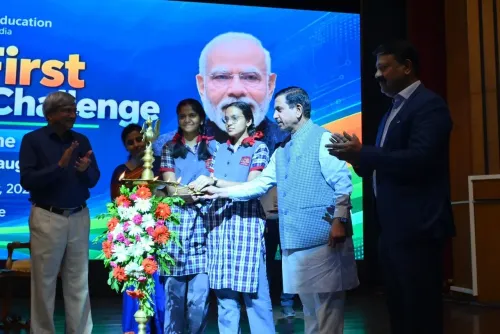
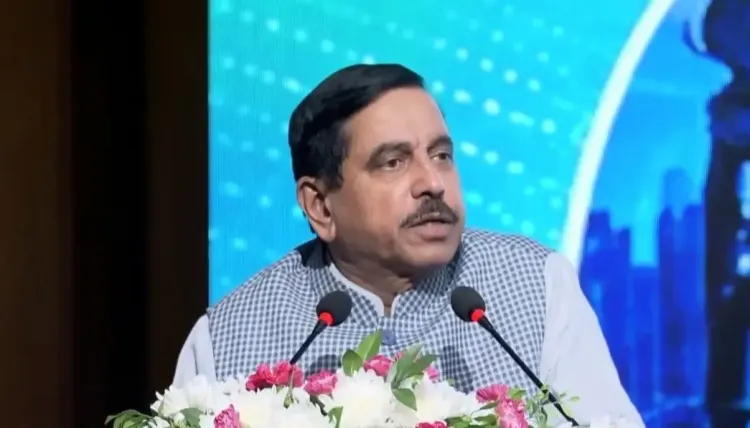
Union Education Minister Pralhad Joshi addressed the Seva First Innovation Challenge at IISc Bengaluru on 25 September 2026 .
More than 65 per cent of India's population is below the age of 35 , which Joshi cited as a global innovation opportunity.
The challenge spans schools, ITIs, polytechnics, colleges and universities ; promising solutions will receive mentoring and incubation support.
IISc has been designated the South Zone Nodal Institute , covering 8 states and UTs including Karnataka, Tamil Nadu and Kerala.
Researchers at IISc have reportedly developed technology to extract 99 per cent pure green hydrogen from agricultural waste and biomass.
The final round of the challenge will be held in Delhi .
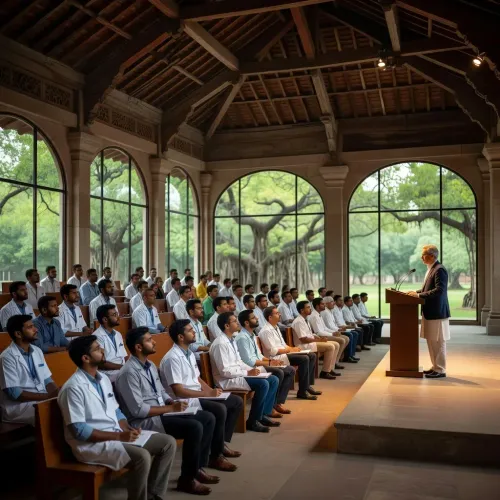
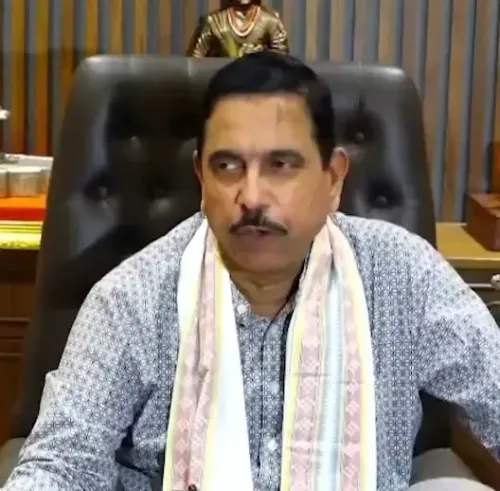
Union Education Minister Pralhad Joshi on Friday, 25 September 2026, called on India's youth to direct their energy toward global innovation, not just domestic problem-solving, citing the demographic fact that more than 65 per cent of India's population is below the age of 35. He was speaking at the Seva First Innovation Challenge organised by the Ministry of Education at the Indian Institute of Science (IISc), Bengaluru.
The Core Message
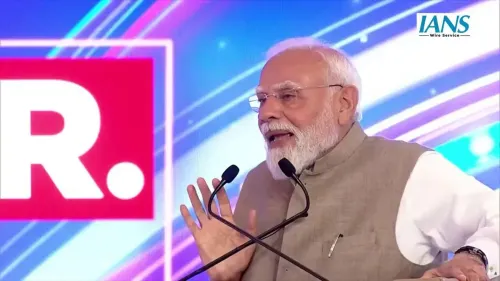
'We should work, we should innovate, we should provide solutions, not only for India, but for the world also. Innovate in India, Make in India, not only for India, for the world also,' Joshi said, framing India's demographic dividend as a strategic global asset rather than a domestic resource alone.
The minister urged students to channel their curiosity into tangible action. 'That curiosity should get an opportunity, and opportunity should convert into action, and action should serve the common person of the country and the common person of the world. That is why it is called Seva,' he said.
What the Seva First Innovation Challenge Is
The Seva First Innovation Challenge is a Ministry of Education initiative designed to encourage students and young innovators to identify real-world problems and develop practical solutions. The challenge draws participants from schools, ITIs, polytechnics, colleges and universities across the country, making it one of the broader student-facing innovation platforms under the current education policy framework.
Promising submissions, according to Joshi, will receive support beyond the prototype stage through mentoring, incubation, and clear pathways for real-life adoption. He confirmed that the final round of the challenge will be held in Delhi.
IISc's Role and the South Zone Nodal Mandate
IISc Bengaluru has been designated the South Zone Nodal Institute for the challenge, responsible for coordinating technical evaluation and mentorship across Karnataka, Tamil Nadu, Kerala, Andhra Pradesh, Telangana, Puducherry, Andaman and Nicobar Islands, and Lakshadweep. The institute's existing research infrastructure makes it a natural anchor for the region's innovation pipeline.
The minister also highlighted an example from IISc itself: researchers there have reportedly developed technology to extract 99 per cent pure green hydrogen from agricultural waste and biomass — a development he cited as a model for the kind of indigenous, real-need-driven innovation the challenge seeks to encourage.
Emerging Priorities: Energy and Viksit Bharat 2047
Joshi underscored the urgency of developing indigenous solutions for renewable energy storage and power grid stabilisation as solar and wind generation scales up across the country. He also connected the innovation push to the broader national goal of India becoming a developed nation by 2047, commonly referenced under the Viksit Bharat framework.
He pointed to everyday challenges — water wastage, garbage disposal, and traffic management — as examples of problems that are widely observed but rarely acted upon. 'First you should search for the problem and also find a solution,' he said, emphasising that innovation must begin with an honest understanding of people's real needs.
Broader Context
This comes amid a wider government push to embed innovation culture at the student level, building on the National Education Policy 2020's emphasis on research and experiential learning. The Seva First Challenge is notably broader in institutional reach than earlier focused schemes, spanning ITIs and polytechnics alongside universities — a signal that the Centre is attempting to democratise the innovation pipeline beyond elite institutions. With India eyeing a larger share of global technology and manufacturing value chains, cultivating ground-up innovators at scale is increasingly central to that strategy.
Point of View
But the proof will be in the pipeline. Seva First's strength is its institutional breadth — reaching ITIs and polytechnics, not just IITs — yet breadth alone does not guarantee depth of output. The IISc green hydrogen claim deserves scrutiny: 99 per cent purity from biomass, if independently verified, would be commercially significant, not just a ministerial talking point. More broadly, India has produced innovation challenge winners before; what it has struggled with is the incubation-to-adoption bridge. Whether the promised mentoring and real-life pathways are funded and tracked, or whether they remain aspirational, will determine if Seva First is a policy instrument or a photo opportunity.
NationPress
25 Sept 2026
Frequently Asked Questions
What is the Seva First Innovation Challenge?
The Seva First Innovation Challenge is a Ministry of Education initiative that invites students from schools, ITIs, polytechnics, colleges and universities to identify real-world problems and develop practical solutions. Promising entries receive mentoring, incubation support, and pathways for real-life adoption, with the final round to be held in Delhi.
What did Education Minister Pralhad Joshi say at IISc Bengaluru?
Joshi called on India's youth to innovate not just for India but for the world, citing that more than 65 per cent of the population is below 35. He stressed that curiosity must convert into action that serves ordinary people — the principle behind the challenge's name, 'Seva'.
What role does IISc play in the Seva First Innovation Challenge?
IISc Bengaluru has been designated the South Zone Nodal Institute for the challenge, coordinating technical evaluation and mentorship across Karnataka, Tamil Nadu, Kerala, Andhra Pradesh, Telangana, Puducherry, Andaman and Nicobar Islands, and Lakshadweep.
What is the green hydrogen development Joshi mentioned?
The minister cited research at IISc where scientists have reportedly developed technology to extract 99 per cent pure green hydrogen from agricultural waste and biomass, presenting it as an example of indigenous, need-driven innovation relevant to India's renewable energy goals.
How does this initiative connect to Viksit Bharat 2047?
Joshi linked the Seva First Innovation Challenge to India's goal of becoming a developed nation by 2047, arguing that ground-up student innovation — particularly in areas like renewable energy storage and grid stabilisation — is essential to achieving that target.