Pralhad Joshi urges startups to mentor young innovators at IISc Bengaluru
Synopsis
India now has 2.4 lakh startups — up from just 360 in 2014 — and Education Minister Pralhad Joshi wants the founders who benefited from early support to now become mentors themselves. Speaking at IISc Bengaluru, he proposed a national ideas repository and challenged the ecosystem to focus innovation not on scale, but on solving real problems faced by farmers, labourers, and the poor.
Key Takeaways
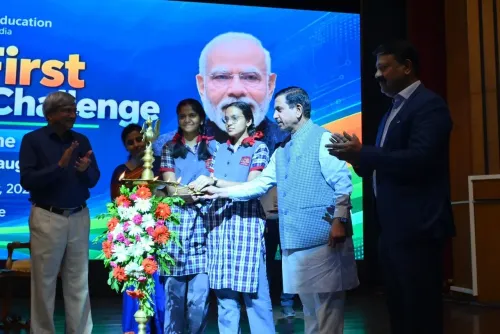
Union Education Minister Pralhad Joshi addressed the Seva First Innovation Challenge at IISc, Bengaluru on 25 September .
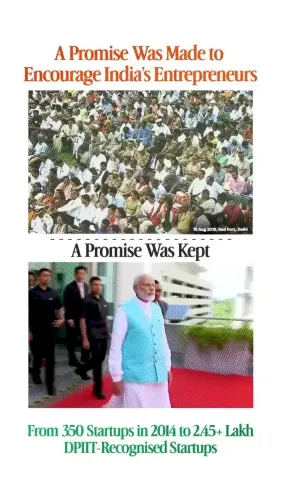
India's startup count has grown from ~360 in 2014 to ~2.4 lakh , making it the world's third-largest startup ecosystem .
Nearly half of India's startups are now based in Tier-2 and Tier-3 cities .
India's Global Innovation Index ranking improved from 81 (2015) to 38 currently; patent filings rose from ~4,200 (2013-14) to over one lakh in a decade.
120 startups showcased innovations at Bharat Mandapam during the BRICS summit .
Joshi proposed a national repository on the Seva First Innovation Challenge website for continued mentoring of promising ideas.
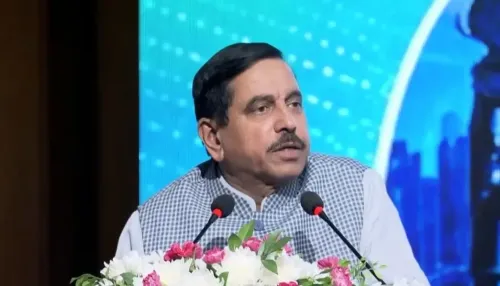
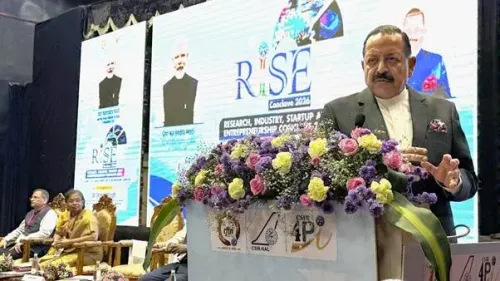
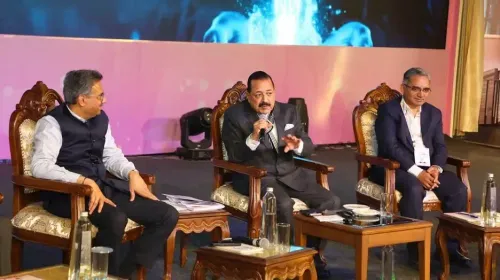
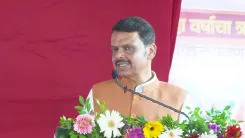
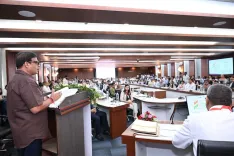
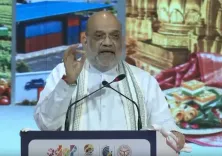
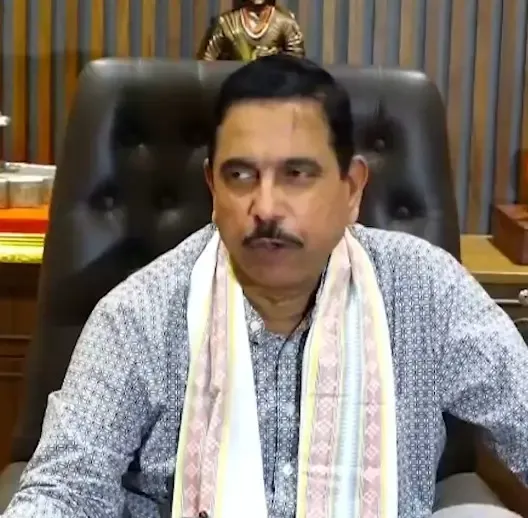
Union Education Minister Pralhad Joshi on Friday, 25 September called upon established startup founders and industry partners to step up as mentors for the next generation of innovators, saying those who once received early-stage support now have a responsibility to help young entrepreneurs convert ideas into products and scalable solutions. Joshi made the appeal while addressing the Seva First Innovation Challenge at the Indian Institute of Science (IISc) in Bengaluru.
The Core Message: Pay It Forward
Joshi struck a personal chord with founders in the audience, reminding them of their own journeys. 'When you were struggling to put up a startup, someone or the other supported you. Now you support these young people, our bright future,' he said, urging both startup founders and industry partners to actively engage with teams participating in the challenge.
He emphasised that the initiative was not designed merely as a prize competition. The goal, he said, was to identify promising ideas, provide sustained mentoring, and facilitate implementation at scale. Joshi added that the government and IISc would continue supporting young innovators with mentoring beyond the competition itself.
Innovation Must Serve Ordinary People
The minister outlined a clear guiding philosophy for the challenge — that innovation must be anchored in the spirit of 'Seva' (service) and directed at solving real problems faced by ordinary citizens, particularly the poor, farmers, and labourers.
'We did innovation, we did everything, but for the common person, who is having real need, you should try to understand them, their problems, and that problem has to be solved. That is the intention,' Joshi said. This framing positions grassroots problem-solving — rather than commercial scale — as the primary metric for success.
India's Startup Growth: Key Numbers
Joshi highlighted the dramatic expansion of India's startup ecosystem over the past decade. The number of recognised startups has surged from approximately 360 in 2014 to roughly 2.4 lakh today, making India the world's third-largest startup ecosystem. Notably, nearly half of these startups are based in Tier-2 and Tier-3 cities, signalling a geographic democratisation of entrepreneurship beyond the traditional tech hubs.
India's Global Innovation Index ranking has also improved sharply, climbing from 81st in 2015 to 38th currently. The country has filed more than one lakh patents over the last 10 years, compared to around 4,200 in 2013-14 — a more than twenty-fold increase.
BRICS Showcase and Global Visibility
Joshi also recalled the participation of Indian startups at the recent BRICS summit, where 120 startups displayed their innovations at Bharat Mandapam and received direct interaction with leaders from BRICS nations. He said this kind of global visibility was essential for young entrepreneurs to understand the scale at which their ideas could eventually operate.
National Repository and the Viksit Bharat Vision
In a concrete institutional proposal, Joshi suggested creating a national repository through the Seva First Innovation Challenge website, where promising ideas that do not win immediate prizes could still remain accessible for future mentoring and large-scale adoption.
Linking the initiative to Prime Minister Narendra Modi's vision of 'Viksit Bharat', Joshi told participants that young minds would be central to India's development trajectory over the next two decades. 'The future is yours. Future of the world is in India, and that future belongs to you,' he said. How effectively the innovation ecosystem converts this rhetoric into structured mentorship pipelines remains the critical question going forward.
Point of View
But the structural gap between inspiration and institutionalised mentorship remains wide. India's startup numbers are impressive on paper, yet the concentration of high-value outcomes in a handful of cities and sectors suggests the Tier-2 and Tier-3 story is still more about registrations than real scaling. The proposed national repository is a meaningful idea — but only if it comes with active curation rather than becoming a digital archive no one revisits. The deeper challenge is that 'Seva-first' innovation and venture-scale returns are not always compatible goals, and the ecosystem will need clearer frameworks to bridge that tension.
NationPress
25 Sept 2026
Frequently Asked Questions
What is the Seva First Innovation Challenge?
The Seva First Innovation Challenge is an innovation competition hosted at the Indian Institute of Science (IISc) in Bengaluru, aimed at identifying and nurturing promising ideas from young entrepreneurs. The initiative focuses on problem-solving for ordinary citizens — particularly farmers, labourers, and the poor — rather than purely commercial innovation.
What did Pralhad Joshi say at the event?
Education Minister Pralhad Joshi urged established startup founders and industry partners to mentor young innovators, drawing on their own early experiences of receiving support. He also announced that the government and IISc would provide continued mentoring to promising participants even after the competition concludes.
How large is India's startup ecosystem currently?
India's startup ecosystem has grown to approximately 2.4 lakh recognised startups, up from around 360 in 2014, making it the world's third-largest. Nearly half of these startups are based in Tier-2 and Tier-3 cities, reflecting a broader geographic spread of entrepreneurship.
What is India's current Global Innovation Index ranking?
India currently ranks 38th on the Global Innovation Index, a significant improvement from its 81st position in 2015. The country has also filed more than one lakh patents in the last 10 years, compared to approximately 4,200 in 2013-14.
What national repository did Joshi propose?
Joshi proposed creating a national repository through the Seva First Innovation Challenge website, where promising ideas — including those that do not win prizes — could remain accessible for future mentoring and large-scale adoption. No formal timeline for the repository's launch was announced.