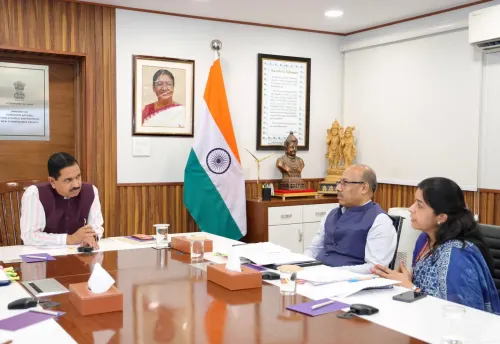
Pralhad Joshi: AI training for 1 crore youth a national priority

Synopsis
Union Minister Pralhad Joshi on October 22, 2026 declared AI-readiness for India's 4.5 crore higher-education students a national priority, spotlighting a plan to train one crore youth in AI, four Centres of Excellence, and NEP 2020 as the foundation for Viksit Bharat 2047.
Key Takeaways
Union Minister Pralhad Joshi called preparing India's youth for an AI-driven economy a national priority on October 22, 2026 .
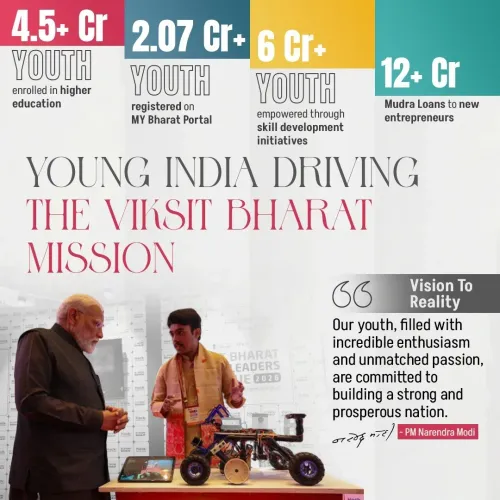
India currently has over 4.5 crore students in higher education; more than 100 crore Indians will be of working age by 2030 .
The government is targeting training of one crore youth in AI and has announced four AI Centres of Excellence to boost research.
National Education Policy 2020 is positioned as the curricular backbone for integrating critical thinking and AI literacy into graduate programmes.
The initiative is framed within the long-term Viksit Bharat 2047 vision to make India a developed economy by independence's centenary.
India's AI policy lineage traces back to the National Strategy for AI (#AIforAll) released in 2018 .
India's demographic clock is ticking — and Union Consumer Affairs Minister Pralhad Joshi wants the country's education system to answer it. On Thursday, October 22, 2026, Joshi posted on X, framing the skilling of India's youth for an AI-driven economy as nothing less than a national imperative, citing a figure of over 4.5 crore students currently enrolled in higher education and projecting that more than 100 crore Indians will be of working age by 2030.
The numbers behind the urgency
Joshi's argument rests on a demographic arithmetic that is hard to ignore. With the world's largest youth population moving through higher education and into the workforce within the next few years, the question is not whether India will have the numbers — it is whether those numbers will carry the right skills. The minister pointed to Prime Minister Narendra Modi's government expanding AI infrastructure and committing to train one crore youth in AI as a direct policy answer to that question.
Central to this push are four AI Centres of Excellence, which the government is positioning as research anchors that bridge academia and industry. The centres are intended to drive high-end AI research while generating a pipeline of talent capable of innovating, not just operating, in an AI-enabled economy. The rollout timelines and funding allocations for these hubs remain a key indicator to watch as the initiative moves from announcement to implementation.
NEP 2020 as the curricular backbone
Joshi's column — referenced in his post — highlights the National Education Policy 2020 as the structural foundation for this transformation. Approved in July 2020, the NEP overhauled India's higher education framework with an explicit emphasis on multidisciplinary learning, critical thinking, and technology integration. The minister's argument is that NEP 2020 is not merely a curriculum reform — it is the lever that can make AI literacy a default graduate competency rather than a specialist niche.
India's AI policy lineage runs deeper still. The government released its National Strategy for Artificial Intelligence — branded #AIforAll — in 2018, establishing responsible AI adoption as a cross-sector priority. The current push to train one crore youth effectively operationalises that strategy at scale, with NEP 2020 providing the institutional delivery mechanism inside universities and colleges.
Viksit Bharat 2047 and the graduate dividend
Joshi tied the education-AI agenda explicitly to #ViksitBharat2047, the government's flagship long-term vision to transform India into a fully developed economy by the centenary of independence. The logic is direct: a workforce that is AI-literate, critically equipped, and research-capable is the human capital foundation without which no development target holds.
The minister's framing carries a quiet urgency — if the graduation years of today's 4.5 crore higher-education students are not matched by AI-ready curricula and robust research infrastructure, India risks squandering the very demographic dividend it has spent decades waiting for. Whether the four Centres of Excellence and the NEP implementation pipeline can deliver at that scale is the question that will define the next phase of this agenda.
Point of View
The one-crore youth training target, and Viksit Bharat 2047 into a single narrative, the BJP is building a cohesive 'future-ready India' brand around education policy. The real test, however, is institutional: the four AI Centres of Excellence remain at varying stages of operationalisation, and university-level NEP implementation has been uneven across states. Joshi's public column-writing on the subject suggests the government is aware it needs to build popular salience for these targets, not just administrative momentum.
NationPress
22 Oct 2026
Frequently Asked Questions
What is India's plan to train youth in AI?
The Indian government has announced a target to train one crore youth in AI as part of a broader push to expand AI infrastructure, supported by four AI Centres of Excellence for research and innovation.
What are the four AI Centres of Excellence in India?
The four AI Centres of Excellence are government-backed research hubs designed to advance artificial intelligence capabilities and foster collaboration between academia and industry. Their exact locations and funding timelines are awaiting formal rollout confirmation.
How does NEP 2020 relate to AI education in India?
National Education Policy 2020 , approved in July 2020, restructured higher education around multidisciplinary learning and critical thinking — forming the curricular backbone that the government is now using to integrate AI literacy into graduate programmes across India.
What is Viksit Bharat 2047?
Viksit Bharat 2047 is India's long-term national vision to transform the country into a fully developed economy by 2047, the centenary of independence, with human capital and technology development as core pillars.
What is India's National Strategy for AI?
India released its National Strategy for Artificial Intelligence , branded #AIforAll , in 2018 to guide responsible AI adoption across sectors including education, agriculture, health, and smart cities.