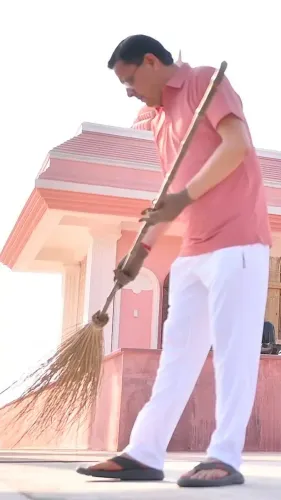
CM Dhami launches cleanliness drive at Har Ki Pauri, Haridwar

Synopsis
Uttarakhand CM Pushkar Singh Dhami has ordered a special cleanliness campaign at Har Ki Pauri, Haridwar — India's iconic Ganges ghat — as the state reinforces its Swachh Bharat commitments at a pilgrimage site that draws millions of devotees annually.
Key Takeaways
A special cleanliness campaign was launched at Har Ki Pauri, Haridwar on 23 October 2026 .
The drive was ordered directly by Chief Minister Pushkar Singh Dhami .
Har Ki Pauri is one of India's most visited pilgrimage ghats on the Ganges , attracting millions of devotees each year.
The campaign aligns with the national Swachh Bharat Abhiyan , launched in 2014 .
Uttarakhand regularly conducts targeted sanitation drives at high-footfall religious sites across the state.
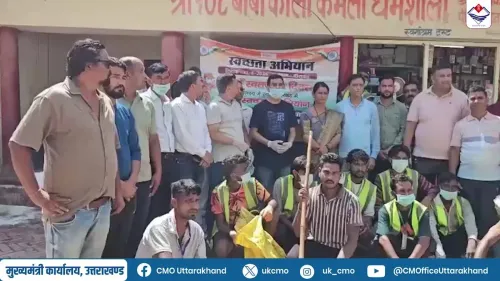
At one of India's most sacred riverfront ghats, brooms and buckets are following the prayers. On Friday, 23 October 2026, a special cleanliness campaign was launched at Har Ki Pauri, Haridwar on the direct orders of Uttarakhand Chief Minister Pushkar Singh Dhami — a signal that the state is doubling down on keeping its holiest corridors as clean as they are devout.
The Chief Minister's Office announced on X: 'मुख्यमंत्री श्री पुष्कर सिंह धामी के निर्देशों पर हरकी पैड़ी, हरिद्वार से विशेष स्वच्छता अभियान शुरू किया गया।' ('On the instructions of Chief Minister Shri Pushkar Singh Dhami, a special cleanliness campaign has been launched from Har Ki Pauri, Haridwar.')Why Har Ki Pauri is the symbolic starting point
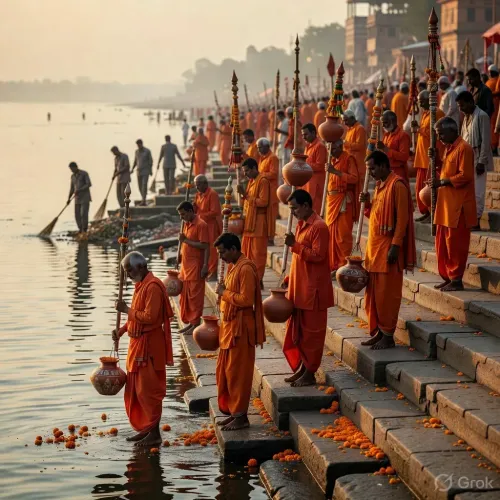
Har Ki Pauri is not just a ghat — it is arguably the spiritual heartbeat of the Ganges in northern India. Millions of pilgrims descend on it annually for the Ganga Aarti and for ritual bathing, particularly during major events like Kumbh Mela and Ardh Kumbh. The sheer volume of footfall — devotees, tourists, vendors — makes it both a symbol of devotion and a pressure point for urban sanitation. Choosing it as the launch site gives the campaign maximum visibility and moral weight.
Haridwar as a city sits at the intersection of faith and infrastructure. Uttarakhand's administration has consistently had to balance the city's identity as a pilgrimage hub with the practical demands of waste management, riverbank upkeep, and public hygiene at scale.
Aligning with the national cleanliness mission
This drive fits squarely within the broader framework of the Swachh Bharat Abhiyan, the national sanitation mission launched in 2014 that set cleanliness targets across urban and rural India. Indian states have repeatedly used targeted campaigns at high-footfall religious sites to keep that national mandate visible and locally relevant. Uttarakhand, with its cluster of pilgrimage towns — Haridwar, Rishikesh, Badrinath, Kedarnath — has particular reason to embed cleanliness drives into the rhythm of its governance calendar.
CM Dhami, who has led the state since 2021, has positioned Uttarakhand's religious tourism infrastructure as a governance priority. A clean Har Ki Pauri is, in that framing, not just a hygiene goal — it is a brand statement for the state's pilgrimage economy.
Whether this campaign extends to other ghats and generates measurable improvements in local sanitation metrics will be the real test. For now, the message from the state government is clear: the Ganges deserves better than the mess left behind by its admirers.
Point of View
A constituency that matters enormously in Uttarakhand's political calculus. The move also reinforces the state's alignment with the central government's Swachh Bharat framework, keeping Dhami's administration visibly on-message with New Delhi's sanitation narrative. The broader pattern of India's temple-town governance increasingly treats cleanliness at sacred sites as both a public-health imperative and a soft-power investment in pilgrimage tourism.
NationPress
23 Oct 2026
Frequently Asked Questions
What is the special cleanliness campaign launched at Har Ki Pauri?
A special cleanliness campaign was launched at Har Ki Pauri ghat in Haridwar on 23 October 2026 on the orders of Uttarakhand Chief Minister Pushkar Singh Dhami, aimed at improving sanitation at one of the Ganges' most visited pilgrimage sites.
Who ordered the Haridwar cleanliness drive in 2026?
Uttarakhand Chief Minister Pushkar Singh Dhami ordered the special cleanliness campaign at Har Ki Pauri, Haridwar.
What is Har Ki Pauri and why is it important?
Har Ki Pauri is an iconic ghat on the Ganges in Haridwar, Uttarakhand. It is the site of the famous daily Ganga Aarti and attracts millions of pilgrims each year, making it one of India's most significant religious landmarks.
How does this campaign relate to Swachh Bharat Abhiyan?
The drive aligns with the Swachh Bharat Abhiyan, India's national cleanliness mission launched in 2014. Uttarakhand regularly conducts targeted sanitation campaigns at major religious sites as part of this broader national mandate.
Is Uttarakhand running other cleanliness campaigns at religious sites?
Uttarakhand integrates cleanliness drives into the governance of its major holy cities, including Haridwar and Rishikesh, as part of ongoing efforts to maintain pilgrimage infrastructure and support public health.