CM Dhami Reaffirms Ganga Cleanliness as Top Priority
Synopsis
Uttarakhand Chief Minister Pushkar Singh Dhami on 26 May 2026 reaffirmed that keeping the Ganga clean and free-flowing from Gomukh to Haridwar is his government's highest priority, linking conservation with India's Sanatan cultural identity and citing continuous work on ghats and pollution control.
Key Takeaways
CM Pushkar Singh Dhami declared Ganga cleanliness and free flow from Gomukh to Haridwar the top priority of the Uttarakhand government on 26 May 2026 .
The statement frames river conservation as inseparable from India's faith, culture and Sanatan tradition .
Work is ongoing on Ganga cleanliness, conservation and ghat development along the upper river corridor in Uttarakhand.
The post aligns with the central government's Namami Gange programme, launched in 2014 , which covers pollution abatement and riverfront infrastructure.
Haridwar , a Kumbh Mela site, and the glacial source at Gomukh make Uttarakhand's stretch of the Ganga both ecologically and spiritually critical.
Pilgrims, riverside communities and the state's pilgrimage economy are the primary stakeholders affected by the government's conservation commitments.
Uttarakhand Chief Minister Pushkar Singh Dhami on Tuesday, 26 May 2026, reaffirmed that keeping the Ganga clean and free-flowing from Gomukh to Haridwar remains the highest priority of his government, framing river conservation as an expression of India's faith and Sanatan heritage.
Context
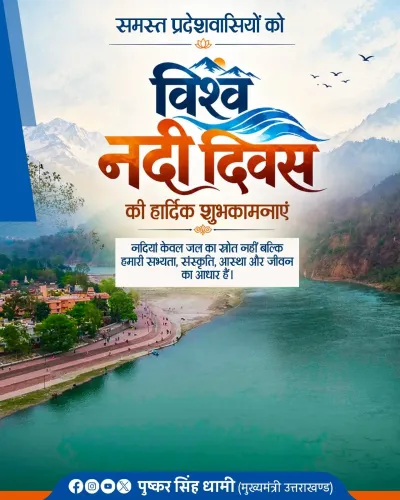
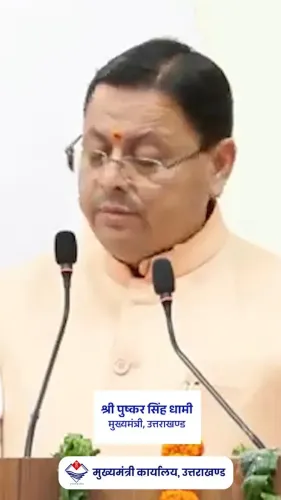
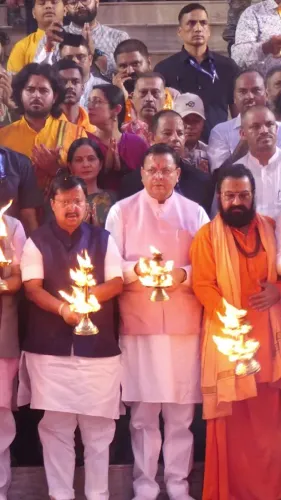
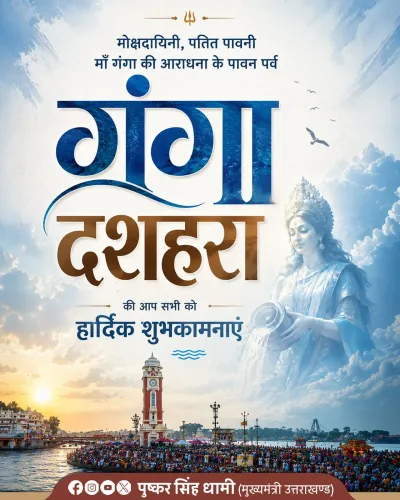
Posting in Hindi on X, CM Dhami described the Ganga as 'bharat ki aastha, sanskriti aur Sanatan parampara ki pavitra pehchaan' — 'the sacred identity of India's faith, culture and Sanatan tradition.' He stated that his government is continuously working on Ganga cleanliness, conservation, and the development of ghats along its course. The post was accompanied by a video, signalling an active communication push on the river's upkeep.
Policy Backdrop
The statement aligns with the Namami Gange programme, the central government's flagship integrated mission launched in 2014 for Ganga rejuvenation, pollution control, and riverfront infrastructure. Uttarakhand hosts the river's upper stretch — from the Gangotri glacier, where Gomukh marks the traditional source, down to Haridwar, where the river descends to the Indo-Gangetic plains. This stretch is ecologically sensitive and spiritually central to millions of pilgrims. Ganga conservation efforts in India date to the Ganga Action Plan Phase-I initiated in 1986, though sustained progress accelerated under the post-2014 national mission framework.
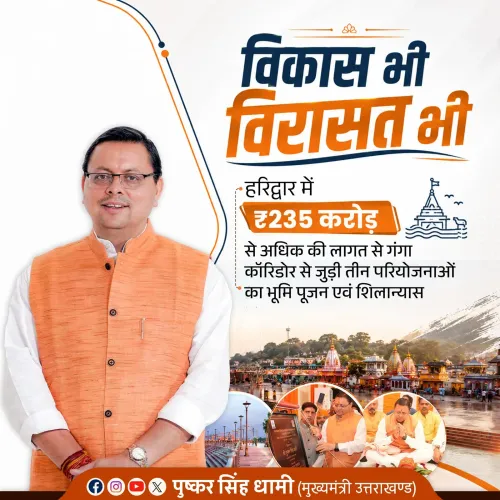
The Dhami government has consistently positioned Ganga conservation as both an environmental and a cultural-religious commitment, combining pollution abatement with ghat development and flow-maintenance measures. Haridwar, one of the four sites of the Kumbh Mela, draws tens of millions of pilgrims and makes the river's condition a matter of both public health and religious sentiment.
Stakeholders and Impact
The communities most directly affected span a wide range: pilgrims and devotees who bathe at ghats from Gangotri to Haridwar, riverside populations dependent on the river for water and livelihoods, and the state's pilgrimage and tourism economy. Ghat development and cleanliness drives have a direct bearing on visitor experience and the safety of ritual bathing. Environmental groups and river-rights advocates also watch flow-maintenance commitments closely, particularly as glacial retreat at Gomukh raises long-term concerns about the river's volume.
For the BJP government in Uttarakhand, the Ganga's condition carries political weight — the river is a recurring theme in the party's cultural-nationalist messaging and its governance record is measured partly against visible improvements at key ghats and pollution levels at major monitoring points.
What's Next
Observers will watch for concrete follow-through: state budget allocations for ghat development, new pollution monitoring stations along the upper Ganga corridor, and progress reports under the Namami Gange components assigned to Uttarakhand. With the pilgrimage season in full swing by late May, the government's messaging on river cleanliness is likely to intensify. The broader test will be whether the stated priority translates into measurable improvements in water quality and uninterrupted river flow by the next major pilgrimage cycle.
Point of View
The statement speaks to the party's core voter base while positioning the state government as the custodian of a national sacred trust. The Gomukh-to-Haridwar framing is deliberate: it claims the entire upper river corridor as Uttarakhand's responsibility, reinforcing the state's identity as 'Dev Bhoomi.' The real measure of the commitment, however, will come from water-quality data and ghat infrastructure progress rather than from messaging cycles timed to the pilgrimage season.
NationPress
10 Oct 2026
Frequently Asked Questions
What did CM Dhami say about the Ganga on 26 May 2026?
CM Pushkar Singh Dhami stated that keeping the Ganga clean and free-flowing from Gomukh to Haridwar is his government's highest priority, describing the river as the sacred identity of India's faith, culture and Sanatan tradition.
What is the Namami Gange programme?
Namami Gange is the central government's flagship integrated mission launched in 2014 for Ganga rejuvenation, pollution control and ghat infrastructure development across the river's basin, including the upper stretch in Uttarakhand.
Where does the Ganga originate and why is Gomukh significant?
The Ganga originates at the Gangotri glacier in Uttarakhand, and Gomukh — the glacier's snout — is considered the traditional sacred source of the river, making it a key pilgrimage and environmental reference point.
Why is Haridwar important for Ganga conservation?
Haridwar is the point where the Ganga descends from the Himalayas to the plains and is one of India's most important religious centres, hosting the Kumbh Mela. Its ghat condition and water quality directly affect millions of pilgrims.
What work is the Uttarakhand government doing for Ganga conservation?
According to CM Dhami's statement, the Uttarakhand government is continuously working on Ganga cleanliness, conservation and the development of ghats along the river's course, in line with the broader Namami Gange national mission.