CM Dhami sets record with two Gairsain sessions in one year
Synopsis
Chief Minister Pushkar Singh Dhami's government has set a record by conducting two Uttarakhand Assembly sessions in Gairsain — the state's summer capital in Chamoli district — within a single year, deepening a commitment to hill-focused governance that began with Gairsain's capital declaration in 2020.
Key Takeaways
The Chief Minister's Office of Uttarakhand announced on October 28, 2026 that the Dhami government has set a record of two assembly sessions in Gairsain in one year.
Gairsain , located in Chamoli district , was declared Uttarakhand's summer capital in 2020 to address the plains-hills governance divide.
The dual-session milestone is being framed as proof that Gairsain has moved from symbolic status to a regularly functioning legislative venue.
The announcement carries political significance for BJP 's appeal to Himalayan constituencies, where the demand for a hill capital has persisted since statehood in 2000 .
The debate over whether Gairsain should become the sole or permanent capital remains open and is likely to intensify after this milestone.
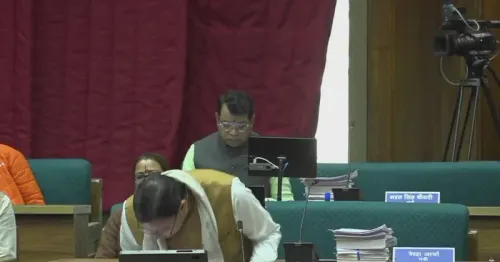
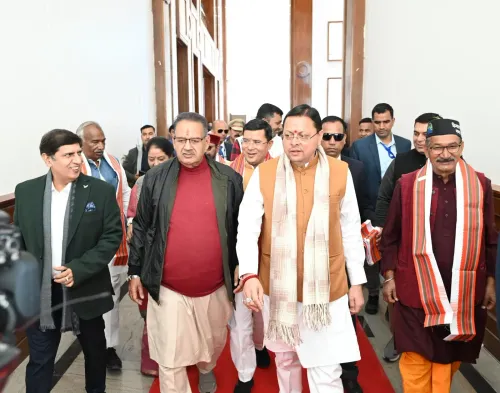
Two legislative sessions in a single year at Gairsain — that is the record Chief Minister Pushkar Singh Dhami's government has quietly etched into Uttarakhand's governance history, according to an announcement by the Chief Minister's Office of Uttarakhand on Wednesday, October 28, 2026.
The CMO post, written in Hindi, states: 'Mukhyamantri Shri Pushkar Singh Dhami sarkar ke naam Gairsain mein ek saal mein do satra chalane ka record' — ('Chief Minister Shri Pushkar Singh Dhami's government holds the record of conducting two sessions in Gairsain in one year'). It is a compact announcement, but the political signal it carries stretches all the way back to the founding promise of Uttarakhand's statehood.
Why Gairsain is not just another assembly venue
Gairsain, a town nestled in Chamoli district in the high Himalayas, has been a contested symbol since Uttarakhand became a separate state in 2000. Hill communities long argued that a plains-based capital in Dehradun left mountain districts feeling like afterthoughts in their own state. The demand for Gairsain as the capital — or at minimum as an active seat of power — became a rallying cry for regional identity. The breakthrough came in 2020, when the state government formally declared Gairsain the summer capital, committing to hold some assembly sessions there.From symbolic gesture to measurable habit
Holding one Gairsain session per year had already become a marker of that commitment. Holding two sessions in a single calendar year pushes that benchmark further — it signals that the hill capital is not a photo-opportunity but a functioning legislative venue visited repeatedly within the same political cycle. For the Dhami government, framing this as a record is deliberate: it positions the BJP administration as the one that translated a decades-old aspiration into institutional routine. For legislators from Himalayan constituencies and the communities they represent, sessions at Gairsain reduce the distance — literal and figurative — between elected representatives and the people of the hills. Infrastructure around the venue, connectivity to far-flung villages, and administrative attention to mountain districts all tend to receive a temporary but real boost during session weeks.The bigger question Gairsain keeps asking
Every session held in Gairsain renews the debate over whether the state should go further and make it the sole or permanent capital. That step would require far heavier investment in infrastructure, housing for officials, and administrative machinery — and would inevitably invite pushback from Dehradun's established bureaucratic and commercial ecosystem. For now, the dual-session model serves as a pressure valve: enough to satisfy hill sentiment, not enough to upend the status quo. Two sessions in one year is a record today. Whether the next government — or this one in its next term — chooses to make three the new baseline is the question Gairsain's residents will be watching most closely.Point of View
The BJP signals governance continuity to a demographic that has historically felt marginalised by Dehradun-centric administration. The milestone stops short of the permanent-capital commitment that hill activists demand, but it raises the floor for any future government — walking back from two sessions a year would now carry a political cost. The record claim also quietly benchmarks the Dhami administration against its predecessors, turning an administrative scheduling decision into an electoral asset ahead of the next assembly cycle.
NationPress
28 Oct 2026
Frequently Asked Questions
What is the Gairsain session record set by CM Dhami's government?
The Dhami government has conducted two Uttarakhand Legislative Assembly sessions in Gairsain within a single year, which the Chief Minister's Office has described as a record.
Why is Gairsain significant for Uttarakhand?
Gairsain, a town in Chamoli district, was declared Uttarakhand's summer capital in 2020 to fulfil long-standing demands from hill communities for an administrative centre closer to the Himalayan districts rather than the plains-based capital Dehradun.
When was Gairsain declared the summer capital of Uttarakhand?
Gairsain was declared the summer capital of Uttarakhand in 2020 , and assembly sessions have been held there intermittently since then.
Could Gairsain become the permanent capital of Uttarakhand?
The demand for Gairsain as the permanent capital exists but has not been formalised. Making it the sole capital would require significant infrastructure investment and faces resistance from Dehradun's established administrative ecosystem.
Who is Pushkar Singh Dhami?
Pushkar Singh Dhami is the Chief Minister of Uttarakhand, leading the BJP government in the state since March 2021.