CM Pema Khandu Bids Farewell to Buddha's Piprahwa Relics
Synopsis
Arunachal Pradesh Chief Minister Pema Khandu bid farewell to the sacred Piprahwa Relics of Bhagwan Shakyamuni Buddha after their state exposition, thanking Prime Minister Modi, Union Culture Minister Shekhawat, the Indian Air Force, and the Dalai Lama for making the spiritually significant event possible.
Key Takeaways
The Piprahwa Relics of Bhagwan Shakyamuni Buddha concluded their exposition in Arunachal Pradesh and have departed the state.
CM Pema Khandu publicly thanked PM Narendra Modi , Union Culture Minister Gajendra Singh Shekhawat , the Indian Air Force , and His Holiness the Dalai Lama for facilitating the event.
The Piprahwa relics originate from an 1898 excavation in Uttar Pradesh and are among the most venerated Buddhist artefacts held by the Indian state.
The exposition is part of India's broader Buddhist Circuit and Swadesh Darshan cultural connectivity initiative targeting northeastern states.
The Dalai Lama's involvement carries diplomatic resonance given Arunachal Pradesh's border with China and India's facilitation of Tibetan Buddhist institutions.
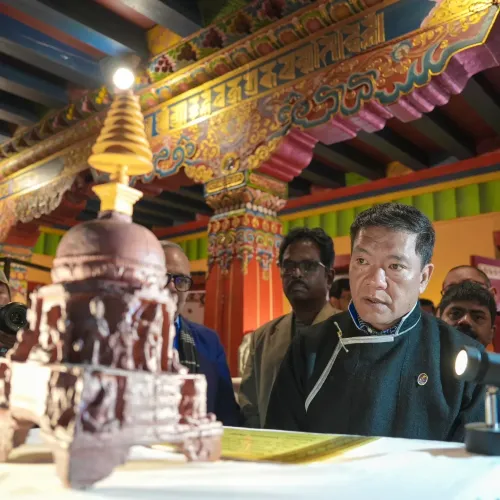
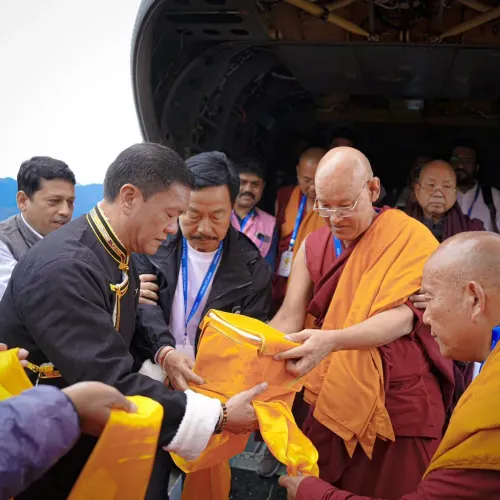
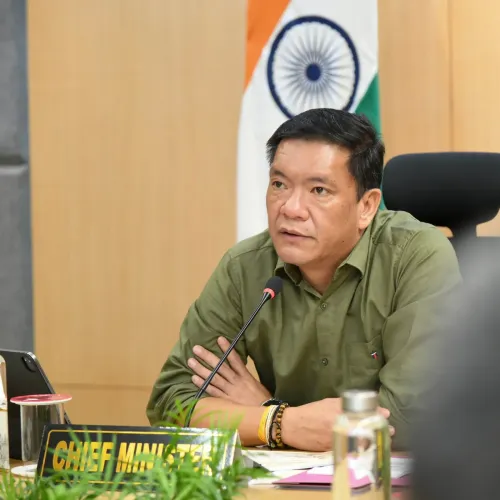
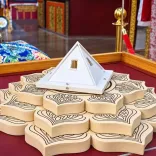
As the sacred Piprahwa Relics of Bhagwan Shakyamuni Buddha concluded their exposition in Arunachal Pradesh and departed from the state, Chief Minister Pema Khandu marked the moment with a heartfelt send-off — invoking peace, unity, and the ancient Pali salutation Namo Buddhaya ('I bow to the Buddha').
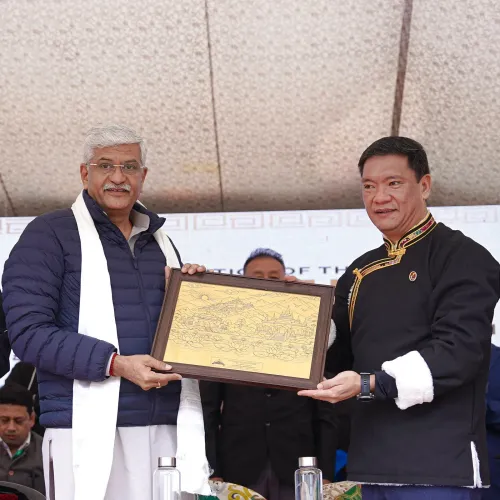
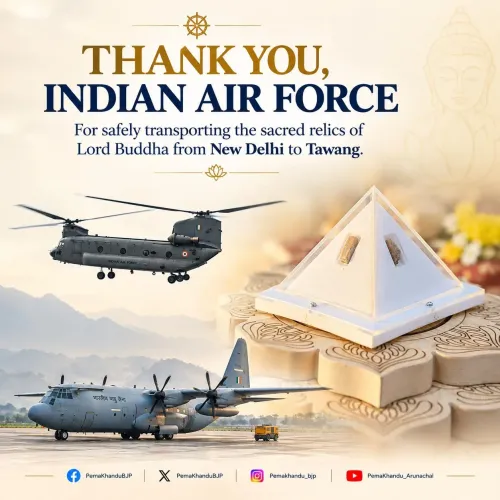
Khandu expressed gratitude to Prime Minister Narendra Modi, Union Minister of Culture Gajendra Singh Shekhawat, the Indian Air Force, and His Holiness the Dalai Lama for making the exposition possible, calling the experience one that 'will remain with us for generations.'
What the Piprahwa Relics Are — and Why They Matter
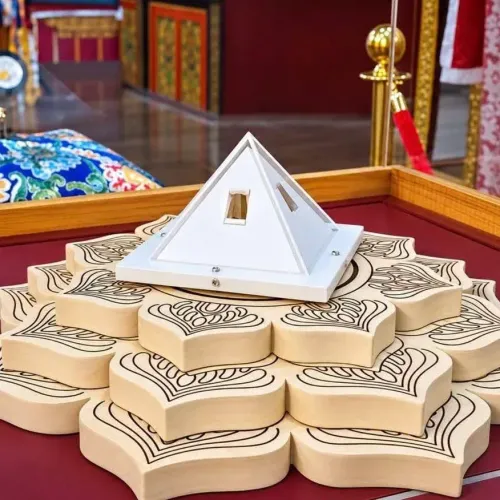
The relics trace their origin to Piprahwa, an archaeological site in Uttar Pradesh where excavations in 1898 unearthed bone fragments and funerary objects believed to belong to Bhagwan Shakyamuni Buddha himself. Regarded among the most venerated Buddhist artefacts held by the Indian state, they are not displayed lightly. Their journey to Arunachal Pradesh — a Himalayan state with deep Buddhist traditions — carried both spiritual and geopolitical resonance.
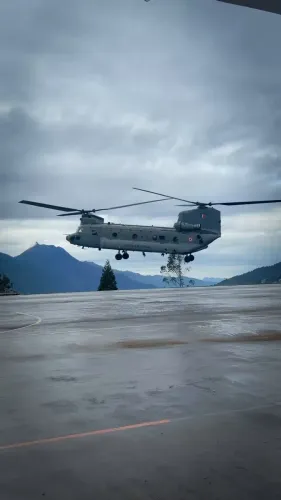
The Indian Air Force provided logistical support for the relics' transport, underlining the gravity with which the government treated the occasion. The presence and blessings of the Dalai Lama — the Tibetan spiritual leader who has lived in exile in India for decades — added a layer of significance that extended well beyond a domestic cultural event.
India's Buddhist Heritage Push Reaches the Northeast
This exposition is part of a broader, sustained effort by the Government of India to promote its Buddhist heritage through periodic relic expositions and the Buddhist Circuit under the Swadesh Darshan tourism scheme. Northeastern states with substantial Buddhist populations have increasingly been drawn into this cultural connectivity drive. For Arunachal Pradesh — a border state where Tibetan Buddhism is woven into daily life — hosting the Piprahwa Relics was more than ceremony. It was an assertion of cultural identity and national belonging.
The involvement of the Dalai Lama also reflects India's long-standing facilitation of Tibetan Buddhist institutions on its soil, a relationship that carries quiet diplomatic weight given the state's proximity to China.
Khandu's Closing Prayer and What It Signals
Khandu closed his post with the Bodhisattva aspiration: 'May all sentient beings be happy and free from suffering.' It is a phrase drawn from the heart of Mahayana Buddhist philosophy — and its use by a sitting chief minister signals how deeply Buddhist identity is embedded in the political and cultural fabric of the state he leads.
With the relics now departing, the Culture Ministry is expected to continue expanding Buddhist pilgrimage infrastructure in Himalayan states — and Arunachal Pradesh, having hosted this exposition, has placed itself firmly on that sacred map.
Point of View
Religious identity, and border-state politics. By hosting artefacts linked to Buddha himself — with the Dalai Lama's blessings and the Indian Air Force's logistical muscle — New Delhi signals to both its own northeastern citizens and its northern neighbour that India's Buddhist heritage is a living, state-backed reality. CM Khandu's effusive public gratitude reinforces the BJP's sustained effort to embed Buddhist cultural pride within its governance narrative in the Himalayan frontier. The Culture Ministry's expanding relic exposition programme suggests this is a strategic cultural tool, not a one-off gesture.
NationPress
21 Nov 2026
Frequently Asked Questions
What are the Piprahwa Relics of Buddha?
The Piprahwa Relics are bone fragments and funerary objects believed to belong to Bhagwan Shakyamuni Buddha, excavated in 1898 at Piprahwa in Uttar Pradesh. They are among the most sacred Buddhist artefacts held by the Indian government.
Why were the Buddha relics brought to Arunachal Pradesh?
The relics were brought to Arunachal Pradesh as part of the Government of India's periodic relic exposition programme, which aims to promote Buddhist cultural heritage and strengthen connectivity with northeastern states that have significant Buddhist populations.
What role did the Indian Air Force play in the relic exposition?
The Indian Air Force provided logistical support for transporting the sacred Piprahwa Relics, reflecting the high ceremonial and security importance the government attached to the event.
Why was the Dalai Lama involved in the Arunachal Pradesh relic exposition?
The Dalai Lama, the Tibetan spiritual leader living in exile in India, was invited to offer blessings for the exposition. His involvement reflects India's long-standing support for Tibetan Buddhist institutions and the deep roots of Tibetan Buddhism in Arunachal Pradesh.
What is the Buddhist Circuit under Swadesh Darshan?
The Buddhist Circuit is a government-supported pilgrimage and tourism route developed under the Swadesh Darshan scheme to connect major Buddhist heritage sites across India, promote cultural tourism, and strengthen the country's identity as the birthplace of Buddhism.