Rajnath Singh highlights UP Defence Corridor, BrahMos Lucknow unit
Synopsis
Union Defence Minister Rajnath Singh on 30 May 2026 spotlighted the Uttar Pradesh Defence Industrial Corridor and BrahMos missile production in Lucknow as central to India's drive for defence self-reliance, reinforcing the Atmanirbhar Bharat push through state-level manufacturing clusters.
Key Takeaways
Rajnath Singh on 30 May 2026 publicly highlighted the Uttar Pradesh Defence Industrial Corridor as a vehicle for national defence self-reliance.
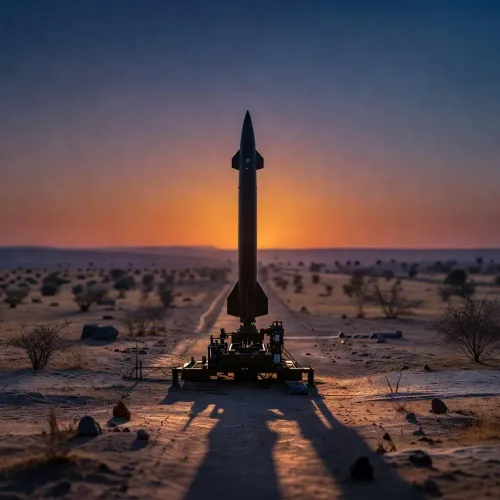
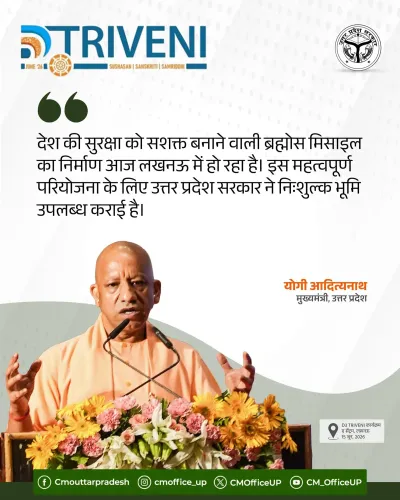
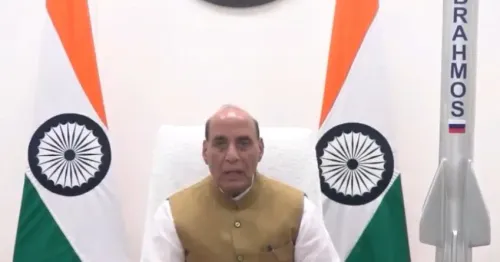
The Minister confirmed that BrahMos supersonic cruise missiles are being manufactured in Lucknow , a key corridor node.
The UP Defence Industrial Corridor was announced in 2018 and spans six nodes , including Lucknow, Agra, Aligarh, Jhansi, Kanpur, and Chitrakoot.
BrahMos Aerospace is an India-Russia joint venture and its Lucknow facility is one of the corridor's most strategically significant anchors.
The corridor is part of India's broader Atmanirbhar Bharat and Make in India defence indigenisation drive, complemented by a second corridor in Tamil Nadu .
Stakeholders include defence MSMEs, large manufacturers, and the Indian Armed Forces , all of whom benefit from shorter, domestic supply chains.
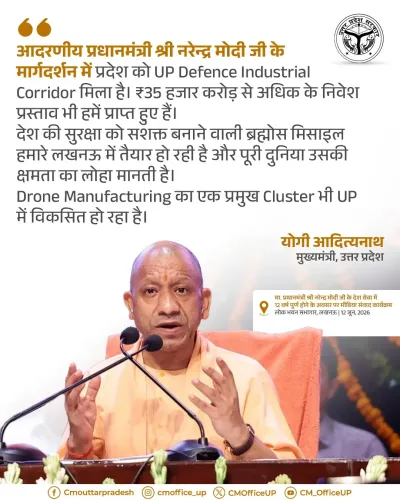
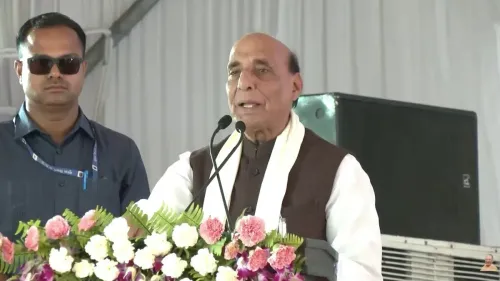
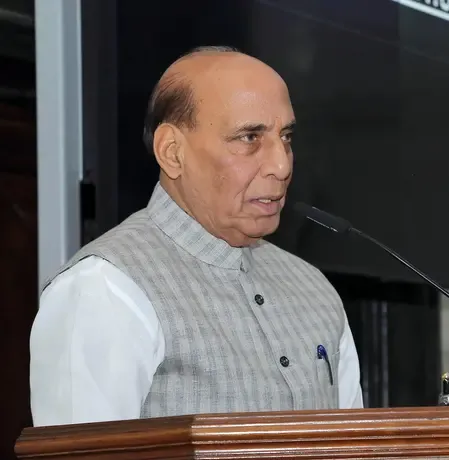
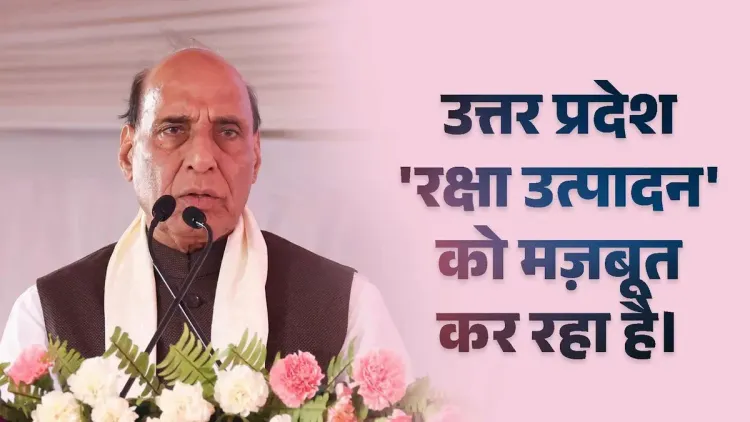
Union Defence Minister Rajnath Singh on Saturday, 30 May 2026, highlighted Uttar Pradesh's growing role in India's defence manufacturing ecosystem, pointing specifically to the Uttar Pradesh Defence Industrial Corridor and the production of BrahMos supersonic cruise missiles in Lucknow as evidence of the state's deepening contribution to national security self-reliance.
Context
Posting in Hindi on X, the Minister stated: 'डिफेंस कॉरिडोर के माध्यम से उत्तर प्रदेश, भारत के रक्षा क्षेत्र को आत्मनिर्भर बना रहा है' ('Through the Defence Corridor, Uttar Pradesh is making India's defence sector self-reliant'). He added that BrahMos is being manufactured in Lucknow and that the state is strengthening defence manufacturing in several other ways as well. The remarks underscore the political and policy salience of the corridor for both the state and the Union government.
Rajnath Singh has a personal connection to Uttar Pradesh, having served as its Chief Minister before his tenures as Union Home Minister and, since 2019, as Union Defence Minister. His highlighting of the corridor carries both policy weight and regional significance.
Policy Backdrop
The Uttar Pradesh Defence Industrial Corridor was formally announced in 2018 at the UP Investors Summit, envisaging a network of six nodes — including Lucknow, Agra, Aligarh, Jhansi, Kanpur, and Chitrakoot — to build dedicated defence manufacturing clusters across the state. The corridor is one of two such dedicated corridors in India, the other being in Tamil Nadu, both conceived under the broader Make in India and Atmanirbhar Bharat frameworks to reduce the country's historically high dependence on defence imports.
BrahMos Aerospace, the India-Russia joint venture that produces the world's fastest supersonic cruise missile in operational service, integrated its Lucknow production infrastructure into the corridor framework following the 2018 announcement and subsequent memoranda of understanding. The Lucknow facility represents one of the corridor's most high-profile anchors, given BrahMos's strategic importance to all three branches of the Indian Armed Forces.
Stakeholders and Impact
The corridor's beneficiaries span a wide spectrum: large defence public sector undertakings, private Tier-1 suppliers, and Uttar Pradesh micro, small and medium enterprises (MSMEs) seeking to enter the defence supply chain. For the state, the corridor represents an opportunity to leverage its large industrial workforce and geographic centrality into a high-value manufacturing base. For the Indian Armed Forces, indigenous production of platforms such as BrahMos reduces foreign exchange outflows and shortens supply chains for critical munitions.
The broader Atmanirbhar Bharat defence push — which includes positive indigenisation lists, rising defence export targets, and dedicated procurement budgets for domestic industry — provides the policy scaffolding within which the corridor operates. Uttar Pradesh's corridor is seen as a test case for whether state governments can effectively execute central indigenisation policy at scale.
What's Next
Attention will now turn to node-level investment disclosures, production target updates for BrahMos and other platforms, and any announcements at upcoming defence industry events. The Minister's public emphasis on the corridor signals continued political commitment at the Union level to sustaining momentum in state-level defence manufacturing. As India pushes to expand defence exports and build a more self-sufficient industrial base, the performance of the Uttar Pradesh Defence Industrial Corridor will remain a closely watched benchmark for the country's indigenisation ambitions.
Point of View
He anchors an abstract policy narrative to a tangible, high-profile platform that resonates with both strategic and popular audiences. The timing reflects a pattern of senior BJP leaders using social media to amplify state-level execution of central schemes, reinforcing the party's governance credentials ahead of any electoral cycle. More broadly, the post fits a consistent arc: India's defence ministry has been systematically publicising corridor milestones to sustain investor confidence and demonstrate that Atmanirbhar Bharat is moving beyond intent into production.
NationPress
14 Oct 2026
Frequently Asked Questions
What is the Uttar Pradesh Defence Industrial Corridor?
The Uttar Pradesh Defence Industrial Corridor is a network of six defence manufacturing nodes — Lucknow, Agra, Aligarh, Jhansi, Kanpur, and Chitrakoot — announced in 2018 to build dedicated defence production clusters in the state as part of India's Make in India and Atmanirbhar Bharat initiatives.
Is BrahMos being manufactured in Lucknow?
Yes. BrahMos Aerospace, the India-Russia joint venture that produces supersonic cruise missiles, has a production facility in Lucknow that is integrated into the UP Defence Industrial Corridor framework.
What did Rajnath Singh say about the UP Defence Corridor?
On 30 May 2026, Rajnath Singh posted on X in Hindi saying that through the Defence Corridor, Uttar Pradesh is making India's defence sector self-reliant, that BrahMos is being manufactured in Lucknow, and that the state is strengthening defence manufacturing in several other ways.
How many defence corridors does India have?
India has two dedicated defence industrial corridors — one in Uttar Pradesh and one in Tamil Nadu — both set up to reduce import dependence and build a robust domestic defence manufacturing base.
What is Atmanirbhar Bharat in defence?
Atmanirbhar Bharat in defence refers to India's policy drive, accelerated after 2014, to achieve self-reliance in defence production through indigenisation lists, dedicated corridors, increased domestic procurement budgets, and rising defence export targets.