Rajnath Singh calls for Technological Sovereignty in defence R&D
Synopsis
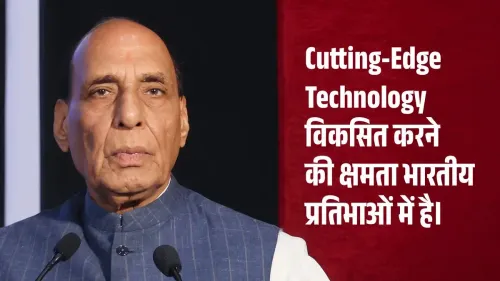
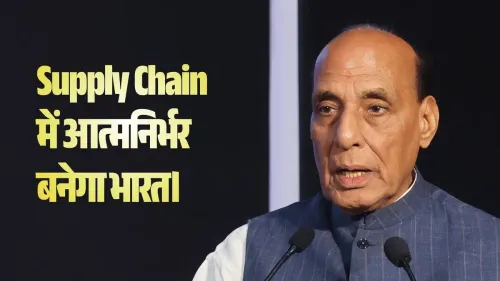
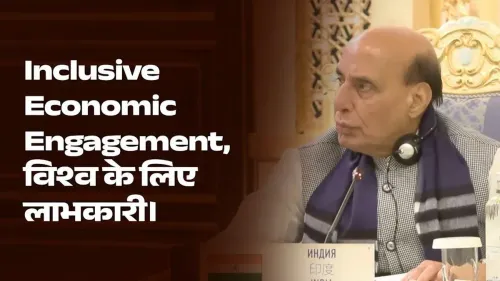
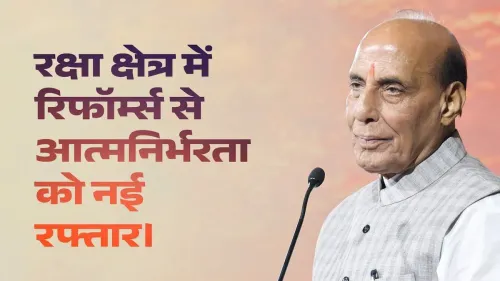
Defence Minister Rajnath Singh on 3 November 2026 declared that India's self-reliance goal must go beyond manufacturing to achieve full Technological Sovereignty, calling for an integrated R&D ecosystem uniting DRDO, private industry, academia, start-ups and the Armed Forces.
Key Takeaways
Rajnath Singh defined the new benchmark as 'Technological Sovereignty' — the capacity to design, develop and sustain critical defence technologies independently.
He called for a unified R&D ecosystem bringing together DRDO , private industry, academia, start-ups and the Armed Forces .
The statement builds on the Atmanirbhar Bharat Abhiyan (launched May 2020 ) and the Defence Acquisition Procedure 2020 , which prioritised indigenous development over imports.
DRDO was established in 1958 as India's primary military R&D agency; the new push explicitly expands the base beyond DRDO to include private and academic actors.
The Minister framed external dependence in critical technologies as a strategic vulnerability, not merely an economic one.
Upcoming defence expos and budget allocations will be the next key tests of how this vision translates into concrete commitments.
Mere manufacturing is not enough — Union Defence Minister Rajnath Singh raised the ambition significantly on Tuesday, 3 November 2026, arguing that India's self-reliance mission must culminate in nothing less than full Technological Sovereignty: the ability to design, develop and sustain critical defence technologies entirely on home soil.
Beyond the factory floor: what 'Technological Sovereignty' demands
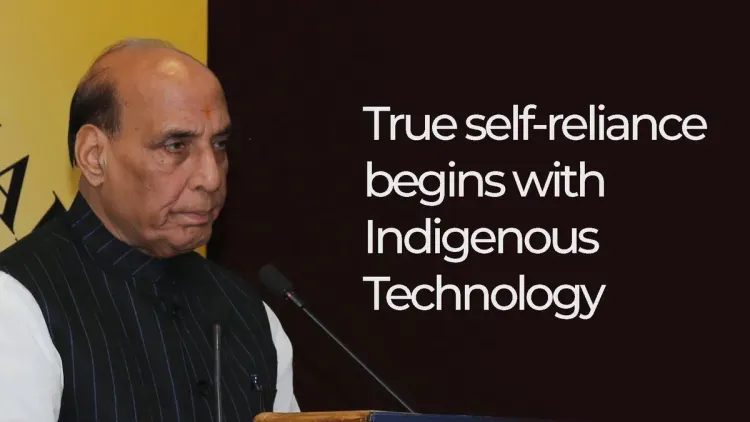
Singh's message drew a sharp line between assembling hardware and owning the intellectual bedrock behind it. 'Self-reliance is not just about manufacturing in India; it is about achieving Technological Sovereignty,' he wrote, calling on India to 'move beyond external dependence and build the capability to design, develop and sustain its own critical defence technologies.' The distinction matters enormously: a country can manufacture under licence and still remain hostage to a foreign licensor's political decisions, supply chains, and upgrade cycles. True sovereignty means holding the source code, the metallurgy, the propulsion science — not just the assembly line.
The five-pillar ecosystem Singh is pointing to
At the centre of Singh's prescription is a unified R&D ecosystem that fuses five actors who have historically operated in silos: DRDO (the Defence Research and Development Organisation, established in 1958 as India's primary military R&D body), private industry, academia, defence start-ups, and the Armed Forces themselves. The explicit inclusion of start-ups and academia alongside the legacy defence-industrial base signals an acknowledgement that cutting-edge capability — in areas such as AI, drones, cyber and advanced materials — increasingly originates outside traditional government labs.
From Atmanirbhar Bharat to the sovereignty threshold
India's defence indigenisation push has deep roots but a sharply accelerated recent history. The Atmanirbhar Bharat Abhiyan, launched in May 2020, placed defence at the forefront of the self-reliance agenda, introducing successive positive indigenisation lists that bar outright imports of hundreds of weapons systems, pushing procurement toward domestically produced alternatives. The Defence Acquisition Procedure 2020 further entrenched the preference for indigenous design and development over direct foreign purchase. Singh's framing on Tuesday suggests the government views those measures as necessary but not sufficient — the next frontier is sovereign mastery of the underlying technology, not just localised production of existing foreign designs.
Why the timing of this push carries strategic weight
Global supply-chain fractures, export-control regimes, and the weaponisation of technology access by great powers have made the case for self-sufficiency in critical systems more urgent than at any point since India's post-1962 defence modernisation push. Nations that cannot independently sustain their own platforms in wartime face a decisive vulnerability. Singh's call positions India's defence R&D agenda not as an industrial-policy talking point but as a matter of strategic survival — a message calibrated as much for domestic industry and academia as for adversaries and partners watching India's capability trajectory.
The proof will arrive in budget lines, DRDO project milestones, and the platforms that debut at upcoming defence showcases. For now, the Minister has set the bar: not 'Made in India,' but 'Mastered in India.'
Point of View
Accelerated by global supply-chain disruptions, where dependence on foreign technology is increasingly treated as a security liability rather than a procurement convenience. By explicitly naming start-ups and academia alongside DRDO, Singh is also signalling institutional frustration with the pace of legacy R&D delivery and an appetite for a more distributed innovation model. The political subtext is clear: Atmanirbhar Bharat needs a second act, and it runs through laboratories and IP registries, not just factory floors.
NationPress
3 Nov 2026
Frequently Asked Questions
What does Rajnath Singh mean by 'Technological Sovereignty' in defence?
Rajnath Singh defines Technological Sovereignty as India's ability to independently design, develop and sustain its own critical defence technologies — going beyond simply assembling or manufacturing weapons under foreign licence to actually owning the underlying science and engineering.
What is the difference between 'Make in India' and technological sovereignty in defence?
Manufacturing in India can still depend on foreign designs, components and intellectual property. Technological sovereignty means India controls the full development chain — from concept and design through to sustainment — eliminating vulnerability to export controls or licence revocations by foreign suppliers.
What is DRDO and what role does it play in India's defence R&D?
The Defence Research and Development Organisation (DRDO) was established in 1958 and is India's primary government agency for military research and development, responsible for developing weapons, electronics, and supporting technologies for the Armed Forces.
How does Atmanirbhar Bharat relate to defence indigenisation?
Atmanirbhar Bharat Abhiyan, launched in May 2020, placed defence self-reliance at its core, introducing positive indigenisation lists that prohibit direct imports of hundreds of defence systems and encouraging domestic production through the Defence Acquisition Procedure 2020.
Why are defence start-ups important to India's military R&D ambitions?
Defence start-ups bring agility and cutting-edge expertise in emerging areas like artificial intelligence, drones, and cyber technologies that traditional government labs may develop more slowly. Rajnath Singh's call to include them in the R&D ecosystem reflects a push to broaden and accelerate India's innovation base beyond DRDO.