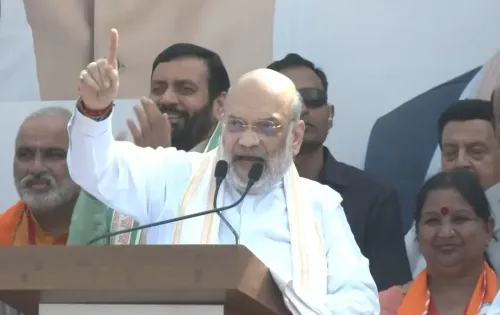
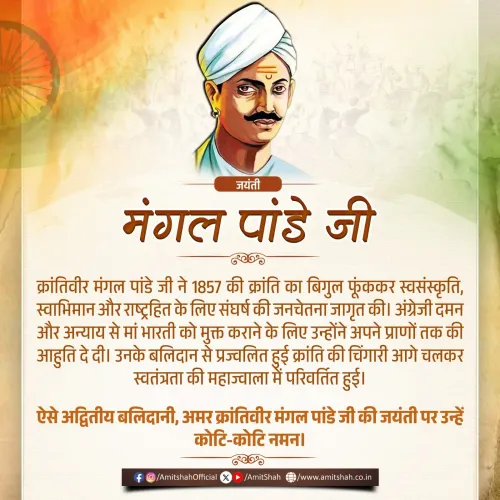
Amit Shah honours Ambala's 1857 uprising on X
Synopsis
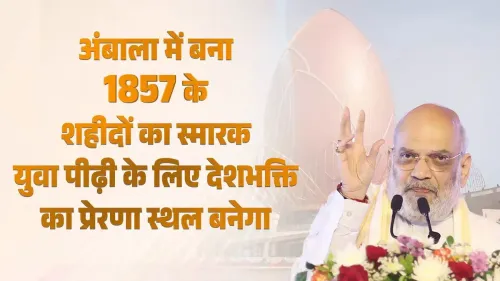
Union Home Minister Amit Shah posted a tribute on X honouring revolutionaries who he said sounded the bugle of armed resistance in Ambala on 10 May 1857, declaring their spark shook the foundations of British rule across the entire country.
Key Takeaways
Union Home Minister Amit Shah posted a tribute on 5 November 2026 honouring the 1857 revolutionaries of Ambala .
Shah specifically cited 10 May 1857 as the date armed revolution was ignited on Ambala's soil.
The post invokes the Indian Rebellion of 1857 , widely called the First War of Independence against the East India Company.
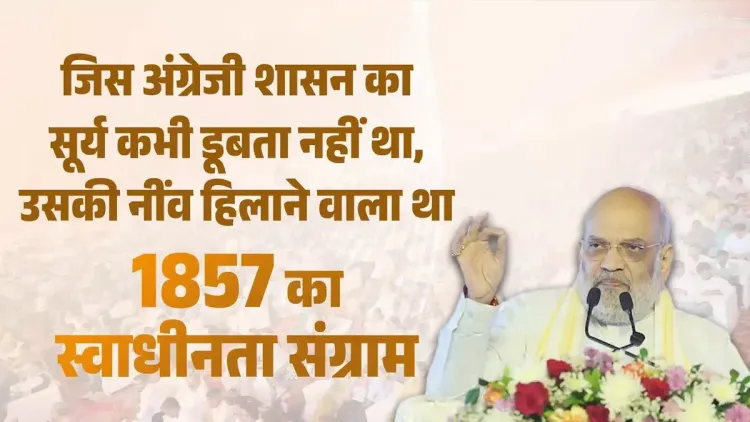
Shah used the empire's own phrase — 'the sun never sets' — to frame how profoundly the revolt shook British rule.
The tribute fits a broader pattern of senior BJP leaders highlighting regional contributions to pre-20th century anti-colonial resistance.
A spark lit in Ambala on 10 May 1857 — that is the image Union Home Minister Amit Shah invoked on 5 November 2026, paying tribute to the revolutionaries who fired the opening salvo of armed resistance against British rule on that soil, shaking an empire that once boasted the sun never set on its flag.
Shah wrote on X: 'Ambala ki bhoomi par 10 May 1857 ko krantiveeron ne sashastra kranti ka bigul phoonka tha, aur yeh chingari poore desh mein failkar us Angrezi shasan ki neev hila gayi jiska surya kabhi doobta nahin tha.' ('On the soil of Ambala, on 10 May 1857, revolutionaries sounded the bugle of armed revolution, and this spark, spreading across the entire country, shook the foundations of that British rule whose sun was said never to set.')
Ambala's place in the 1857 revolt
The Indian Rebellion of 1857 is widely recognised as the First War of Independence — a seismic uprising against the East India Company that began in May of that year and convulsed the subcontinent for more than a year. Shah's tribute specifically anchors the revolution's armed beginning to Ambala, Haryana, framing the city as the ground zero of a chain reaction that eventually challenged the most powerful colonial power of the 19th century. The metaphor he reaches for — the sun that never sets — deliberately turns the empire's own boast into an emblem of its vulnerability.
A consistent BJP pattern of honouring pre-20th century resistance
Shah's post fits a well-established cadence among senior BJP leaders of marking episodes from the 1857 revolt to foreground regional contributions to the independence struggle. The framing serves a dual purpose: it widens the national memory of anti-colonial resistance beyond the more familiar early-20th century movements, and it roots that memory in specific geography — a district, a date, a deed. Posts like this frequently precede or accompany state-level commemorations, and Haryana remains a politically significant state where such historical recognition carries weight.
For the people of Ambala, the tribute is a reminder that their city's name is written into one of history's great turning-point stories — the moment a spark became a conflagration that an empire could not extinguish.
Point of View
Stretching it back to 1857 and anchoring it in specific regional soil rather than leaving it centred on the 20th-century nationalist movement alone. By naming Ambala and a precise date, he converts a broad historical narrative into a local pride point — particularly resonant in electorally important Haryana. The 'sun never sets' inversion is rhetorically sharp: it turns colonial triumphalism into evidence of colonial fragility. Such posts consistently reinforce the BJP's positioning as the custodian of a long and heroic civilisational resistance.
NationPress
6 Nov 2026
Frequently Asked Questions
What happened in Ambala on 10 May 1857?
According to Union Home Minister Amit Shah's tribute post, revolutionaries in Ambala sounded the bugle of armed revolution on 10 May 1857, a spark that he says spread across the country and shook the foundations of British rule. The Indian Rebellion of 1857, broadly known as the First War of Independence, began in May of that year against East India Company rule.
Why did Amit Shah post about 1857?
Amit Shah posted on X on 5 November 2026 to pay tribute to the revolutionaries of Ambala and their role in the 1857 armed uprising. Senior BJP leaders regularly mark episodes from the 1857 revolt to highlight regional contributions to India's independence struggle.
What is the Indian Rebellion of 1857?
The Indian Rebellion of 1857 is widely recognised as the First War of Independence — a major armed uprising against the East India Company that began in May 1857 and spread across much of the subcontinent, fundamentally challenging British colonial rule.
What is Ambala's historical significance?
Ambala is a city in Haryana associated, as per Amit Shah's post, with the outbreak of armed resistance during the 1857 revolt. Shah's tribute frames it as the ground from which a revolutionary spark spread across the entire country.
What does 'the sun never sets on the British Empire' mean?
It was a famous boast about the British Empire's global reach — that it spanned so many time zones that sunlight always fell on some part of its territory. Amit Shah uses the phrase in his tribute to underscore how thoroughly the 1857 revolutionaries challenged even this seemingly invincible power.