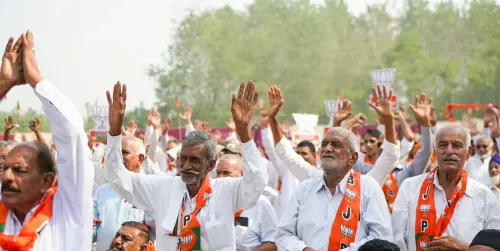
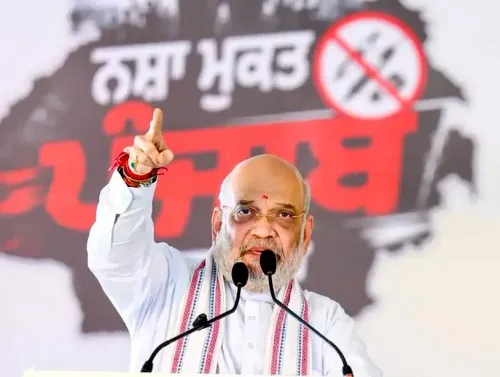
Amit Shah contrasts Haryana MSP buys with Punjab farmer protests
Synopsis
Home Minister Amit Shah sharpened BJP's Punjab pitch on 5 November 2026, contrasting ongoing farmer protests over MSP in AAP-ruled Punjab with Haryana BJP government's claimed procurement of 24 crops at minimum support price, arguing only a BJP government can resolve Punjab farmers' demands.
Key Takeaways
Union Home Minister Amit Shah posted on 5 November 2026 contrasting MSP delivery in BJP-ruled Haryana with ongoing farmer protests in AAP-ruled Punjab.
Shah claimed Haryana's BJP government procures 24 crops at MSP — NationPress could not independently verify this figure from established public records.
Punjab farmers have demanded a statutory legal guarantee for MSP since the farm-law agitations of 2020–21 ; the demand remains unresolved.
The Centre formed a committee to examine MSP reforms after repealing the three farm laws in November 2021 , but no statutory MSP framework has been legislated.
Shah explicitly called for a BJP government in Punjab , signalling active positioning ahead of the state's 2027 assembly elections .
The post follows a consistent BJP strategy of pairing opposition-ruled and BJP-ruled states to build governance-based electoral arguments.
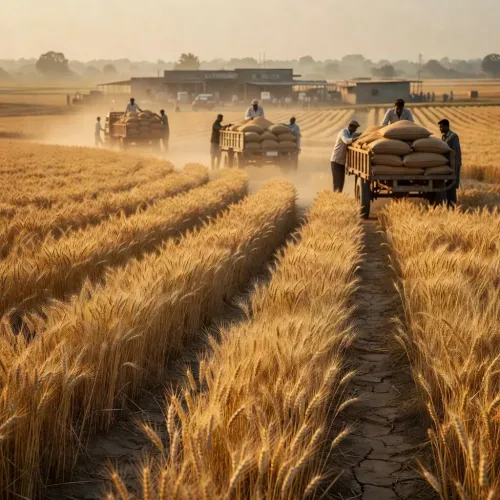
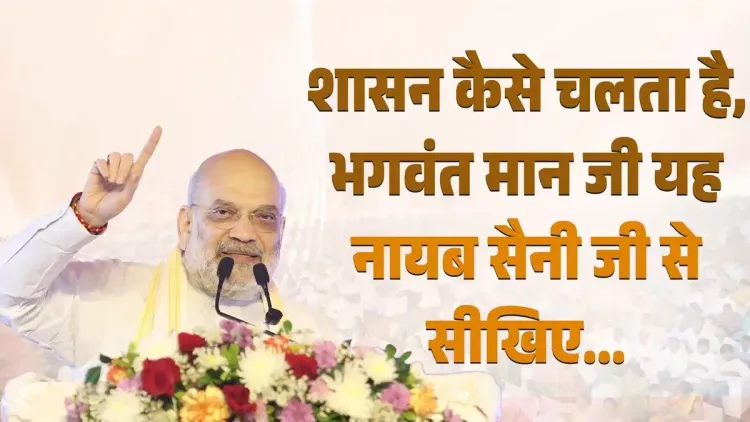
While Punjab farmers remain on protest sites demanding a legal guarantee for Minimum Support Price, their counterparts across the border in Haryana are already selling crops to the government at MSP — and Union Home Minister Amit Shah wants voters to draw the obvious conclusion. On Thursday, 5 November 2026, Shah posted a sharp political contrast on X, pointing to what he called the only path to Punjab's progress.
In his post, Shah wrote: 'Punjab ke kisaan aaj bhi MSP ki maang par dharne par baithe hain, waheen Haryana ki BJP sarkar 24 faslon ki kharid MSP par kar rahi hai.' — 'Punjab's farmers are still sitting on protests demanding MSP, while Haryana's BJP government is procuring 24 crops at MSP. There is only one way for Punjab's progress... a BJP government must be formed there too.'
The MSP fault-line between two farming states
The Minimum Support Price mechanism guarantees farmers a floor price at which government agencies will buy their produce. It sits at the heart of Indian agricultural politics — and nowhere more so than in Punjab, whose farmers led the prolonged agitations of 2020–21 against the Centre's three farm laws, eventually forcing their repeal in November 2021. The central demand that outlasted those protests was a statutory, legally enforceable MSP — a demand that remains unmet.
Haryana, meanwhile, has moved in a different direction. The BJP-governed state has expanded its MSP-based procurement operations across a wider basket of crops, a model the party has consistently held up as a template. Shah's post leans directly on that contrast: same geography, same crop types, different political outcomes.
A BJP playbook for Punjab
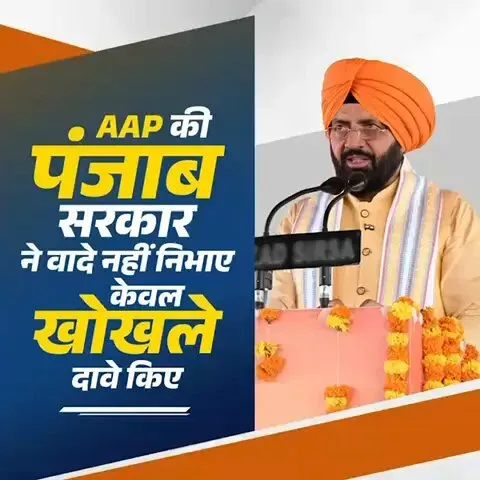
The rhetorical structure of Shah's post follows a well-worn BJP pattern — place two neighbouring states side by side, one ruled by the opposition and one by the BJP, and let the governance gap make the electoral argument. Punjab is currently governed by the Aam Aadmi Party, which came to power in a landslide in February 2022. The next Punjab assembly election is due in 2027, and the BJP — historically a minor force in the state — has been working to position itself as a credible alternative, particularly among the farming community that forms the backbone of Punjab's electorate.
The post is also a pointed reminder that the Centre constituted a committee to examine MSP reforms following the repeal of the farm laws, but no statutory framework has emerged from it. By framing Haryana's procurement expansion as proof of BJP intent, Shah shifts the burden of delivery back onto state governance rather than central legislation.
What the Haryana model actually claims
Shah's post specifically cites procurement of 24 crops at MSP in Haryana — a figure that NationPress cannot independently verify from established public records as of this date. What is on record is that BJP-ruled states have progressively widened their procurement lists in the years following the farm-law repeal, and Haryana has featured prominently in party communications on this front. The Centre's own MSP list covers 23 kharif, rabi, and commercial crops, making Haryana's claimed 24-crop procurement a marginal but symbolically significant one-up.
For Punjab's farmers, the question is whether a change in state government would translate into the kind of procurement expansion Shah describes — or whether the deeper demand for a legal MSP guarantee requires central action that no state government alone can deliver.
The comparison is set. The election clock is ticking. Punjab's farmers are watching both sides for answers.
Point of View
The BJP sidesteps the unresolved demand for a statutory MSP guarantee while still claiming farmer-welfare credibility. With Punjab elections due in 2027 and the AAP government under sustained pressure on agricultural and economic issues, this kind of targeted narrative — MSP in Haryana, protests in Punjab — is precisely the message the BJP needs to amplify among a farming electorate it has historically struggled to reach. The unresolved committee on MSP reform, however, remains a vulnerability the opposition will likely press.
NationPress
6 Nov 2026
Frequently Asked Questions
What did Amit Shah say about MSP and Punjab farmers?
On 5 November 2026, Amit Shah posted that Punjab farmers are still protesting for MSP while Haryana's BJP government is already procuring crops at MSP, and argued that only a BJP government in Punjab can deliver the same for Punjab's farmers.
How many crops does Haryana procure at MSP according to Amit Shah?
Shah's post claims Haryana's BJP government procures 24 crops at MSP, though NationPress could not independently verify this specific figure from established public records.
Why are Punjab farmers still protesting for MSP?
Punjab farmers have been demanding a statutory legal guarantee for Minimum Support Price since the agitations of 2020–21. While the Centre repealed the three farm laws in November 2021, no law guaranteeing MSP has been passed since.
What is MSP and why is it important for farmers?
Minimum Support Price (MSP) is a floor price set by the government at which its agencies buy crops from farmers, protecting them from market price crashes. Farmers — especially in Punjab and Haryana — want this price guaranteed by law so it cannot be bypassed.
When is the next Punjab assembly election?
The next Punjab assembly election is due in 2027. The state is currently governed by the Aam Aadmi Party, which won a landslide in February 2022.