Amit Shah: ₹594 Cr Ambala Memorial to Inspire Youth
Synopsis
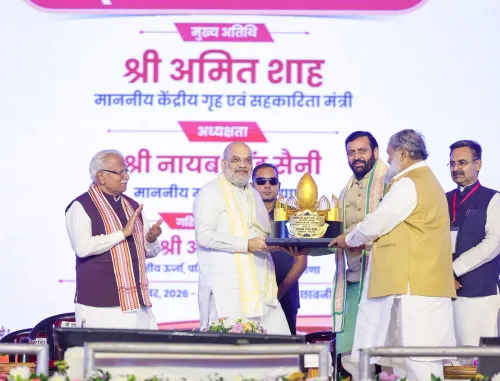
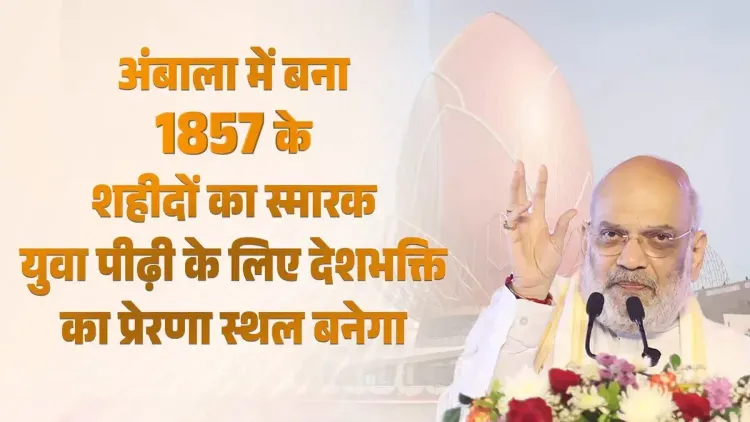
Union Home Minister Amit Shah has announced a ₹594 crore, 22-acre memorial in Ambala dedicated to the martyrs of the 1857 revolt, calling it a patriotic inspiration site for India's youth — part of a wider national push to memorialise the First War of Independence.
Key Takeaways
A 22-acre memorial honouring the martyrs of the 1857 revolt has been built in Ambala, Haryana , at a cost of ₹594 crore .
Union Home Minister Amit Shah described it as a site of patriotic inspiration for India's youth nationwide.
Ambala was an early flashpoint of the 1857 uprising, making it a historically significant choice of location.
The project aligns with the Azadi Ka Amrit Mahotsav programme launched in 2021 to develop 1857-related heritage sites across India.
Official inauguration details and any linked curriculum or tourism initiatives are yet to be announced.
A sprawling 22-acre memorial honouring the martyrs of the 1857 uprising now stands in Ambala, Haryana — built at a cost of ₹594 crore and designed, according to Union Home Minister Amit Shah, to become a living source of patriotic inspiration for the country's next generation.
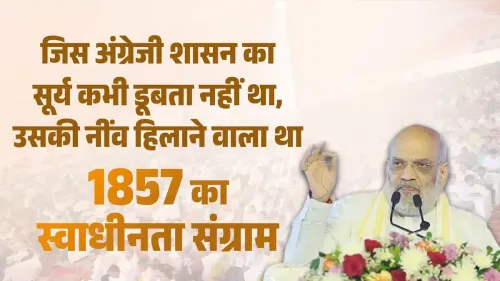
Shah, posting on Thursday, November 5, 2026, declared that the memorial will serve as 'deशभक्ति का प्रेरणा स्थल' — a 'site of inspiration for patriotism' — for youth across India. The post comes as the government doubles down on commemorating the revolt that official narratives have long called the First War of Independence.
Why Ambala: A City Written Into 1857's Story
Ambala is no arbitrary choice. The city's military cantonment was among the earliest flashpoints of the 1857 revolt, making it one of the most historically resonant sites for a memorial of this scale. The choice of location anchors the project in authentic geography rather than symbolic convenience.
At 22 acres, the complex is large enough to function not just as a monument but as an immersive civic destination — the kind of place school curricula and state tourism boards can build programmes around.
Azadi Ka Amrit Mahotsav and the Politics of Memory
The project fits squarely within a broader national programme launched in 2021 under the Azadi Ka Amrit Mahotsav initiative, which marked 75 years of Indian independence by channelling funds into 1857-site development across multiple states. Central and state governments have consistently used such memorials to frame the revolt as the founding act of modern Indian nationalism.
The pattern is deliberate: invest in physical infrastructure that makes history tactile — something a student can walk through, not merely read about. At ₹594 crore, the Ambala project is one of the most significant single-site investments in this category.
The Youth Mandate Shah Is Staking This On
Shah's framing is explicitly generational. The memorial is not pitched as a heritage site for historians — it is pitched as a destination for 'the youth of the entire country,' 'देशभर की युवा पीढ़ी.' That language signals an intent to link the site to school visits, curriculum modules, and potentially tourism incentives targeting young Indians.
What those accompanying initiatives look like in practice — whether official inauguration announcements, education-board partnerships, or tourism campaigns follow — will determine whether the ₹594-crore investment translates into the generational impact Shah is promising.
Ambala's newest landmark is built. Now comes the harder task: filling it with the next generation of Indians who will decide what 1857 means to them.
Point of View
' the Home Ministry is signalling that the site is meant to function as a soft-power tool, with school visits and state tourism as the delivery mechanism. The Azadi Ka Amrit Mahotsav programme gave this drive institutional momentum from 2021; Ambala now becomes its most prominent physical expression. Whether the project catalyses a genuine curriculum shift or remains largely ceremonial will be the real test of its stated generational ambition.
NationPress
6 Nov 2026
Frequently Asked Questions
Where is the 1857 martyrs memorial built in Ambala?
The memorial is located in Ambala, Haryana , a city whose military cantonment was one of the earliest sites of action during the 1857 revolt. The complex spans 22 acres .
How much did the Ambala 1857 memorial cost to build?
According to Union Home Minister Amit Shah , the memorial was built at a cost of ₹594 crore .
What is the Azadi Ka Amrit Mahotsav programme?
Azadi Ka Amrit Mahotsav is a national programme launched in 2021 to mark 75 years of Indian independence , under which the central and state governments funded the development of multiple sites linked to the 1857 revolt and other independence-era events.
Why is Ambala significant to the 1857 uprising?
Ambala was one of the earliest flashpoints of the 1857 revolt against British rule, with its military cantonment playing a notable role — making it a historically resonant location for a memorial of this scale.
What did Amit Shah say about the Ambala memorial?
Shah stated that the memorial will become a 'site of patriotic inspiration' — deशभक्ति का प्रेरणा स्थल — for the youth of the entire country, emphasising its generational significance.