Karnataka CM's Office announces ₹5,000 drought relief for farmers
Synopsis
The Chief Minister's Office of Karnataka announced a ₹5,000 drought relief package for farmers on 7 November 2026, with the first instalment of ₹2,500 being transferred directly into farmers' bank accounts to support those who suffered crop losses due to monsoon failure.
Key Takeaways
The Karnataka government has declared a ₹5,000 drought relief package for farmers whose crops failed due to poor monsoon rains.
The first instalment of ₹2,500 is being credited directly into farmers' bank accounts via direct benefit transfer.
The announcement was made by the Chief Minister's Office of Karnataka on 7 November 2026 .
Karnataka has a history of similar direct-transfer drought relief packages, including interventions in 2019 and 2023 .
The state's large rain-fed farming population makes it recurrently vulnerable to crop losses during erratic monsoon years.
Details on total beneficiary numbers, taluk-wise coverage, and the second instalment timeline are yet to be officially notified.
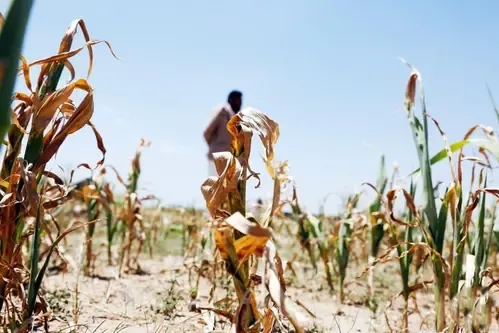
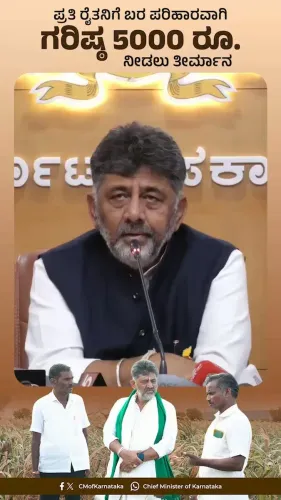
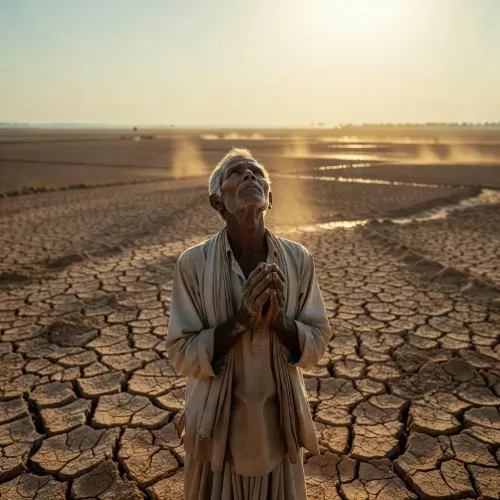
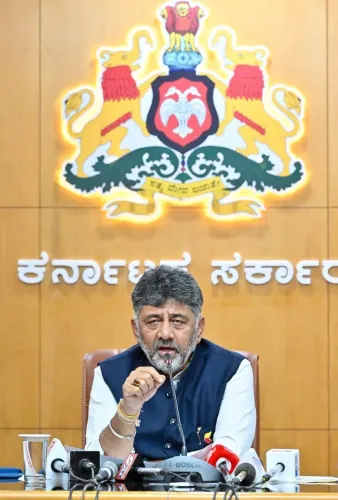
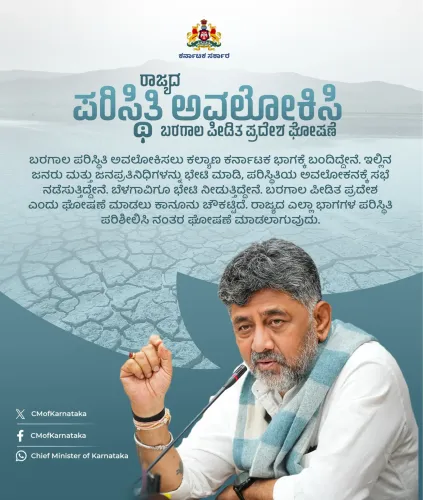
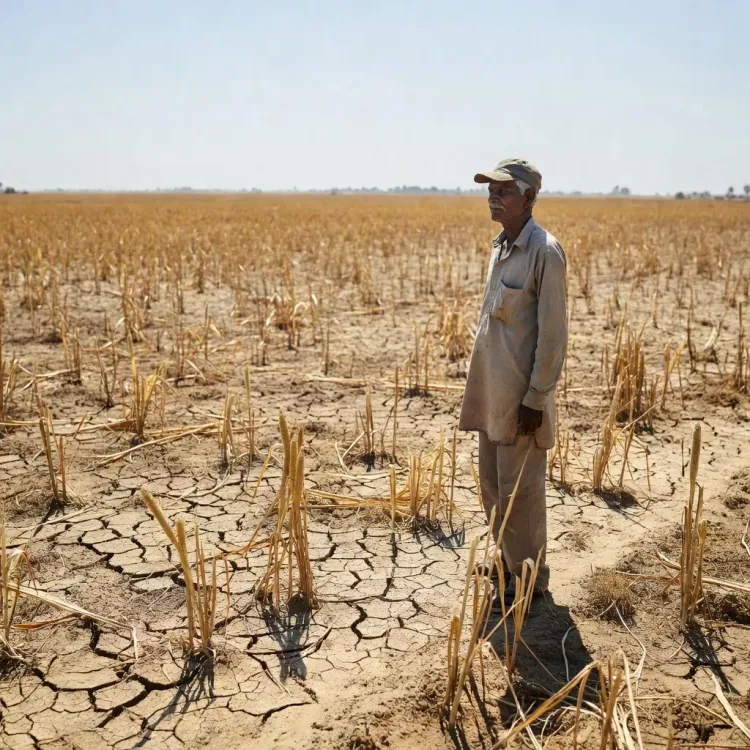
When the monsoon fails and crops wither in the field, the Karnataka government wants to make sure the farmer's livelihood does not wither with them. The Chief Minister's Office of Karnataka announced on Saturday, 7 November 2026 that a drought relief package of ₹5,000 per farmer has been declared, with the first instalment of ₹2,500 being credited directly into beneficiaries' bank accounts.
The post, written in Kannada, states: 'ರೈತರ ಹಿತವೇ ಆದ್ಯತೆ, ಸಂಕಷ್ಟದಲ್ಲಿ ಸರ್ಕಾರದ ಆಸರೆ' — 'Farmers' welfare is the priority; the government's support in times of hardship.' The message frames the relief as a commitment: even if crops fail, the state's hand must not slip from the farmer's shoulder.
Direct bank transfer as the delivery mechanism
The government is routing the first instalment of ₹2,500 directly into farmers' accounts, bypassing intermediaries. This direct benefit transfer model has become Karnataka's preferred tool for agricultural welfare, ensuring that cash reaches drought-hit cultivators without administrative leakage. A second instalment — bringing the total to ₹5,000 — is implied, with disbursement details awaited.
The state's announcement reflects a recurring pattern: erratic monsoon behaviour in Karnataka's rain-fed districts regularly triggers crop losses, forcing successive administrations to intervene with emergency cash support. Similar relief packages were announced in 2019 and 2023, each time using direct transfers as the cornerstone of delivery.
Karnataka's monsoon vulnerability and the politics of farmer welfare
Karnataka has one of India's most monsoon-dependent farming populations. A large share of the state's cultivated area relies on rainfall rather than irrigation, making crop cycles acutely vulnerable to deficit or delayed rains. When the rains fail, the economic distress ripples fast — from the farm household to the local mandi to the broader rural economy.
State-level drought packages like this one operate independently of central government schemes, underscoring the Karnataka government's direct accountability to its agrarian base. The official messaging — invoking the Kannada word annadaata (the one who gives food, used to honour farmers) — signals that this is as much a political commitment as a fiscal one.
The numbers that matter most — how many farmers are covered, which taluks qualify, and when the second instalment flows — will determine whether this relief package lands as promised or remains a headline. Those details are what drought-hit farmers across Karnataka will be watching for next.
Point of View
000 drought relief announcement fits squarely into the state's established pattern of using direct benefit transfers as a political and administrative lifeline for its rain-dependent farming communities. By emphasising the annadaata framing and routing cash directly to accounts, the government is signalling both fiscal responsiveness and distrust of intermediary-heavy disbursement systems. The move also reflects a broader trend of state governments filling welfare gaps that central agricultural insurance schemes have not fully plugged. The real test will come with the second instalment and transparent disclosure of beneficiary counts — the gap between announcement and delivery has historically defined whether such packages shift rural sentiment.
NationPress
7 Nov 2026
Frequently Asked Questions
How much drought relief will Karnataka farmers receive in 2026?
Karnataka has announced a drought relief package of ₹5,000 per farmer , disbursed in two instalments. The first instalment of ₹2,500 is currently being credited directly into farmers' bank accounts.
How will the Karnataka drought relief money be distributed to farmers?
The Karnataka government is using a direct benefit transfer mechanism, crediting the amount straight into farmers' registered bank accounts without intermediaries.
Which farmers are eligible for Karnataka's drought relief 2026?
The relief targets farmers who suffered crop losses due to monsoon failure in Karnataka. Official notifications on specific taluk-wise coverage and eligibility criteria are awaited.
When will the second instalment of Karnataka's drought relief be paid?
The Karnataka government has not yet announced a specific date for the second instalment of ₹2,500 . Disbursement timelines and beneficiary details are expected to be notified through official government channels.
Has Karnataka announced drought relief for farmers before?
Yes. Karnataka has a history of announcing similar direct cash transfer drought relief packages , with comparable interventions recorded in 2019 and 2023 during periods of significant crop distress.