MP Cabinet Approves Uniform Civil Code 2026 Under CM Mohan Yadav
Synopsis
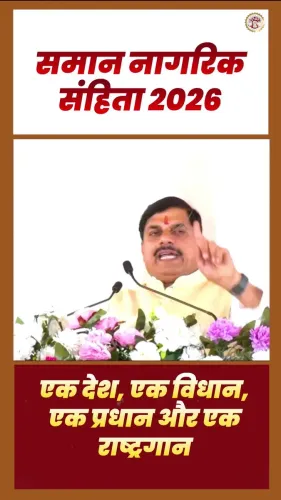
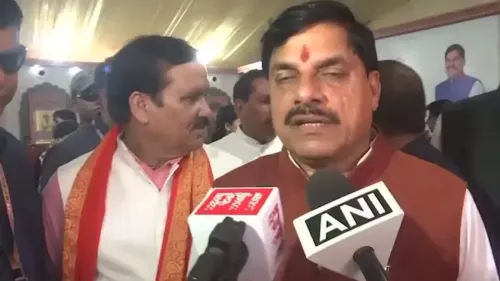
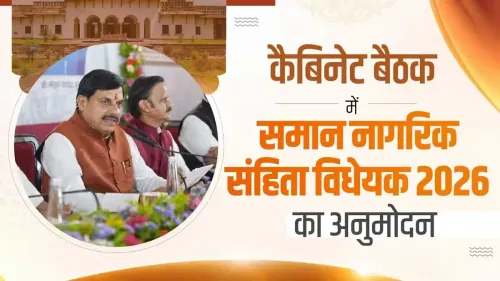
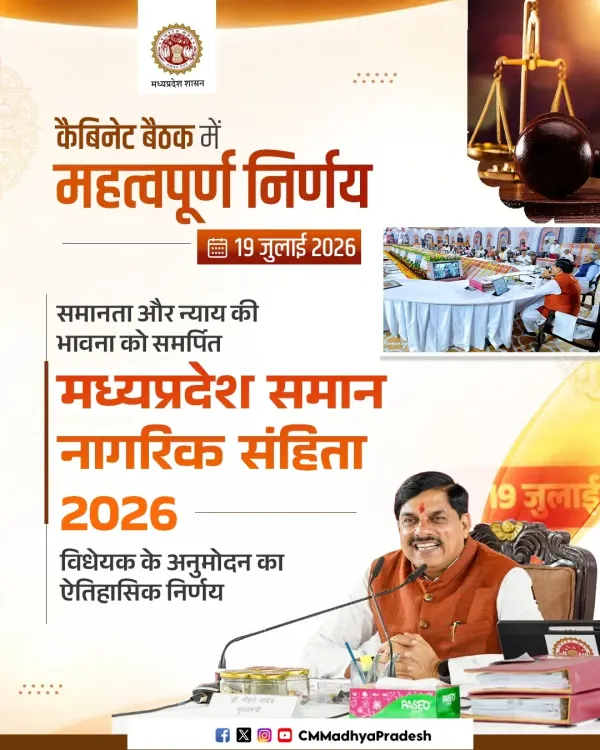
The Madhya Pradesh cabinet chaired by Chief Minister Dr. Mohan Yadav approved the 'Madhya Pradesh Uniform Civil Code-2026' at a meeting in Jagdishpur, Bhopal, on 19 July 2026, making MP the latest BJP-governed state to advance UCC legislation.
Key Takeaways
The Madhya Pradesh cabinet approved the Madhya Pradesh Uniform Civil Code-2026 at a meeting on 19 July 2026 .
The meeting was chaired by Chief Minister Dr.
Mohan Yadav and held at Jagdishpur, Bhopal .
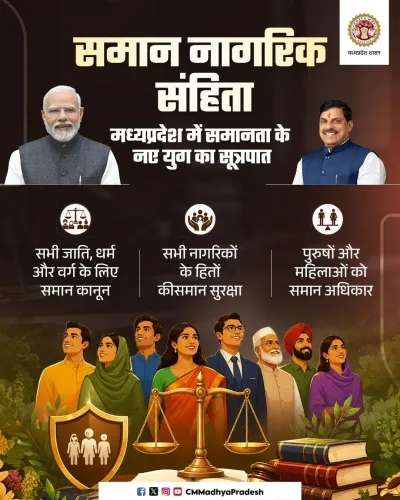
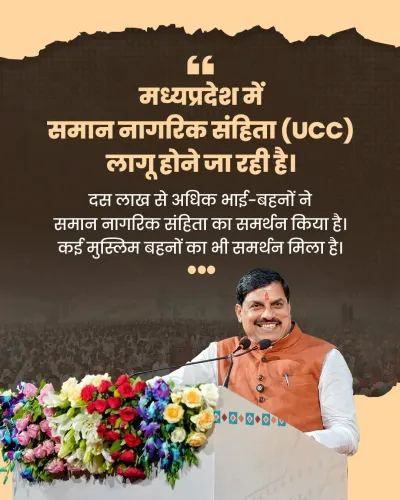
The UCC aims to replace religion-specific personal laws on marriage, divorce, inheritance, and adoption with a single code for all citizens.
Article 44 of the Indian Constitution has directed the State to pursue a Uniform Civil Code since 1950 ; Uttarakhand was the first state to legislate a new UCC.
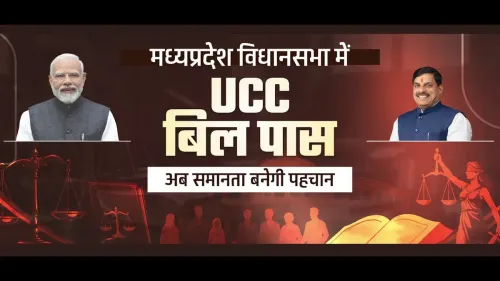
The draft code must now be passed by the Madhya Pradesh Legislative Assembly to become law.
Specific provisions of the 2026 code and the assembly timetable are yet to be made public.
The Chief Minister's Office of Madhya Pradesh announced on Sunday, 19 July 2026 that the state cabinet, meeting under Chief Minister Dr. Mohan Yadav at Jagdishpur, Bhopal, approved the Madhya Pradesh Samaan Nagrik Sanhita-2026 (Madhya Pradesh Uniform Civil Code-2026) along with several other significant decisions.
Context
The cabinet meeting, chaired by Dr. Mohan Yadav, cleared the 'Madhya Pradesh Uniform Civil Code-2026' — a state-level legal framework intended to replace religion-specific personal laws governing marriage, divorce, inheritance, and adoption with a single, uniform code applicable to all citizens of the state. The announcement was made via the official @CMMadhyaPradesh handle, confirming cabinet-level approval as the formal first step in the legislative process.
The post stated that the meeting at Jagdishpur in Bhopal also took several other important decisions, though specific details of those decisions were not enumerated in the official communication.
Policy Backdrop
Article 44 of the Indian Constitution, a Directive Principle of State Policy since 1950, directs the State to endeavour to secure a Uniform Civil Code for all citizens. Goa has historically been the only Indian state to operate under a common civil code, a legacy of Portuguese rule retained after its integration into India in 1961.
The Bharatiya Janata Party (BJP) has included UCC implementation in its national election manifestos from 2014 onward. Uttarakhand became the first state in independent India to legislate a new UCC, setting a precedent that multiple BJP-governed states have since sought to follow. Madhya Pradesh's cabinet approval places it within this broader pattern of state-driven legal reform.
Dr. Mohan Yadav has led the BJP government in Madhya Pradesh since December 2023, following the party's decisive victory in the state assembly elections that year.
Stakeholders and Impact
The proposed code, if enacted by the state legislature, would directly affect women and members of all religious communities in Madhya Pradesh in matters of personal civil law. Proponents argue the code advances gender-neutral provisions and reduces religion-based differentiation in civil matters.
Madhya Pradesh has a population of over 8.5 crore, making it one of India's most populous states. The scope of any uniform code would extend to all communities residing within the state, irrespective of faith.
What's Next
Cabinet approval is the executive green light; the draft legislation must now be introduced and passed in the Madhya Pradesh Legislative Assembly before it acquires the force of law. Legal scrutiny and potential constitutional challenges before the courts are widely anticipated once the bill's specific provisions become public.
The details of the draft code — including its provisions on marriage age, divorce grounds, inheritance rights, and adoption norms — will be closely watched by legal experts, civil society groups, and religious bodies across the state and the country. The Madhya Pradesh UCC's passage through the assembly could further accelerate similar legislative moves in other BJP-governed states.
Point of View
Signalling that the BJP's long-standing constitutional commitment on personal law reform is now moving from manifesto pledge to state statute. Following Uttarakhand's precedent, MP's move adds legislative momentum to a strategy of building UCC adoption state by state, creating pressure on both the central government and opposition-ruled states. The approval also hands the ruling party a potent electoral narrative ahead of future assembly cycles, framing the UCC as a governance deliverable rather than merely an ideological aspiration. Legal scrutiny of the bill's specific provisions will determine whether the code withstands constitutional challenge and sets a durable national template.
NationPress
18 Oct 2026
Frequently Asked Questions
What is the Madhya Pradesh Uniform Civil Code 2026?
The Madhya Pradesh Uniform Civil Code-2026 is a state-level legal framework approved by the MP cabinet on 19 July 2026 that proposes to replace religion-based personal laws on marriage, divorce, inheritance, and adoption with a single code applicable to all citizens of the state.
Who approved the MP Uniform Civil Code?
The Madhya Pradesh cabinet, chaired by Chief Minister Dr. Mohan Yadav, approved the code at a meeting held in Jagdishpur, Bhopal, on 19 July 2026.
Is Madhya Pradesh the first state to implement UCC?
No. Goa has operated under a common civil code since Portuguese rule, and Uttarakhand became the first state in independent India to legislate a new Uniform Civil Code. Madhya Pradesh's cabinet approval is the latest step in a broader trend among BJP-governed states.
What happens after MP cabinet approves the UCC?
Cabinet approval is the executive stage. The draft legislation must next be introduced and passed by the Madhya Pradesh Legislative Assembly before it becomes law, after which it may also face legal challenges in the courts.
What does the UCC mean for people in Madhya Pradesh?
If enacted, the code would apply uniform rules on marriage, divorce, inheritance, and adoption to all residents of Madhya Pradesh regardless of their religion, replacing the current system where different communities are governed by different personal laws.