MP Assembly Passes Uniform Civil Code Bill 2026
Synopsis
The Madhya Pradesh Legislative Assembly passed the 'Madhya Pradesh Saman Nagrik Sanhita, 2026' on 21 July 2026, making it one of the first major states to enact a Uniform Civil Code covering marriage, divorce, inheritance and adoption for all citizens regardless of religion.
Key Takeaways
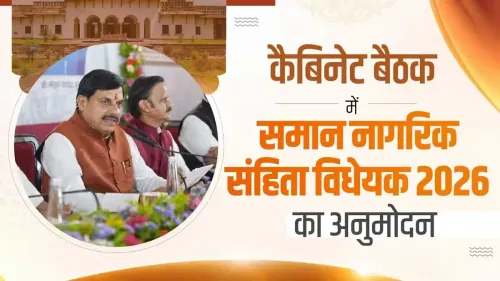
The Madhya Pradesh Legislative Assembly passed the 'Madhya Pradesh Saman Nagrik Sanhita, 2026' (UCC bill) on 21 July 2026 .
The bill establishes a common civil code on marriage, divorce, inheritance, and adoption for all citizens of the state, irrespective of religion.
The legislation was passed under Chief Minister Dr.
Mohan Yadav and announced by the official Chief Minister's Office account.
Article 44 of the Constitution has directed states to pursue a uniform civil code since 1950 ; this bill is among the most concrete state-level implementations.
The bill must receive the Governor's assent before it becomes law, and is expected to face constitutional challenges in court.
Religious communities and tribal groups in Madhya Pradesh have raised concerns about the impact on faith-based and customary personal laws.
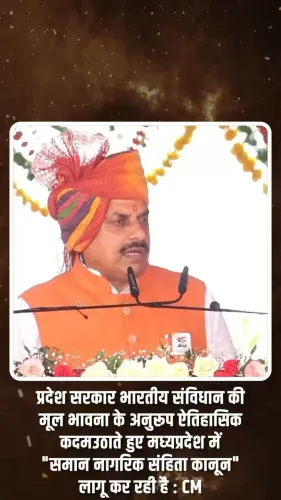
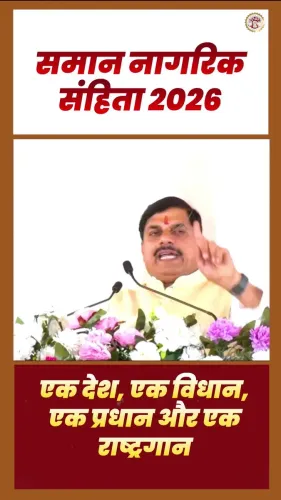
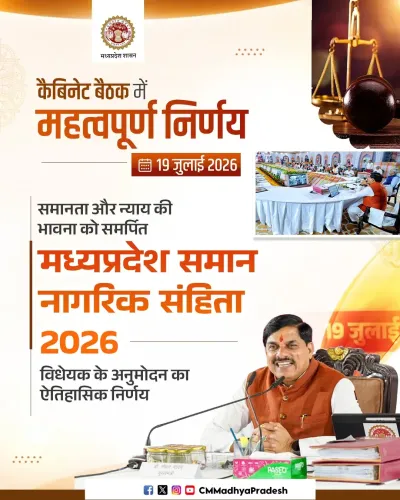
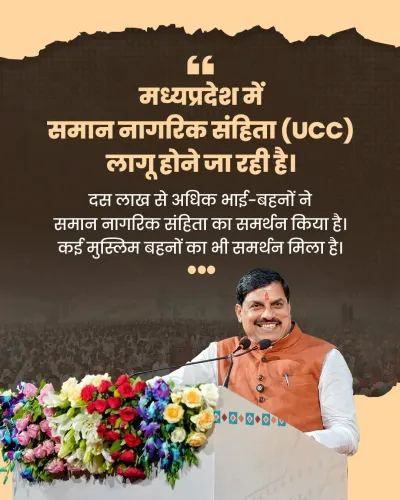
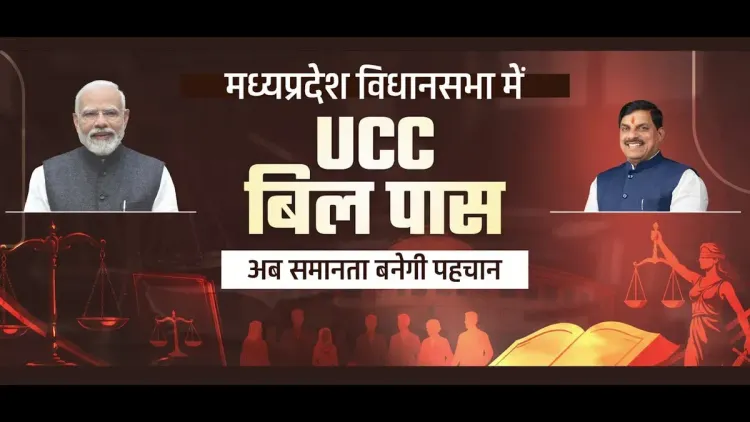
The Chief Minister's Office of Madhya Pradesh announced on Tuesday, 21 July 2026, that the Madhya Pradesh Legislative Assembly has passed the 'Madhya Pradesh Saman Nagrik Sanhita, 2026' — the state's Uniform Civil Code (UCC) bill — marking a landmark shift in the state's civil law framework.
The official post declared: 'Ab samanata banegi pehchaan' ('Now equality will become identity'), signalling the government's framing of the legislation as a milestone in equal citizenship. The bill was passed under the leadership of Chief Minister Dr. Mohan Yadav, whose office tagged the Ministry of Home Affairs and the Ministry of Home Department in the announcement.
Context
The Madhya Pradesh Saman Nagrik Sanhita, 2026 seeks to establish a common civil code governing personal matters — including marriage, divorce, inheritance, and adoption — applicable to all citizens of the state irrespective of their religion or community. The passage of the bill is among the most consequential legislative actions taken by the Mohan Yadav government since it assumed office. The announcement was made through the official @CMMadhyaPradesh handle and carries the authority of the Chief Minister's Office, making it an official communication of the Government of Madhya Pradesh.Policy Backdrop
Article 44 of the Indian Constitution (1950) places a Uniform Civil Code among the Directive Principles of State Policy, directing the state to 'endeavour to secure for citizens a uniform civil code throughout the territory of India.' The provision has remained aspirational at the national level for over seven decades. The BJP's national manifesto of 2019 explicitly committed the party to implementing a Uniform Civil Code, making its legislative pursuit a long-standing political priority. Madhya Pradesh, governed by the BJP, now joins a broader pattern of saffron-governed states advancing UCC-related legislation to replace religion-based personal laws with a common statutory framework. Uttarakhand had earlier enacted its own Uniform Civil Code, becoming the first state to do so after independence. The Madhya Pradesh bill follows that precedent and reflects the national momentum building around the issue within BJP-ruled states.Stakeholders and Impact
The legislation is expected to affect a wide cross-section of society. Women's rights groups have broadly welcomed UCC frameworks as instruments of gender equality, particularly in matters of divorce rights, inheritance, and maintenance that have historically varied across religious personal laws. Religious communities — particularly Muslim, Christian, and tribal groups — have raised concerns about the potential overriding of faith-based personal law traditions. Tribal organisations in Madhya Pradesh, a state with a significant Scheduled Tribe population, have previously flagged apprehensions about the impact of a uniform code on customary practices. The bill's passage will now require implementation rules to be framed, and legal experts anticipate that constitutional challenges may be filed before the Madhya Pradesh High Court or the Supreme Court of India.What's Next
With the bill passed in the assembly, it will proceed for the Governor's assent before it can be notified as law. The state government will subsequently need to frame detailed rules for implementation across its administrative machinery. All eyes will be on whether the legislation survives judicial scrutiny, as courts will be called upon to adjudicate questions of the state legislature's competence, the rights of religious minorities, and the protection of tribal customary law. The outcome in Madhya Pradesh could set a significant precedent for other states considering similar legislation, and intensify the national debate on whether a central UCC should follow.Point of View
While simultaneously drawing a sharper line between BJP-governed states and the opposition. The real test, however, will come in the courts, where the bill's provisions on tribal customary law and minority personal law are likely to face their most rigorous scrutiny.
NationPress
20 Oct 2026
Frequently Asked Questions
What is the Madhya Pradesh Uniform Civil Code bill 2026?
The 'Madhya Pradesh Saman Nagrik Sanhita, 2026' is a state law passed by the MP Legislative Assembly that establishes common civil rules on marriage, divorce, inheritance, and adoption for all citizens of Madhya Pradesh, regardless of their religion.
When was the MP UCC bill passed?
The Madhya Pradesh Legislative Assembly passed the UCC bill on 21 July 2026 , as announced by the Chief Minister's Office.
Who introduced the Madhya Pradesh UCC bill?
The bill was introduced and steered through the assembly by the government of Chief Minister Dr. Mohan Yadav of the BJP.
Does the UCC apply to tribal communities in Madhya Pradesh?
This is a key point of concern. Tribal organisations in Madhya Pradesh have raised apprehensions about whether the UCC would override their customary personal law practices. The exact provisions and any exemptions will become clearer once the implementation rules are framed.
What happens after the MP UCC bill is passed in the assembly?
The bill must now receive the assent of the Governor of Madhya Pradesh to become law. The state government will then frame implementation rules, and the legislation is expected to face constitutional challenges before higher courts.