MP CM Mohan Yadav Hails UCC Bill-2026 Passage in Assembly
Synopsis
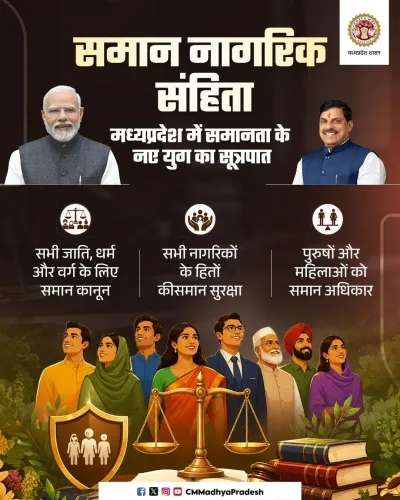
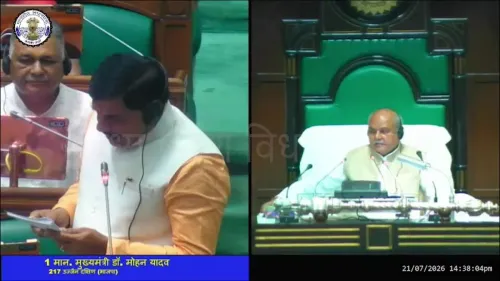
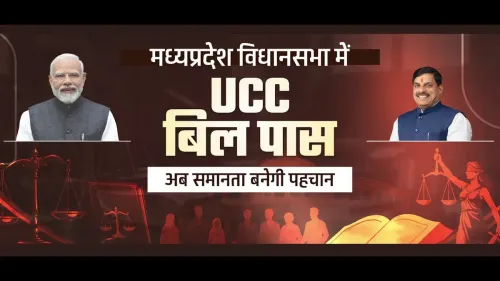
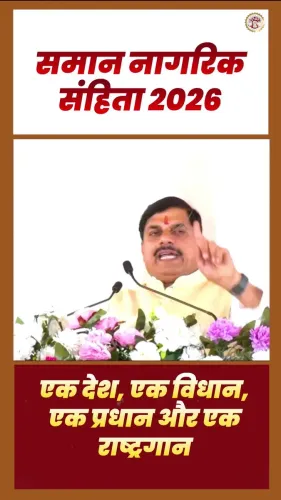
Madhya Pradesh Chief Minister Dr. Mohan Yadav announced on 23 July 2026 that the state assembly has passed the Uniform Civil Code Bill-2026, describing it as a landmark step toward equal rights and social harmony for all citizens of the state.
Key Takeaways
Madhya Pradesh Chief Minister Dr.
Mohan Yadav announced the passage of the Uniform Civil Code Bill-2026 (UCC) in the state assembly on 23 July 2026 .
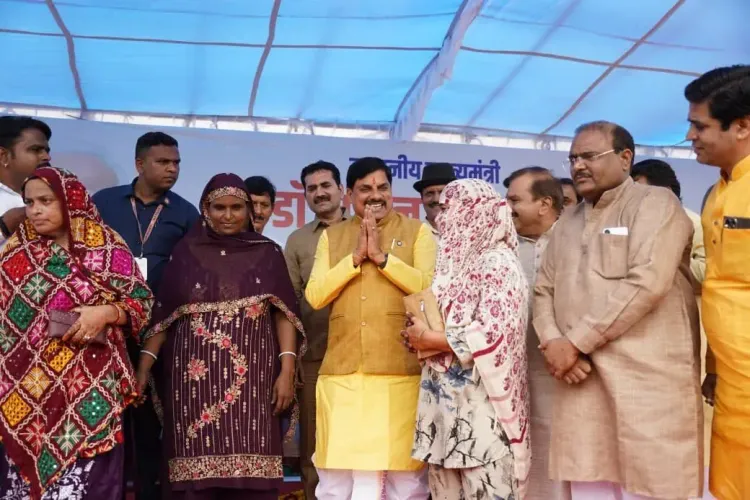
The announcement was made during a visit to Indore , the state's largest city, where the CM also thanked citizens for their public support.
The UCC is rooted in Article 44 of the Indian Constitution and seeks uniform personal laws across all religious communities.
Uttarakhand was the first Indian state to enact a UCC law, in February 2024 , setting a precedent that Madhya Pradesh now follows.
The BJP has committed to the UCC in its national manifestos of 2014 , 2019 , and 2024 .
Legal challenges and detailed provisions of the bill are expected to emerge in the coming weeks.
Madhya Pradesh Chief Minister Dr. Mohan Yadav on Thursday, 23 July 2026, expressed gratitude to citizens of Indore for their warm reception and declared that the passage of the Uniform Civil Code Bill-2026 (UCC) in the state assembly has opened the path to equal justice for all residents of the state.
Context
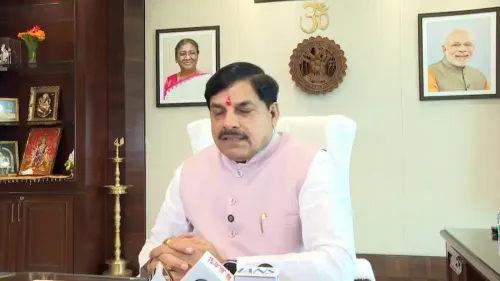
Posting on X during his visit to Indore — the state's largest city and its commercial capital — Dr. Yadav said, 'Aaj Indore aagaman par nagarikon se mile sneh ke prati hridaya se aabhar vyakt karta hoon' ('I express heartfelt gratitude for the affection received from citizens on my arrival in Indore today'). He added that the assembly's passage of the UCC Bill-2026 has 'paved the way for equal justice for all in the state.' The post was accompanied by two images from the visit.
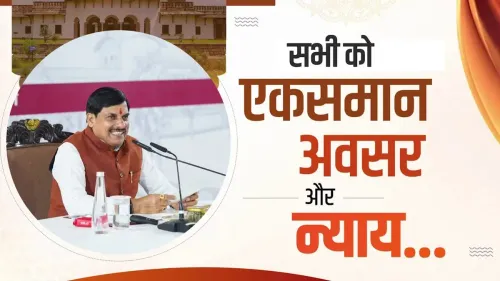
The Chief Minister framed the development as a milestone in his government's commitment to providing 'equal rights and equal opportunities to every citizen of Madhya Pradesh,' describing the state as now moving toward 'a new chapter of development alongside social harmony.'
Policy Backdrop
The Uniform Civil Code draws its constitutional basis from Article 44 of the Indian Constitution, a Directive Principle of State Policy that calls for a uniform set of personal laws governing marriage, divorce, inheritance, and adoption across all religious communities. The BJP has included the UCC as a commitment in its national manifestos of 2014, 2019, and 2024.
Uttarakhand became the first state in India to enact a UCC law in February 2024, setting a legislative precedent for other BJP-governed states. Madhya Pradesh's reported assembly action with the UCC Bill-2026 represents the next significant step in this sequence of incremental state-level reforms, ahead of any potential national legislation.
Stakeholders and Impact
The bill, if enacted into law, would affect Madhya Pradesh's entire population across religious communities, standardising personal law provisions on matters such as marriage, divorce, and succession. Women's rights advocates have broadly supported the UCC principle as a path to gender-equal legal protections that transcend religion-specific personal laws.
However, several Muslim community bodies and some minority rights groups have historically raised concerns about the UCC potentially overriding established religious practices. Legal experts anticipate the bill could face scrutiny in the courts over questions of legislative competence and fundamental rights.
What's Next
The detailed provisions of the UCC Bill-2026 — including its scope, exemptions, and implementation timeline — are expected to be published and debated in the coming days. Legal challenges before the Madhya Pradesh High Court or the Supreme Court of India remain a distinct possibility, following the pattern seen after Uttarakhand's enactment.
Political observers will also watch whether other BJP-governed states accelerate their own UCC legislative efforts in response, and whether Parliament uses the state-level momentum to revive debate on a national uniform civil code. For Dr. Mohan Yadav, the bill's passage marks a significant political moment ahead of future electoral cycles in Madhya Pradesh.
Point of View
' the party seeks to shift the political narrative from religious identity to constitutional equality. Madhya Pradesh's move, following Uttarakhand's 2024 enactment, suggests a coordinated legislative push across BJP-governed states that could intensify pressure on the central government to act at the national level. The coming legal and political contestation over the bill's provisions will be a critical test of how far state-level UCC frameworks can advance before judicial scrutiny intervenes.
NationPress
21 Oct 2026
Frequently Asked Questions
What is the Uniform Civil Code Bill-2026 passed in Madhya Pradesh?
The Uniform Civil Code Bill-2026 is a legislation passed by the Madhya Pradesh state assembly that seeks to establish a single set of personal laws — covering marriage, divorce, inheritance, and adoption — applicable equally to all citizens of the state regardless of religion.
Which was the first Indian state to pass a Uniform Civil Code law?
Uttarakhand was the first Indian state to enact a Uniform Civil Code law, doing so in February 2024. Madhya Pradesh's UCC Bill-2026 follows that precedent.
What did CM Mohan Yadav say about the UCC Bill passage?
CM Dr. Mohan Yadav said the passage of the UCC Bill-2026 in the assembly has 'paved the way for equal justice for all in the state' and reaffirmed his government's resolve to provide equal rights and equal opportunities to every citizen of Madhya Pradesh.
What is Article 44 of the Indian Constitution?
Article 44 is a Directive Principle of State Policy in the Indian Constitution that directs the state to endeavour to secure a Uniform Civil Code for all citizens, covering personal matters such as marriage, divorce, and inheritance across all religious communities.
Will the Madhya Pradesh UCC Bill face legal challenges?
Legal experts widely anticipate that the UCC Bill-2026 could face challenges in the Madhya Pradesh High Court or the Supreme Court of India, particularly on questions of legislative competence and fundamental rights, following patterns seen after similar legislation in other states.