CM Mohan Yadav: UCC Bill to ensure equal rights for all MP citizens
Synopsis
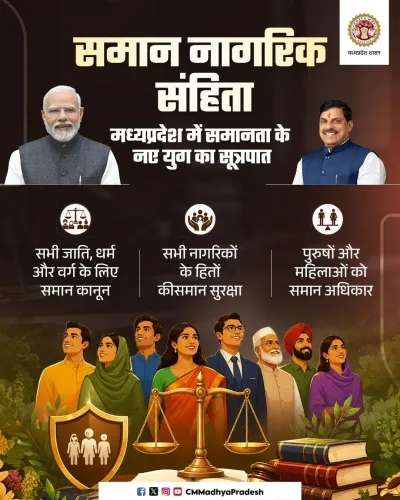
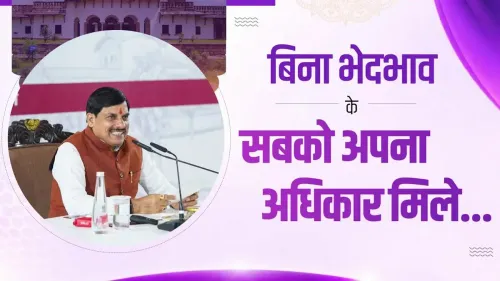
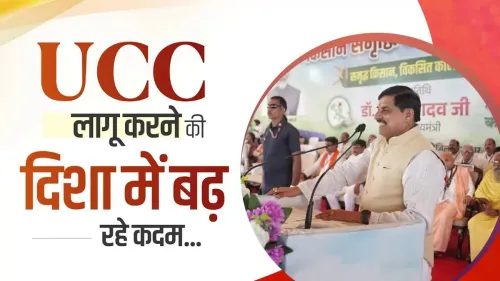
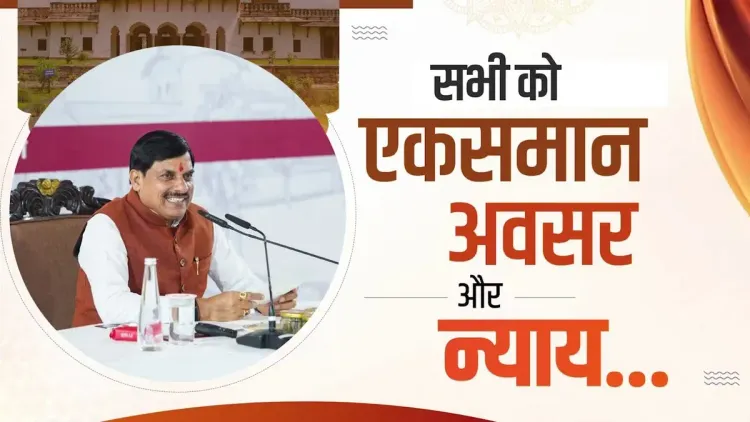
Chief Minister Dr. Mohan Yadav has declared that the Uniform Civil Code Bill will deliver equal justice, rights, and opportunities to all citizens of Madhya Pradesh, advancing a key BJP policy priority rooted in Article 44 of the Constitution.
Key Takeaways
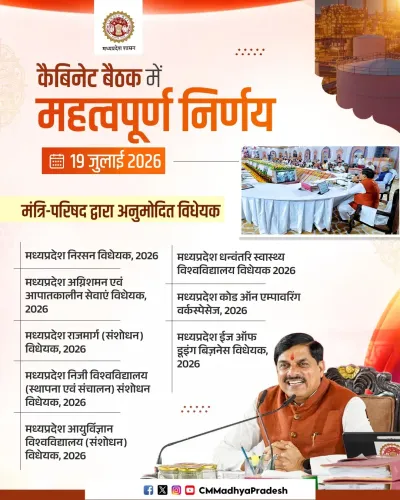
Mohan Yadav declared on 19 July 2026 that the Uniform Civil Code Bill will ensure equal justice, rights, and opportunities for all Madhya Pradesh citizens.
The UCC proposes unified civil laws on marriage, divorce, inheritance, and adoption applicable to all residents regardless of religion.
Article 44 of the Indian Constitution directs the State to secure a Uniform Civil Code, providing the constitutional basis for the legislation.
The BJP has committed to enacting a UCC in its national manifestos since 2014 ; Madhya Pradesh is advancing this agenda at the state level.
Women and all residents of Madhya Pradesh are the primary stakeholders, with the bill aimed at eliminating legal disparities in personal matters.
The bill's next milestone is its tabling and debate in the Madhya Pradesh Legislative Assembly .
The Chief Minister's Office of Madhya Pradesh announced on Sunday, 19 July 2026 that Chief Minister Dr. Mohan Yadav has stated the Uniform Civil Code (UCC) Bill will guarantee equal justice, rights, and opportunities to every citizen of the state, irrespective of religion or community.
Context
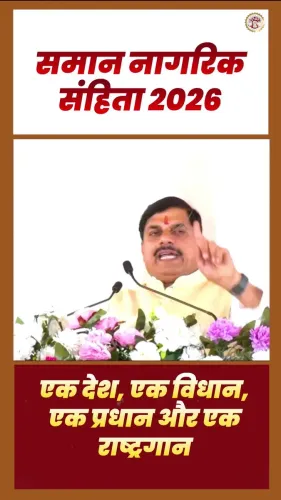
Speaking in the context of the UCC Bill, CM Dr. Mohan Yadav declared: 'Samaan Nagarik Sanhita Vidheyak ke madhyam se pradesh ke sabhi nagarikon ko nyay, adhikar aur avsar saman roop se uplabdh honge' — meaning, 'Through the Uniform Civil Code Bill, justice, rights, and opportunities will be made equally available to all citizens of the state.' The statement was shared by the official Chief Minister's Office, Madhya Pradesh account on X (formerly Twitter), accompanied by a video.
The UCC proposes a single, unified set of civil laws governing personal matters — including marriage, divorce, inheritance, and adoption — applicable uniformly to all citizens regardless of their religious affiliation.
Policy Backdrop
Article 44 of the Indian Constitution (1950) places a Uniform Civil Code among the Directive Principles of State Policy, directing the State to endeavour to secure such a code throughout India. The Bharatiya Janata Party (BJP) has included a commitment to enact a UCC in its national election manifestos since 2014, making it a long-standing party priority.
Madhya Pradesh, governed by the BJP under CM Dr. Mohan Yadav since the 2023 assembly elections, is among the states advancing legislative steps in line with this constitutional directive and party platform. Several other BJP-ruled states have similarly moved toward UCC frameworks at the state level, positioning the policy as a vehicle for equality before law in personal matters.
Stakeholders and Impact
The proposed legislation would affect all residents of Madhya Pradesh, with particular significance for women, who advocates argue stand to benefit most from uniform protections in matters of marriage, divorce, and inheritance. Proponents contend that a common civil code eliminates disparities that arise from religion-specific personal laws.
The Madhya Pradesh Cabinet — the state's apex executive decision-making body — is the institutional driver behind the bill's progression. Community groups, religious organisations, and civil society stakeholders are expected to closely follow the bill's provisions and legislative journey.
What's Next
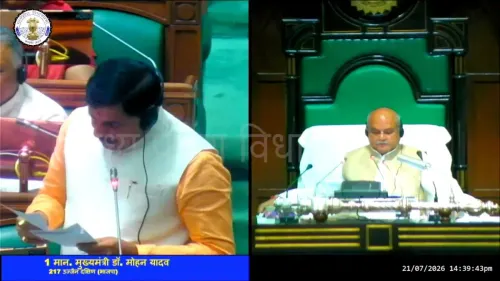
The immediate next step is the tabling and debate of the UCC Bill in the Madhya Pradesh Legislative Assembly. Lawmakers, legal experts, and citizens' groups will scrutinise the specific provisions governing personal law matters once the bill's text is formally placed before the House.
Any rules, implementation framework, or timeline for enforcement that the state government announces following legislative debate will determine how swiftly the code takes effect on the ground. Madhya Pradesh's legislative experience with the UCC could serve as a reference point for other states weighing similar measures.
Point of View
A deliberate rhetorical choice that shifts the conversation from religious identity to constitutional rights. This mirrors the broader BJP strategy of presenting the UCC as a fulfilment of the Directive Principles rather than a majoritarian project. Madhya Pradesh's legislative push, if it reaches the Assembly floor, would make it one of the first large Hindi-heartland states to formally debate a comprehensive UCC, adding significant political weight to the national discourse. The move also consolidates CM Mohan Yadav's positioning as an assertive implementer of the party's core agenda ahead of future electoral cycles.
NationPress
18 Oct 2026
Frequently Asked Questions
What is the Uniform Civil Code Bill in Madhya Pradesh?
The Uniform Civil Code Bill in Madhya Pradesh proposes a single set of civil laws covering marriage, divorce, inheritance, and adoption that would apply equally to all citizens of the state regardless of their religion or community.
What did CM Mohan Yadav say about the UCC Bill?
CM Dr. Mohan Yadav stated that through the Uniform Civil Code Bill, all citizens of Madhya Pradesh will receive equal justice, rights, and opportunities, as announced by the Chief Minister's Office on 19 July 2026.
Is a Uniform Civil Code constitutional in India?
Yes. Article 44 of the Indian Constitution places a Uniform Civil Code among the Directive Principles of State Policy, directing the State to endeavour to secure such a code throughout the country.
Which other states have implemented or proposed a UCC?
Several BJP-ruled states have advanced legislative steps toward a Uniform Civil Code, following constitutional directives and the party's manifesto commitments since 2014. Madhya Pradesh's move continues this pattern at the state level.
How will the UCC Bill affect women in Madhya Pradesh?
Women are among the key stakeholders, as a uniform code would provide consistent legal protections in matters of marriage, divorce, and inheritance, eliminating disparities that can arise under religion-specific personal laws.