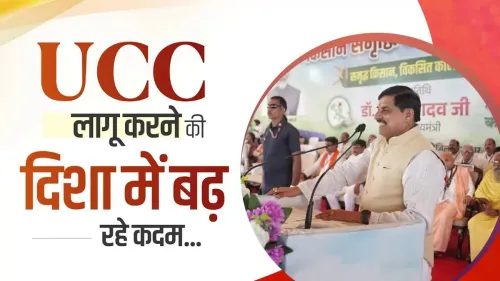
MP Cabinet Approves Uniform Civil Code Bill: CM Mohan Yadav
Synopsis
The Madhya Pradesh cabinet cleared the Uniform Civil Code Bill on 19 July 2026, with CM Dr. Mohan Yadav hailing it as a golden day for the state and a stride toward 'one nation, one law'. The bill now heads to the state assembly for passage.
Key Takeaways
The Madhya Pradesh Cabinet approved the Uniform Civil Code Bill on 19 July 2026 .
Mohan Yadav described the development as a 'golden day' for Madhya Pradesh and cited the 'one nation, one law' principle.
Several other public-interest bills were also approved at the same cabinet sitting.
The bill must now be introduced and passed in the Madhya Pradesh Legislative Assembly before it can become law.
Uttarakhand is the only other state to have passed a UCC law in the current political cycle; Goa remains the only state with a functioning common civil code.
Legal challenges before higher courts are widely expected once the bill progresses.
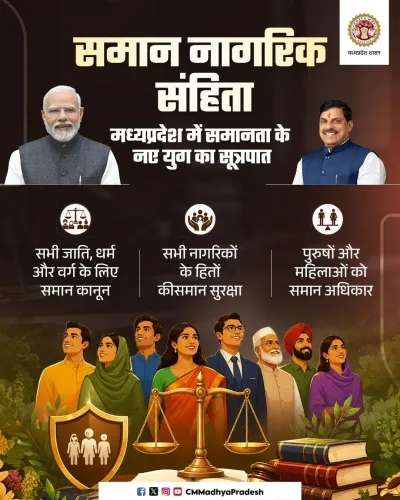
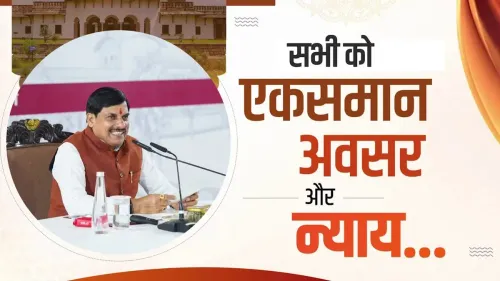
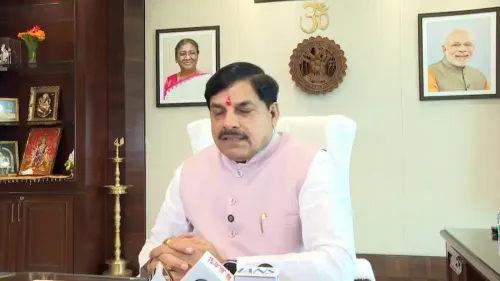
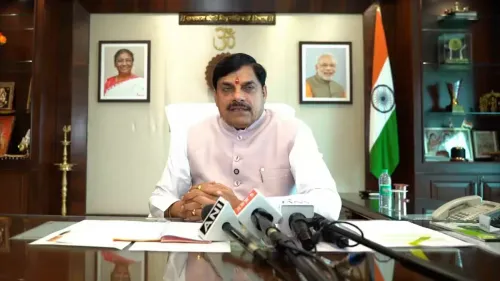
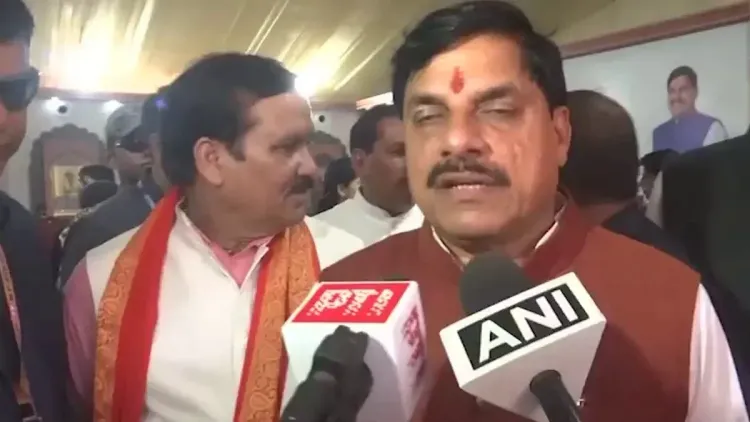
The Chief Minister's Office of Madhya Pradesh announced on Sunday, 19 July 2026 that the state cabinet has approved the Uniform Civil Code (UCC) Bill, calling it a golden day for the state. Chief Minister Dr. Mohan Yadav described the move as a significant step toward ensuring equal rights, justice, and opportunity for all citizens of Madhya Pradesh.
Posting on X, CM Dr. Mohan Yadav stated: 'आज मध्यप्रदेश के लिए एक स्वर्णिम दिन है' ('Today is a golden day for Madhya Pradesh'). He said the cabinet meeting approved the Uniform Civil Code Bill, along with several other public-interest bills. The Chief Minister added that the bill strengthens the spirit of 'एक देश, एक विधान' — 'one nation, one law'.
Context
The Uniform Civil Code refers to a common set of personal laws — governing matters such as marriage, divorce, inheritance, and adoption — applicable to all citizens regardless of religion. Article 44 of the Indian Constitution lists it as a directive principle, directing the state to endeavour toward its implementation. Goa remains the only Indian state with a functioning common civil code, inherited from Portuguese-era legislation.
The Madhya Pradesh Cabinet approved the bill at its meeting on 19 July 2026. Several other public-interest bills were also cleared at the same sitting, though the cabinet did not enumerate them in the announcement.
Policy Backdrop
The Bharatiya Janata Party (BJP) has carried the UCC as a central electoral commitment since its 2014 and 2019 national manifestos. Uttarakhand became the first state to pass a UCC law in the current political cycle, and similar deliberations have been under way in other BJP-governed states.
Madhya Pradesh, governed by the BJP, has aligned several legislative and policy initiatives with the broader national integration agenda championed by the party. The cabinet approval marks the conclusion of the drafting and executive-review stage; the bill must now be tabled in the Madhya Pradesh Legislative Assembly for debate and passage.
Stakeholders and Impact
A Uniform Civil Code, if enacted, would replace religion-specific personal law frameworks with a single statute applicable to all citizens of the state — cutting across Hindu, Muslim, Christian, and other communities. Women's rights groups have historically been among the strongest advocates for uniform personal laws, arguing they would eliminate discriminatory provisions in certain community-specific codes.
Religious community organisations and minority groups have in the past raised concerns about the impact on personal and cultural practices protected under existing laws. The bill's precise scope and provisions were not detailed in the cabinet announcement, and the full text has not been made public at this stage.
What's Next
The bill will now be placed before the Madhya Pradesh Legislative Assembly for introduction, debate, and a vote. Should it pass, the state government would then frame rules for implementation. Legal challenges before the Madhya Pradesh High Court or the Supreme Court of India are widely anticipated, given the constitutional and social dimensions of uniform personal law.
The development will be closely watched as a signal of how far BJP-governed states can advance the UCC agenda at the state level ahead of any potential central legislation, and as a test of the political and legal durability of state-level uniform civil codes in India's federal structure.
Point of View
And it signals that the party is operationalising a long-standing manifesto commitment at the state level rather than waiting for central legislation. For the BJP, state-level UCC laws serve a dual purpose: they advance the ideological 'one nation, one law' project and generate a political contrast with opposition-governed states ahead of assembly and general elections. The move will test whether a large, diverse state like Madhya Pradesh can navigate the legal and social complexity that a uniform personal law entails, particularly given the near-certainty of constitutional challenges. How the bill is drafted and debated in the assembly will determine whether it becomes a durable policy achievement or a prolonged courtroom contest.
NationPress
18 Oct 2026
Frequently Asked Questions
What is the Uniform Civil Code bill approved by Madhya Pradesh?
The Madhya Pradesh cabinet approved a Uniform Civil Code Bill on 19 July 2026, which proposes a single set of personal laws — covering marriage, divorce, inheritance, and adoption — applicable to all citizens of the state regardless of religion, in line with Article 44 of the Indian Constitution.
Which states in India have a Uniform Civil Code?
Goa is the only Indian state with a functioning common civil code, inherited from Portuguese-era law. Uttarakhand passed a UCC law in the current political cycle, and Madhya Pradesh's cabinet has now approved a bill that must still pass the state assembly.
What did CM Mohan Yadav say about the UCC bill?
CM Dr. Mohan Yadav called 19 July 2026 a 'golden day' for Madhya Pradesh, saying the bill strengthens the spirit of 'one nation, one law' and is an important step toward ensuring equal rights, justice, and opportunity for all citizens of the state.
What happens after the Madhya Pradesh cabinet approves the UCC bill?
After cabinet approval, the bill must be introduced and debated in the Madhya Pradesh Legislative Assembly. If passed, the government will frame implementation rules. Legal challenges before the High Court or Supreme Court are widely anticipated.
Does the Uniform Civil Code affect all religions?
Yes. A Uniform Civil Code replaces religion-specific personal law frameworks with a single statute applicable to all citizens — Hindu, Muslim, Christian, and others — on matters such as marriage, divorce, inheritance, and adoption.