Jal Shakti Minister Paatil hails GeM's 10-year digital leap
Synopsis
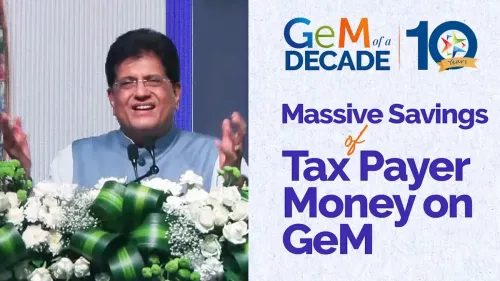
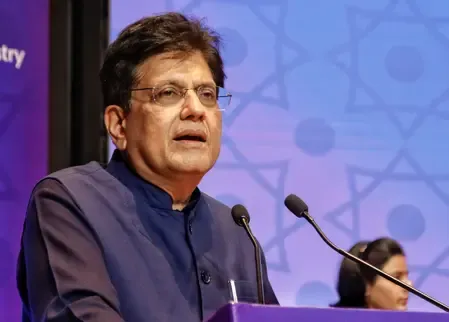
Union Jal Shakti Minister C. R. Paatil marked GeM's 10-year journey on 10 August 2026, crediting PM Modi's leadership for building a transparent, inclusive digital procurement platform that has expanded access for women-led, SC/ST, and MSME vendors across India.
Key Takeaways
GeM was launched in August 2016 to replace manual, paper-based government tendering with a single digital procurement window.
Paatil highlighted the growing participation of women-led and SC/ST enterprises as a defining achievement of the platform's first decade.
GeM is anchored in the broader Digital India (2015) and Atmanirbhar Bharat (2020) policy frameworks that link e-governance to domestic self-reliance.
Public procurement preferences for MSMEs, women, and SC/ST businesses have been progressively embedded in GeM's design since reforms dating to 2012–2014 .
Paatil invoked the BJP's 'Sabka Saath, Sabka Vikas, Sabka Vishwas' slogan to frame GeM's inclusion record as a political deliverable.
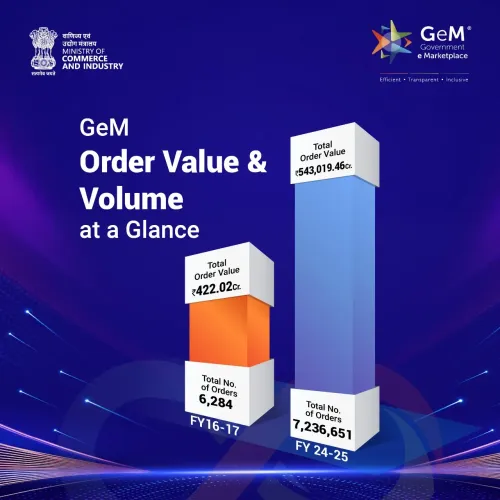
The platform's next credibility test lies in verified annual performance data on vendor registrations and order values for marginalised-community sellers.
Ten years after it quietly replaced reams of paper-based tenders, the Government e-Marketplace (GeM) is drawing fresh political salutes — and Union Jal Shakti Minister C. R. Paatil is among the loudest voices marking the milestone on 10 August 2026.
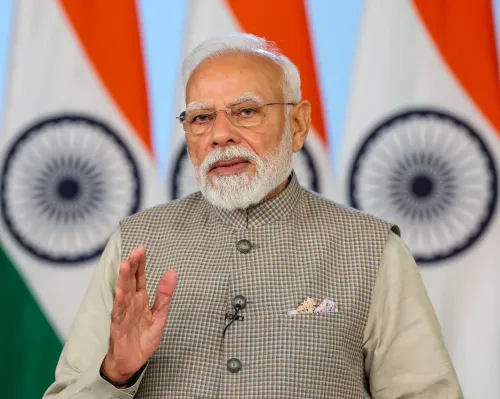
Paatil's post, written in Hindi, credits Prime Minister Narendra Modi's leadership for transforming GeM into what he calls not merely a digital platform but 'a powerful medium connecting small entrepreneurs to opportunity, dignity, and a wider market.' He singles out the growing participation of women-led enterprises and SC/ST businesses as the clearest proof that the platform has moved beyond transactional efficiency into genuine inclusion.
From a 2016 pilot to a procurement backbone
GeM was formally launched in August 2016 as the central government's answer to opaque, delay-prone manual tendering. Built on the scaffolding of the Digital India programme announced the previous year, it offered a single online window for government buyers — from central ministries to state departments — to source goods and services from registered vendors without the friction of traditional procurement. The platform's design deliberately lowered the barrier for smaller sellers, including MSMEs, who had historically struggled to navigate complex tender documents.
The Atmanirbhar Bharat initiative, launched in 2020, gave GeM a second wind by tying public procurement reform explicitly to domestic self-reliance goals. Mandates favouring local suppliers and social-inclusion quotas for women and marginalised-community entrepreneurs were layered onto the platform's architecture, turning it into an instrument of industrial policy as much as administrative efficiency.
Why SC/ST and women-led vendor numbers matter
Paatil's emphasis on women-led and SC/ST enterprises is not incidental. Public procurement policy reforms stretching back to 2012–2014 introduced preferences for MSMEs and subsequently extended them to businesses owned by women and SC/ST communities — but realising those preferences on the ground required a platform that could verify, list, and route orders to these vendors at scale. GeM became that infrastructure. The minister's framing — invoking the BJP's signature slogan 'Sabka Saath, Sabka Vikas, Sabka Vishwas' (Together with all, development for all, trust of all) — positions the platform's inclusion record as a living demonstration of that political promise.
The next hard test will come in GeM's own annual performance data: vendor registration figures, order values routed to women-led and SC/ST units, and any audit findings on compliance will determine whether the anniversary rhetoric holds up to scrutiny.
A decade in, GeM has redrawn the map of who gets to sell to the Indian state — the question now is how many more sellers can find their way onto it.
Point of View
The messaging shifts GeM's narrative from administrative tool to social-justice instrument, a framing that speaks directly to the party's 'Sabka Saath' electoral positioning. The move also signals that Atmanirbhar Bharat's procurement arm is being kept politically warm, suggesting further announcements — possibly around vendor milestones or expanded mandates — could follow. Whether the inclusion numbers survive independent audit scrutiny will determine how durable that narrative proves.
NationPress
24 Sept 2026
Frequently Asked Questions
What is GeM and when was it launched?
GeM, or Government e-Marketplace, is India's official online platform for government procurement of goods and services. It was formally launched in August 2016 to replace manual tendering with a transparent, digital process accessible to vendors including MSMEs, women-led businesses, and SC/ST enterprises.
Why is GeM celebrating 10 years in 2026?
GeM marks its 10th anniversary in 2026 , counting from its launch in August 2016. The milestone has prompted tributes from senior government figures, including Union Jal Shakti Minister C. R. Paatil, who credited the platform's growth under PM Modi's leadership.
How does GeM help SC/ST and women entrepreneurs?
GeM incorporates public procurement preferences for women-led and SC/ST-owned enterprises , rooted in policy reforms from 2012–2014. The platform lowers registration barriers and allows these vendors to directly list products and receive government orders without navigating complex traditional tender processes.
What is the connection between GeM and Atmanirbhar Bharat?
Atmanirbhar Bharat , launched in 2020, expanded GeM's mandate by tying public procurement to domestic self-reliance goals. It introduced stronger preferences for local suppliers and reinforced social-inclusion mandates already embedded in the platform.
What is C. R. Paatil's role in the government?
C. R. Paatil is the Union Minister of Jal Shakti and a senior BJP leader and former BJP Gujarat state president. He posted his tribute to GeM's 10-year milestone on 10 August 2026.