Jal Shakti Minister Paatil hails India's development-environment balance
Synopsis
Union Jal Shakti Minister C. R. Paatil, marking #12YearsOfSeva, credited PM Modi's leadership for presenting India's green energy and conservation model as a global blueprint, with public participation at its core.
Key Takeaways
Union Jal Shakti Minister C.
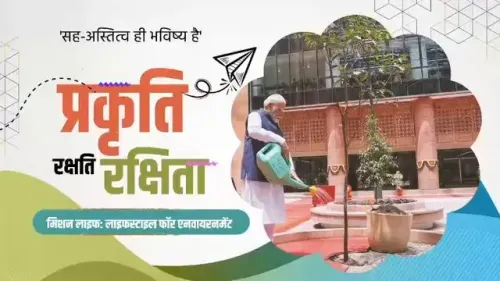
Paatil posted on 9 June 2026 crediting PM Narendra Modi with presenting a new development-environment balance model to the world.
The post was part of the #12YearsOfSeva campaign marking twelve years of the Modi government.
India committed to net-zero emissions by 2070 at COP26 in 2021 and co-launched the International Solar Alliance in 2015.
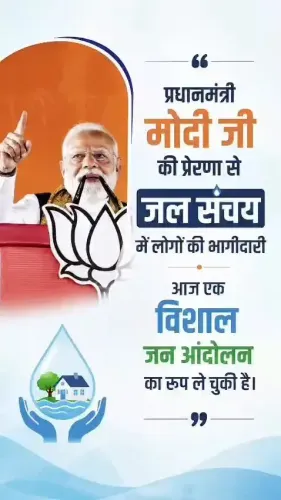
The Namami Gange programme (2014) and Jal Jeevan Mission (2019) are cited as flagship examples of conservation combined with public participation.
Parliamentary review of Jal Jeevan Mission progress is expected in the upcoming monsoon session .
Union Jal Shakti Minister C. R. Paatil on Tuesday, 9 June 2026 praised the Narendra Modi government's approach to balancing economic development with environmental conservation, saying India has placed a new model before the world. The post, tagged #12YearsOfSeva, highlighted green energy, conservation, and public participation as the pillars of this vision.
Context
Paatil's post, written in Hindi, states: 'Mananiya Pradhanmantri Shri Narendra Modi ji ke netritva mein Bharat ne vikas aur paryavaran ke beech santulan ka ek naya model duniya ke saamne rakha hai' — ('Under the leadership of honourable Prime Minister Shri Narendra Modi, India has placed a new model of balance between development and environment before the world.')
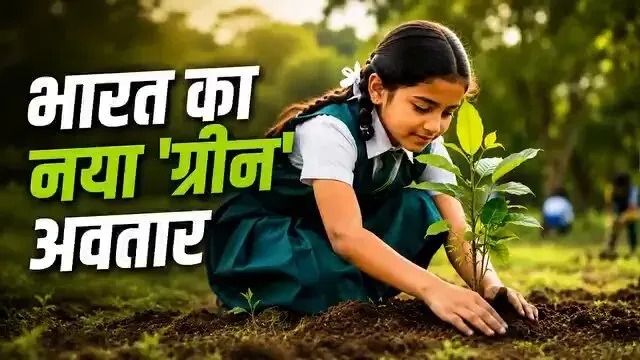
The minister added that India is building a 'safe and prosperous future for coming generations' through commitments to green energy, conservation, and jan bhagidari (public participation). The post accompanied a video and was shared as part of the #12YearsOfSeva campaign marking a dozen years of the Modi government.
Policy Backdrop
India's framing of climate action as compatible with rapid development has been a consistent policy position since 2014. At COP26 in 2021, India announced a long-term target of net-zero emissions by 2070 and updated its Nationally Determined Contributions, positioning itself as a responsible developing nation charting its own climate pathway.
The International Solar Alliance, co-launched by India and France in 2015, has become a flagship expression of this approach — mobilising solar investment globally while advancing India's own renewable capacity. On the water front, the Namami Gange programme, approved in 2014, integrated pollution abatement, biodiversity conservation, and public awareness for the Ganga river. The Jal Jeevan Mission, launched in 2019, extended the jan bhagidari principle to rural water security, aiming to deliver piped drinking water to every rural household.
The Jal Shakti Abhiyan, rolled out in 2019, reinforced this pattern with a time-bound campaign for water conservation in water-stressed districts, again centering community participation as a design feature.
Stakeholders and Impact
Rural communities are the primary beneficiaries of the conservation and water missions cited in this policy arc, with schemes like Jal Jeevan Mission directly targeting households that previously lacked piped water access. The broader framing, however, addresses future generations — a rhetorical and policy commitment to intergenerational equity that runs through India's climate diplomacy.
India's positioning as an alternative development model carries weight in global climate negotiations, particularly for the Global South, where nations face similar pressures to grow economies without repeating the high-carbon trajectories of industrialised countries. Public participation and source sustainability remain recurring design features across water, river, and energy programmes under the current government.
What's Next
Parliamentary scrutiny of the Jal Jeevan Mission's physical and financial progress is expected during the upcoming monsoon session, where state-level water security action plans may also come under review. As the #12YearsOfSeva campaign continues, ministers across portfolios are expected to amplify the government's record on environment and development, setting the narrative frame ahead of future electoral and diplomatic engagements.
India's ability to sustain and deepen this dual commitment — accelerating green energy deployment while expanding conservation missions — will be closely watched both domestically and at international climate forums.
Point of View
The messaging ties technocratic policy goals to a grassroots legitimacy frame, a recurring pattern across Jal Shakti mandates. The #12YearsOfSeva tag signals a coordinated anniversary communication push, with environment emerging as a key plank alongside infrastructure and welfare. Internationally, this framing reinforces India's diplomatic posture as a constructive climate actor while resisting binding commitments that could constrain development.
NationPress
24 Oct 2026
Frequently Asked Questions
What did C. R. Paatil say about India's environment policy?
C. R. Paatil said that under PM Modi's leadership, India has presented a new model of balance between development and environment to the world, built on green energy, conservation, and public participation.
What is #12YearsOfSeva?
#12YearsOfSeva is a campaign hashtag marking twelve years of the Narendra Modi government, used by BJP ministers and leaders to highlight the administration's record across policy areas.
What is India's net-zero target?
India announced a net-zero emissions target of 2070 at the COP26 climate summit in Glasgow in 2021, alongside updated Nationally Determined Contributions.
What is jan bhagidari in India's water policy?
Jan bhagidari means public or community participation and is a core design principle of schemes like Jal Jeevan Mission and Jal Shakti Abhiyan, which rely on local communities for implementation and sustainability.
What is the Jal Jeevan Mission?
Jal Jeevan Mission is a nationwide scheme launched in 2019 to provide piped drinking water connections to every rural household in India, with an emphasis on community participation and source sustainability.