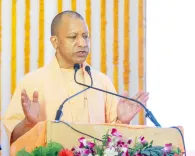
Jal Shakti Minister Paatil hails India's climate leadership since 2014

Synopsis
Union Jal Shakti Minister C. R. Paatil, marking 12 years of the Modi government, says India has moved from a nation with questioned climate policies to a globally recognised leader in green development and clean energy, citing visionary leadership and the Viksit Bharat vision.
Key Takeaways
Paatil posted on 9 June 2026 crediting the post-2014 government with elevating India's climate standing on global platforms.
India co-founded the International Solar Alliance with France in 2015 and presented the Panchamrit strategy at COP26 in 2021 .
India committed to net-zero emissions by 2070 and updated its Nationally Determined Contributions in 2022 .
The post is part of the #12YearsOfSeva campaign marking a decade-plus of BJP governance at the centre.
The Viksit Bharat vision frames green growth as integral to India becoming a developed nation by 2047 .
Upcoming COP sessions and progress on green-hydrogen missions will be key tests of India's stated climate leadership.
Union Jal Shakti Minister C. R. Paatil on Tuesday, 9 June 2026 credited the decade-plus tenure of the Narendra Modi government with transforming India from a nation whose climate policies faced scrutiny to one that is now recognised globally for green development and clean-energy leadership. The minister's remarks, posted on X under the hashtags #12YearsOfSeva and #ViksitBharat, framed the shift as the product of 'visionary leadership, clear resolve, and a commitment to sustainable development.'
Context
In his post, Paatil wrote that before 2014, India's climate policies were frequently questioned, but today the country is being praised on global platforms for its efforts to address climate change, its green-growth record, and its leadership role in clean energy. He argued the transformation is 'not merely of policies, but the result of visionary leadership, clear resolve, and a commitment to sustainable development.' The minister added that India is now showing the world 'the direction of a balanced model of development and environmental protection.'
The post is timed to mark 12 years of the BJP-led central government, with the #12YearsOfSeva hashtag anchoring the message within a broader ruling-party anniversary campaign. The accompanying video underscores the visual communication strategy behind the milestone.
Policy Backdrop
India's climate posture has undergone measurable shifts since 2014. The country co-founded the International Solar Alliance with France in 2015, positioning itself as a champion of solar deployment among developing nations. At COP26 in 2021, India unveiled the Panchamrit strategy, committing to net-zero emissions by 2070 and pledging to source 50 per cent of its energy from non-fossil sources by 2030.
India subsequently submitted updated Nationally Determined Contributions under the Paris Agreement in 2022, strengthening targets on renewable energy capacity and emissions intensity reduction. These commitments have been cited at multilateral forums as evidence that large developing economies can pursue growth and decarbonisation simultaneously.
The Viksit Bharat vision — the government's roadmap for India to become a developed nation by 2047 — explicitly integrates green growth as a pillar, linking climate action to long-term economic ambition rather than treating them as competing priorities.
Stakeholders and Impact
The renewable energy sector stands to benefit most directly from the policy continuity Paatil's post implicitly endorses. India has expanded installed renewable capacity significantly over the past decade, drawing investment from domestic and international players in solar, wind, and emerging green-hydrogen segments.
For developing nations watching India's trajectory, the narrative of balancing economic growth with environmental commitments carries diplomatic weight. India has consistently argued at climate negotiations that equity — the right of emerging economies to develop — must sit alongside ambition, a position that resonates with the Global South.
Civil society and environmental groups, however, have at times raised questions about the pace of coal phase-down and the gap between announced targets and on-ground implementation, adding a layer of ongoing public scrutiny to the government's climate record.
What's Next
Attention will turn to India's positions and any new commitments at upcoming COP sessions, as well as progress reports on the national renewable energy and green-hydrogen missions. The #12YearsOfSeva campaign is likely to continue generating similar messaging from senior BJP ministers in the days ahead, reinforcing the government's communication around the anniversary milestone. How India's climate diplomacy evolves — particularly on coal timelines and climate finance demands from developed nations — will determine whether the global recognition Paatil references translates into binding commitments at the next multilateral round.
Point of View
Weaving climate diplomacy into the BJP's 12-year governance narrative rather than announcing new policy. By contrasting the pre-2014 era with today, it reflects a well-worn ruling-party framing that links institutional credibility gains to a single leadership change. The invocation of Viksit Bharat signals that climate is being positioned as a soft-power asset in India's 2047 development story, not just an environmental obligation. The sharper political test will come at the next COP, where India's coal timelines and climate-finance demands will face scrutiny that anniversary posts cannot pre-empt.
NationPress
26 Oct 2026
Frequently Asked Questions
What did C. R. Paatil say about India's climate policy?
Paatil said that before 2014 India's climate policies were frequently questioned, but today India is praised on global platforms for green development and clean-energy leadership, attributing the change to visionary leadership and a commitment to sustainable development.
What is India's net-zero target?
India committed to achieving net-zero emissions by 2070, announced as part of the Panchamrit strategy at COP26 in Glasgow in 2021.
What is the International Solar Alliance?
The International Solar Alliance is an India-France initiative launched in 2015 to accelerate solar energy deployment among member countries, particularly developing nations.
What is Viksit Bharat?
Viksit Bharat is the Indian government's vision for India to become a developed nation by 2047, the centenary of independence, with green growth integrated as a core pillar.
What is the #12YearsOfSeva campaign?
#12YearsOfSeva is a BJP-led social media campaign marking 12 years of the Narendra Modi government at the centre, under which senior ministers have been posting about policy achievements across sectors.