Jal Shakti Minister Paatil Backs Vision 2047 Under PM Modi
Synopsis
Union Jal Shakti Minister C. R. Paatil on 13 June 2026 reaffirmed India's resolve to achieve developed-nation status by 2047, crediting PM Modi's leadership and marking twelve years of BJP-led central governance under the hashtag #12YearsOfSeva.
Key Takeaways
Paatil , Union Minister of Jal Shakti, posted on 13 June 2026 backing the Viksit Bharat 2047 national vision.
The post was tagged #12YearsOfSeva , marking twelve years of the Modi government at the Centre since 2014 .
PM Modi first announced the Viksit Bharat@2047 goal in his Independence Day address on 15 August 2022 .
The Jal Shakti Ministry anchors the vision through schemes such as Jal Jeevan Mission and Namami Gange .
The next Union Budget and NITI Aayog reports are expected to carry sectoral targets aligned with the 2047 framework.
Union Jal Shakti Minister C. R. Paatil on Saturday, 13 June 2026, reaffirmed the central government's commitment to the Viksit Bharat 2047 vision, stating that India is continuously setting new dimensions on the path to becoming a developed nation under the leadership of Prime Minister Narendra Modi.
Context
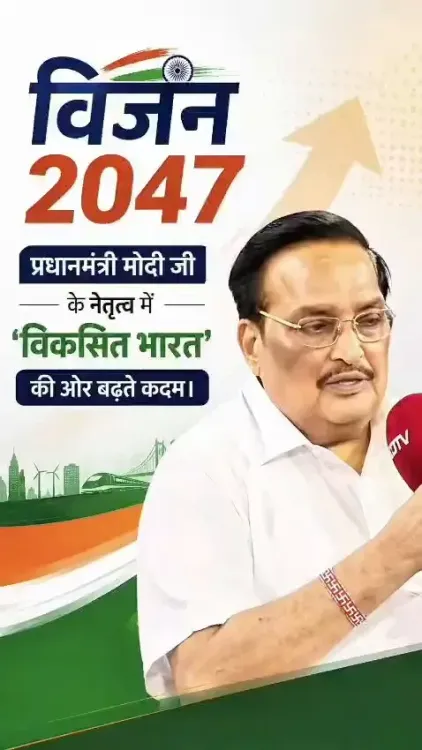
Paatil posted in Hindi: 'विजन 2047 के संकल्प के साथ, प्रधानमंत्री श्री नरेंद्र मोदी जी के नेतृत्व में विकसित भारत के निर्माण की दिशा में देश निरंतर नए आयाम स्थापित कर रहा है' — translated: 'With the resolve of Vision 2047, the country is continuously establishing new dimensions towards building a Viksit Bharat under the leadership of Prime Minister Narendra Modi.' The post was accompanied by a video and the hashtags #12YearsOfSeva, #ViksitBharat2047, and #Vision2047, tying the statement explicitly to twelve years of BJP-led central governance since 2014.
Policy Backdrop
Prime Minister Narendra Modi first articulated the Viksit Bharat@2047 target in his Independence Day address on 15 August 2022, setting the goal of India achieving developed-nation status by 2047 — the centenary of Indian independence. Since then, the vision has been adopted as a whole-of-government framework, with ministries across sectors aligning sectoral plans, budget priorities, and outreach programmes to the overarching target. The Ministry of Jal Shakti, which oversees drinking water, sanitation, and river conservation, has positioned flagship schemes such as the Jal Jeevan Mission and the Namami Gange programme as foundational pillars of this long-term development agenda.
The hashtag #12YearsOfSeva marks the completion of twelve years of the Modi government at the Centre, a milestone that the ruling party has been marking with coordinated messaging across its leadership. Senior ministers and BJP functionaries have used the occasion to highlight governance milestones and restate commitment to long-term national goals.
Stakeholders and Impact
The Viksit Bharat framework directly concerns Indian citizens across income groups, as it encompasses targets in infrastructure, water security, sanitation, digital connectivity, and economic growth. For the Jal Shakti Ministry specifically, the vision translates into measurable goals around universal tap-water access, river rejuvenation, and groundwater management — all of which have direct bearing on rural and peri-urban households. C. R. Paatil, a senior BJP leader and former Gujarat BJP state president, has been one of the more vocal ministers in linking sectoral water policy to the broader national development narrative.
The use of social media by a Union minister to amplify the #ViksitBharat2047 message reflects the government's strategy of mobilising its entire cabinet as communicators of the long-term vision, particularly around symbolic anniversaries in the governance calendar.
What's Next
Analysts and policy watchers will look to the next Union Budget and forthcoming NITI Aayog reports for concrete sectoral action plans and budget allocations that translate the Vision 2047 resolve into measurable targets. For the Jal Shakti Ministry, the focus will be on progress metrics for rural water supply coverage and the pace of river-cleaning projects. The sustained political messaging around 2047 signals that the vision is likely to remain a central organising theme for government communication well into the next electoral cycle.
Point of View
Using milestone hashtags to reinforce a unified government narrative. The invocation of #12YearsOfSeva alongside #ViksitBharat2047 is deliberate — it anchors a long-term aspirational target to a concrete electoral record, making the vision inseparable from the party's governance identity. For the Jal Shakti Ministry, aligning water-sector work with the 2047 frame also serves a defensive purpose: it elevates routine departmental progress into a civilisational project, raising the political cost of criticism. As the 2047 deadline remains two decades away, the government retains flexibility on timelines while locking in the rhetorical high ground.
NationPress
13 Sept 2026
Frequently Asked Questions
What is Viksit Bharat 2047?
Viksit Bharat 2047 is India's national vision to achieve developed-country status by 2047 , the centenary of independence, first announced by PM Modi in his Independence Day address on 15 August 2022 .
Who is C. R. Paatil?
C. R. Paatil is the Union Minister of Jal Shakti in the Modi government and a senior BJP leader who previously served as Gujarat BJP state president .
What does the Jal Shakti Ministry do?
The Ministry of Jal Shakti oversees drinking water supply, sanitation, and river conservation in India, administering flagship schemes such as Jal Jeevan Mission and Namami Gange .
What is #12YearsOfSeva?
#12YearsOfSeva is a hashtag marking twelve years of the BJP-led Modi government at the Centre since 2014 , used by party leaders to highlight governance milestones.
How does Vision 2047 relate to water policy?
The Jal Shakti Ministry positions universal tap-water access, groundwater management, and river rejuvenation as foundational pillars of the Viksit Bharat 2047 framework, linking sectoral targets to the broader national development goal.