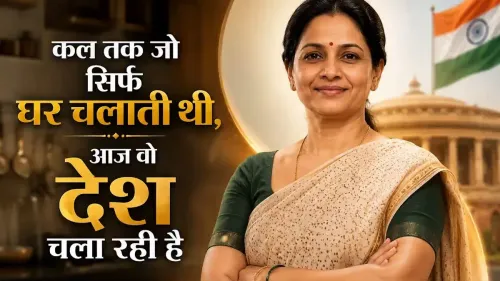
Jal Shakti Minister Paatil Hails 12 Years of Women-Led Growth
Synopsis
Union Jal Shakti Minister C. R. Paatil on 12 June 2026 hailed 12 years of women-led development under PM Modi, citing progress in education, health, defence, and startups as foundational to the Viksit Bharat 2047 vision.
Key Takeaways
Paatil , Union Jal Shakti Minister and senior BJP leader, posted on 12 June 2026 marking 12 years of Nari Shakti under PM Modi's government.
He credited the administration with advancing women's dignity, safety, education, health, and economic empowerment across sectors including defence, startups, science, and governance .
The post is part of a coordinated campaign using hashtags #12YearsOfNariShakti , #ViksitBharat , and #WomenLedDevelopment .
Key policy milestones cited in the backdrop include Beti Bachao Beti Padhao (2015) and Mahila Shakti Kendra (2017) .
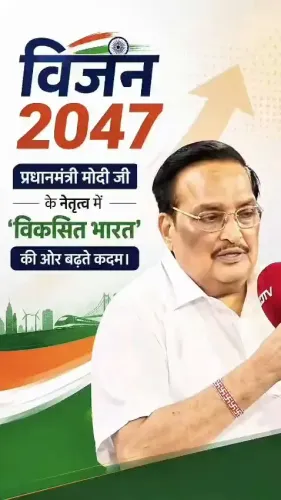
The messaging aligns with the government's Viksit Bharat 2047 framework, which positions women-led development as central to India's growth goals.
Primary beneficiaries highlighted are rural women and women entrepreneurs , with expanded roles in defence and sports also noted.
Union Jal Shakti Minister C. R. Paatil on Friday, 12 June 2026 credited Prime Minister Narendra Modi's government with accelerating women's empowerment across every sector of Indian society, marking what he described as 12 years of Nari Shakti under the current administration. The minister posted a wide-ranging tribute on X, asserting that women today are leading national development in fields ranging from agriculture and science to defence, startups, and governance.
Context
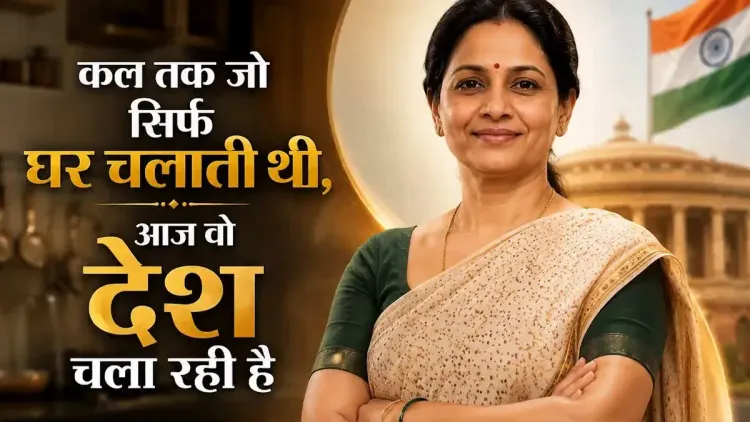
Paatil's post, written in Hindi, opens with the declaration: 'Nari Shakti kewal vikas ki sahbhagi nahin, balki Viksit Bharat ki parivartankari shakti hai' ('Women's power is not merely a participant in development, but the transformative force of a Developed India'). He attributes this transformation to the leadership of Prime Minister Modi over the past 12 years, citing progress in women's dignity, safety, education, health, and economic empowerment. The post is tagged with the hashtags #12YearsOfNariShakti, #ViksitBharat, and #WomenLedDevelopment, placing it squarely within a coordinated government-wide messaging campaign.
The minister concluded with the line: 'Sashakt Nari samriddh samaj aur Viksit Bharat ki sabse mazboot neenv hai' — 'An empowered woman is the strongest foundation of a prosperous society and a Developed India.' The statement reflects the government's consistent framing of women-led development as central to its Viksit Bharat 2047 vision.
Policy Backdrop
The Beti Bachao Beti Padhao scheme, launched in 2015, was among the first flagship interventions of the Modi government targeting the declining child sex ratio and promoting girls' education. It was followed in 2017 by the Mahila Shakti Kendra scheme, which established one-stop support centres for rural women, extending outreach on health, nutrition, legal rights, and digital literacy to village-level communities.
These schemes form part of a broader policy lineage that successive Union budgets have reinforced, seeking to raise female labour-force participation and expand women's representation in leadership roles. Paatil's enumeration of sectors — farms, science, startups, defence, sports, and administration — mirrors the multi-ministry framing of women-led development that has been a recurring theme in government communications since 2014.
Stakeholders and Impact
The primary beneficiaries of this policy arc are rural women and women entrepreneurs, two cohorts that government schemes have explicitly targeted through financial inclusion drives, self-help group networks, and startup support mechanisms. Paatil's reference to women in defence and sports acknowledges more recent milestones, including expanded roles for women in the armed forces and record medal tallies at international sporting events.
The post also carries political significance: as a senior BJP leader and former Gujarat BJP state president, Paatil's messaging reinforces the party's electoral narrative ahead of continued outreach to women voters, a demographic the BJP has actively courted through welfare transfers and empowerment schemes. The hashtag #12YearsOfNariShakti signals a structured anniversary campaign rather than an isolated statement.
What's Next
Analysts and welfare advocates will watch for concrete follow-through in the form of enhanced budget allocations for women-specific schemes and new, measurable targets under the Viksit Bharat 2047 framework. The government's ability to translate this messaging into verifiable gains in female labour-force participation and safety indicators will determine how the 'transformative force' narrative is received beyond political circles. Any new scheme announcements or policy expansions tied to this campaign will be closely tracked by stakeholders in rural development and women's welfare.
Point of View
With the #12YearsOfNariShakti hashtag suggesting synchronised outreach across the party's social-media ecosystem. By spanning agriculture, defence, startups, and governance in a single frame, the messaging attempts to broaden the women's empowerment narrative beyond welfare schemes to aspirational, high-visibility sectors. This is consistent with the BJP's documented strategy of targeting women voters through both direct-benefit transfers and identity-affirming communication. The real test of the 'transformative force' claim will come when independent assessments of female labour-force participation and safety data are placed alongside the rhetorical arc.
NationPress
23 Sept 2026
Frequently Asked Questions
What is the #12YearsOfNariShakti campaign about?
The #12YearsOfNariShakti campaign marks 12 years of the Modi government's women-empowerment initiatives, highlighting schemes and milestones across education, health, defence, and economic participation as part of the Viksit Bharat vision.
What is the Beti Bachao Beti Padhao scheme?
Beti Bachao Beti Padhao is a flagship central scheme launched in 2015 to address the declining child sex ratio and promote girls' education and empowerment, particularly in districts with historically low female birth rates.
What did C. R. Paatil say about women's empowerment?
C. R. Paatil said that women's power is not merely a participant in development but the transformative force of a Developed India, crediting PM Modi's 12-year leadership with accelerating women's progress in sectors from farming to defence and startups.
What is the Mahila Shakti Kendra scheme?
Mahila Shakti Kendra, introduced in 2017, provides one-stop support centres for rural women covering health, nutrition, legal rights, and digital literacy at the village level.
How does Viksit Bharat 2047 relate to women's empowerment?
Viksit Bharat 2047 is the government's long-term development vision targeting a fully developed India by the centenary of independence, with women-led development positioned as a core pillar, reflected in cross-ministry schemes and budget allocations for female labour-force participation.