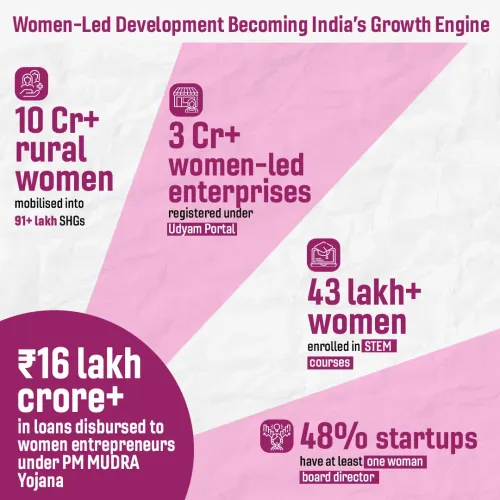
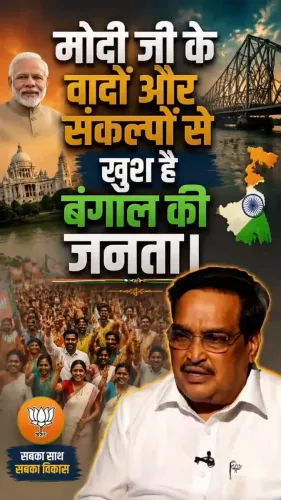
Jal Shakti Minister Paatil hails women as force behind Viksit Bharat
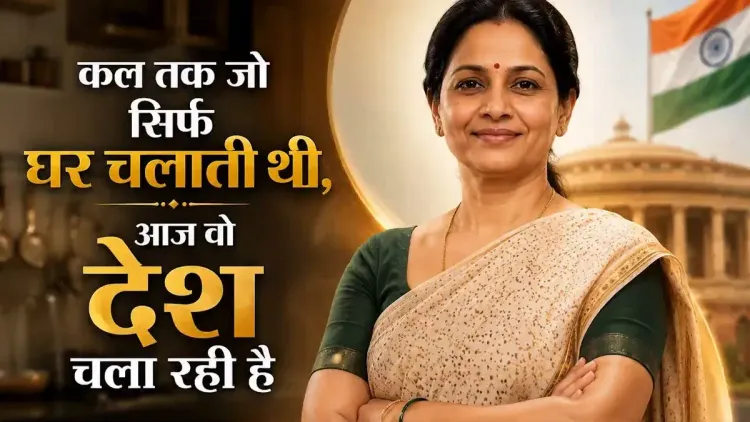
Synopsis
Union Jal Shakti Minister C. R. Paatil marked 12 years of the Modi government's women-focused governance on 12 June 2026, calling women the transformative backbone of Viksit Bharat and citing schemes from Beti Bachao Beti Padhao to the 2023 women's reservation law.
Key Takeaways
Paatil posted on 12 June 2026 under #12YearsOfNariShakti , framing women as the core transformative force of Viksit Bharat .
The post references 12 years of the Narendra Modi government's women-focused programmes spanning honour, safety, education, health and economic empowerment.
Key schemes cited in context include Beti Bachao Beti Padhao (2015), Pradhan Mantri Ujjwala Yojana (2016) and the Nari Shakti Vandan Adhiniyam (2023).
The 2023 constitutional amendment reserves one-third of Lok Sabha and state assembly seats for women, pending a delimitation exercise before it takes effect.
Successive Union Budgets have institutionalised gender budgeting as a structural tool across health, education and livelihood sectors.
Operationalisation of the women's reservation law and gender-disaggregated data in the next Union Budget are the key milestones to watch.
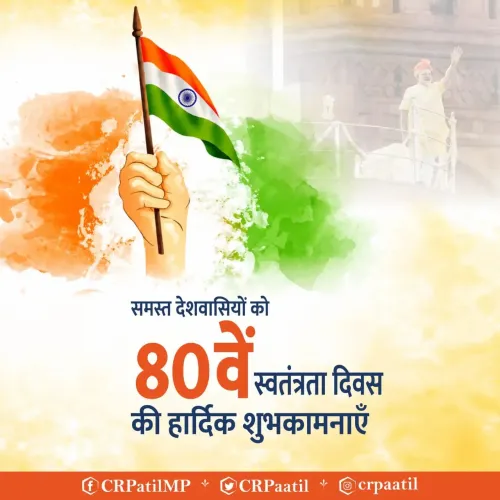
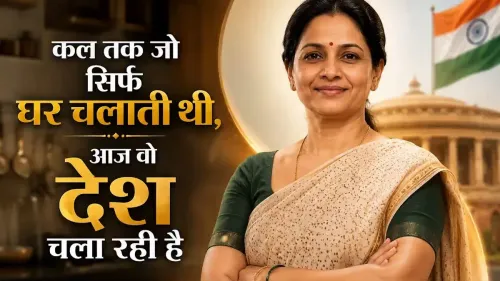
Union Jal Shakti Minister C. R. Paatil on Friday, 12 June 2026, credited 12 years of the Narendra Modi government with accelerating women's empowerment across sectors ranging from agriculture and science to defence and governance, describing women as the transformative engine of a developed India.
Context
Posting under the hashtag #12YearsOfNariShakti, Paatil wrote that 'Nari Shakti kewal vikas ki sahbhagi nahin, balki Viksit Bharat ki parivartankari shakti hai' — 'Women's power is not merely a participant in development, but the transformative force of a developed India.' The post marks a broader BJP communications push to catalogue a decade-plus of women-focused governance as the party approaches future electoral cycles.
Paatil, a senior BJP leader and former Gujarat state party president, highlighted that women today are playing a 'leading role in nation-building' across fields including farming, startups, defence, sports and public administration. The messaging is anchored in the government's Viksit Bharat@2047 vision, which frames women-led development as a structural pillar rather than a peripheral social programme.
Policy Backdrop
The 12-year window Paatil references spans several landmark interventions. The Beti Bachao Beti Padhao scheme, launched in January 2015, targeted the declining child sex ratio and sought to keep girls in school. The Pradhan Mantri Ujjwala Yojana, rolled out in May 2016, extended clean cooking fuel connections to women in low-income households, reducing health burdens and improving domestic safety.
The most constitutionally significant step came in September 2023 with the passage of the Nari Shakti Vandan Adhiniyam, a constitutional amendment reserving one-third of seats for women in the Lok Sabha and state legislative assemblies. Successive Union Budgets over the same period have institutionalised gender budgeting, directing allocations explicitly toward women's health, education and livelihood outcomes.
Stakeholders and Impact
The constituencies Paatil invokes — female farmers, women entrepreneurs, women in defence — reflect a deliberate effort to broaden the empowerment narrative beyond traditional welfare beneficiaries. By citing startups and science alongside agriculture, the messaging signals that the government views women's economic participation as a growth input, not merely a social-equity goal.
Paatil's post concludes with the formulation 'Sashakt Nari, Samridh Samaj aur Viksit Bharat ki sabse mazboot neenv hai' — 'An empowered woman is the strongest foundation of a prosperous society and a developed India.' This framing directly links individual women's advancement to the macro-economic ambition of a fully developed nation by 2047.
What's Next
The operationalisation of the 2023 women's reservation law remains the most-watched near-term milestone; the amendment requires a delimitation exercise before reserved seats are actually notified, making its electoral timeline uncertain. Gender-disaggregated outcome data in the next Union Budget will be a key indicator of whether programmatic gains match the scale of political messaging.
As the government consolidates its #WomenLedDevelopment narrative, pressure will mount on ministries — including Jal Shakti, which oversees drinking-water access critical to women's daily lives — to publish verifiable, sector-wise progress metrics that substantiate the broader empowerment claims.
Point of View
Tying disparate welfare schemes into a single, decade-long governance narrative. By invoking sectors as varied as defence and startups alongside agriculture, the messaging attempts to shift the empowerment frame from welfare recipient to economic agent — a politically potent repositioning. The reference to #12YearsOfNariShakti suggests a coordinated party-wide communications campaign rather than an individual ministerial statement. The real test will be whether the landmark Nari Shakti Vandan Adhiniyam moves from constitutional text to electoral reality before the next general election.
NationPress
19 Sept 2026
Frequently Asked Questions
What is #12YearsOfNariShakti that CR Paatil posted about?
'#12YearsOfNariShakti' is a BJP communications campaign marking 12 years of the Narendra Modi government's women-focused welfare and empowerment programmes, spanning schemes on girls' education, clean cooking fuel, health and the 2023 women's legislative reservation law.
What is the Nari Shakti Vandan Adhiniyam?
The Nari Shakti Vandan Adhiniyam is a constitutional amendment passed in September 2023 that reserves one-third of seats in the Lok Sabha and state legislative assemblies for women. It requires a delimitation exercise before reserved seats are notified, so its exact electoral timeline remains pending.
What is Viksit Bharat and how does it relate to women's empowerment?
Viksit Bharat is the Modi government's vision for India to become a fully developed nation by 2047. Women-led development is positioned as a core structural pillar of this vision, with gender budgeting and targeted welfare schemes framed as economic inputs rather than standalone social-sector measures.
What schemes has the Modi government launched for women's empowerment?
Key central government schemes include Beti Bachao Beti Padhao (launched January 2015 to improve child sex ratio and girls' education), Pradhan Mantri Ujjwala Yojana (May 2016 for clean cooking fuel to low-income households) and the Nari Shakti Vandan Adhiniyam (September 2023 for legislative reservation).
Who is CR Paatil and what ministry does he head?
C. R. Paatil is a senior BJP leader and former Gujarat state party president who currently serves as Union Minister of Jal Shakti, the ministry overseeing India's drinking water and sanitation programmes.