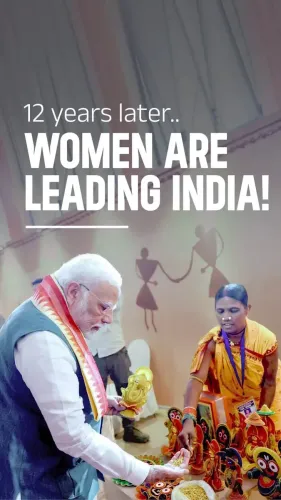
Khattar marks 12 years of Nari Shakti, cites women's rise
Synopsis
Union Power Minister Manohar Lal Khattar marked 12 years of Nari Shakti on June 12, 2026, declaring women-led development a lived reality — from Jan Dhan bank accounts and Mudra loans to panchayat seats and the 2023 parliamentary reservation law — as part of the Viksit Bharat vision.
Key Takeaways
Union Power Minister Manohar Lal Khattar posted on June 12, 2026 to mark #12YearsOfNariShakti , the twelfth anniversary of the Modi government's women-empowerment agenda.
He declared that women leadership-based development has shifted from a slogan to a 'vastavikta' (reality), spanning banking, business, panchayats, and Parliament.
The Pradhan Mantri Jan Dhan Yojana (2014) and Pradhan Mantri Mudra Yojana (2015) are the financial inclusion pillars cited as enabling women's economic agency.
The Nari Shakti Vandan Adhiniyam (2023) constitutionally reserves one-third of Lok Sabha and state assembly seats for women, building on the 1992 panchayat reservation model.
Implementation of the 2023 women's reservation law — contingent on delimitation — remains the key policy milestone to watch ahead of the next general election.
Union Power Minister Manohar Lal Khattar on Friday, June 12, 2026, marked the #12YearsOfNariShakti milestone, asserting that women-led development has moved from slogan to reality — spanning bank accounts, business, village councils, and Parliament.
Context
Khattar's post, written in Hindi, states: 'Mahila netritva aadharit vikas ab keval ek naara nahi, balki ek vastavikta bankar ubhra hai' — 'Women leadership-based development is no longer merely a slogan; it has emerged as a reality.' The minister drew a direct line from grassroots financial inclusion to legislative representation, framing the arc as a defining feature of Viksit Bharat — the government's vision of a developed India.
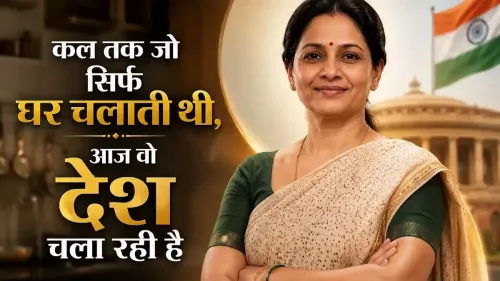
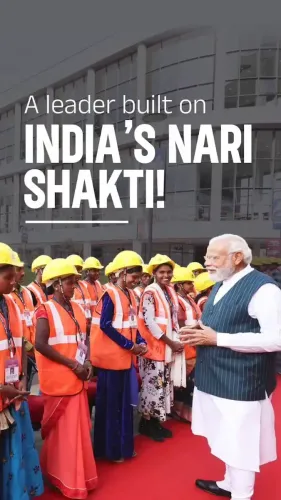
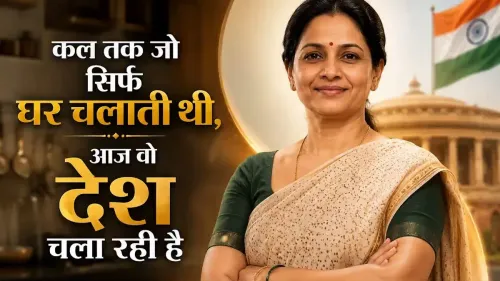
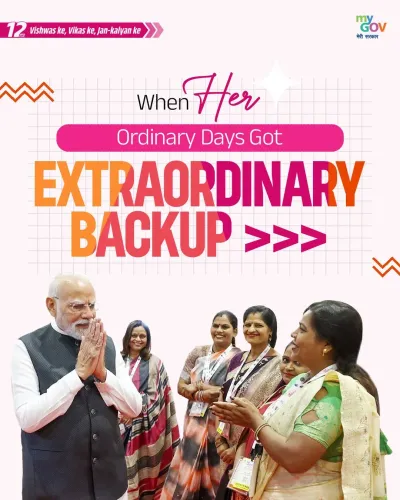
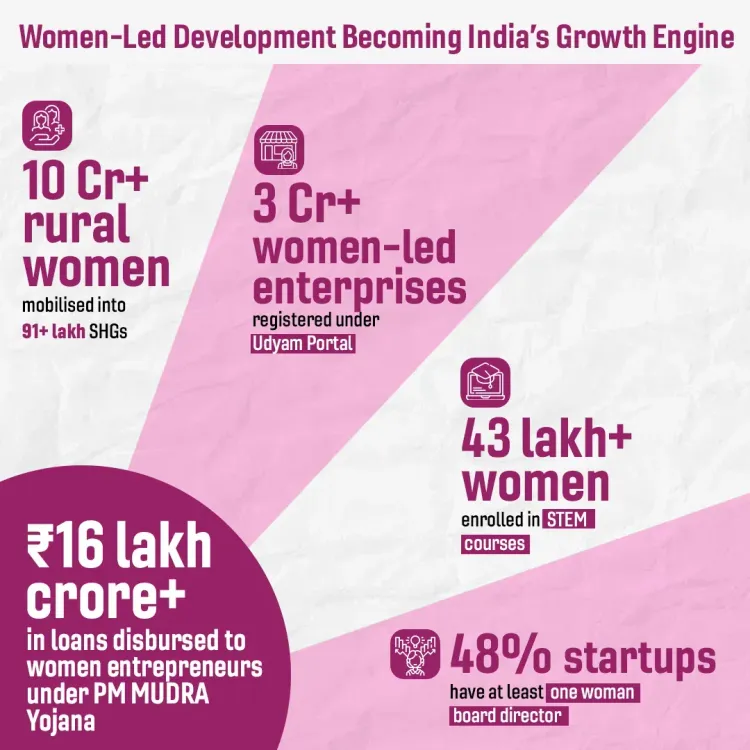
The hashtag #12YearsOfNariShakti marks twelve years since 2014, when the Narendra Modi-led government came to power and placed women's empowerment at the centre of its governance agenda. The post was accompanied by three images, underscoring the visual communication strategy around the anniversary.
Policy Backdrop
The empowerment arc Khattar references begins with the Pradhan Mantri Jan Dhan Yojana, launched in 2014, which opened bank accounts for millions of previously unbanked women, providing the financial foundation for economic participation. This was followed by Pradhan Mantri Mudra Yojana in 2015, which extends collateral-free micro-loans — with a majority share going to women borrowers — to support small businesses and micro-enterprises.
On the education front, the Beti Bachao Beti Padhao scheme, also launched in 2015, addressed the declining child sex ratio and promoted girls' survival and schooling, forming the life-cycle foundation of the Nari Shakti framework. At the legislative level, the Nari Shakti Vandan Adhiniyam — the 2023 constitutional amendment — reserved one-third of seats for women in the Lok Sabha and state assemblies, extending the reservation principle first established in local bodies by the 73rd and 74th Constitutional Amendments of 1992.
Stakeholders and Impact
The constituencies directly addressed by this policy arc are broad: women entrepreneurs accessing Mudra credit, women elected representatives in gram panchayats and municipal bodies, and women parliamentarians who stand to benefit from the reservation law. The government's framing positions these groups not as welfare beneficiaries but as active agents shaping national development.
For women in rural local governance, the 1992 panchayat reservation created a pipeline of political participation that the 2023 law seeks to extend to the national stage. Women borrowers form the dominant share of Mudra loan recipients, making them central to the micro-enterprise economy that underpins household income in semi-urban and rural India.
What's Next
Attention will focus on the implementation timeline for the Nari Shakti Vandan Adhiniyam, as the women's reservation in Parliament is linked to delimitation — a process whose completion will determine when the law takes practical effect ahead of the next general election. Periodic data releases on women account holders, Mudra beneficiaries, and elected representatives at panchayat and parliamentary levels will serve as the measurable benchmarks against which the '12 years of Nari Shakti' claim will be assessed.
Point of View
Using the #12YearsOfNariShakti hashtag to consolidate the BJP's decade-long women's empowerment narrative into a single, electorally resonant frame. By linking financial inclusion (Jan Dhan, Mudra) to legislative representation (the 2023 reservation law), the messaging positions the party as the architect of a full-spectrum shift — from economic access to political power. The timing is significant: with the Nari Shakti Vandan Adhiniyam still awaiting delimitation before it takes effect, such communications serve to maintain political credit for the law even as its implementation remains pending. This is consistent with a broader BJP pattern of anchoring governance anniversaries to the Viksit Bharat meta-narrative ahead of the electoral cycle.
NationPress
22 Sept 2026
Frequently Asked Questions
What is #12YearsOfNariShakti?
#12YearsOfNariShakti marks twelve years since 2014 when the Modi government came to power and placed women's empowerment — through schemes like Jan Dhan, Mudra, and Beti Bachao Beti Padhao — at the centre of its governance agenda. Union Minister Manohar Lal Khattar used the hashtag on June 12, 2026, to mark the anniversary.
What is the Nari Shakti Vandan Adhiniyam?
The Nari Shakti Vandan Adhiniyam is a 2023 constitutional amendment that reserves one-third of seats for women in the Lok Sabha and state legislative assemblies. Its implementation is linked to the completion of delimitation, which will determine when it takes practical effect.
How has Jan Dhan Yojana helped women?
Pradhan Mantri Jan Dhan Yojana, launched in 2014, opened bank accounts for millions of previously unbanked women across India, providing the financial foundation for savings, direct benefit transfers, and broader economic participation.
What is Pradhan Mantri Mudra Yojana and how does it benefit women?
Pradhan Mantri Mudra Yojana, launched in 2015, provides collateral-free micro-loans to small business owners, with women borrowers accounting for the majority of beneficiaries. It supports micro-enterprises and is a key pillar of the government's women entrepreneurship push.
When will women's reservation in Parliament come into effect?
The Nari Shakti Vandan Adhiniyam of 2023 reserves one-third of Lok Sabha and state assembly seats for women, but its operationalisation is contingent on the completion of delimitation. The exact timeline for implementation has not been officially confirmed.