Mandaviya Marks 12 Years of Nari Shakti Initiatives
Synopsis
Union Minister Mansukh Mandaviya marked twelve years of the BJP government's Nari Shakti agenda on June 12, 2026, sharing a video tribute on X. The milestone spans flagship schemes like Beti Bachao Beti Padhao and the landmark Women's Reservation Bill of 2023, reinforcing the ruling party's decade-long gender-empowerment narrative.
Key Takeaways
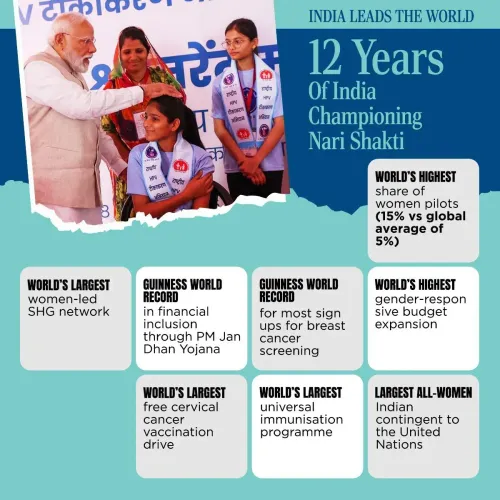
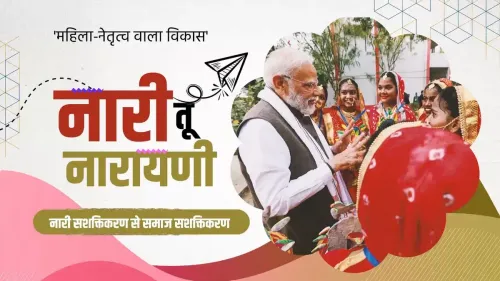
Mansukh Mandaviya posted 'Unstoppable Nari Shakti!' on June 12, 2026 , marking 12 years of the BJP government's women-empowerment drive under #12YearsOfNariShakti .
The Beti Bachao Beti Padhao scheme, launched in January 2015 , remains the flagship initiative addressing child sex ratio and girl-child education.
Parliament passed the Women's Reservation Bill in September 2023 , reserving one-third of Lok Sabha and state assembly seats for women.
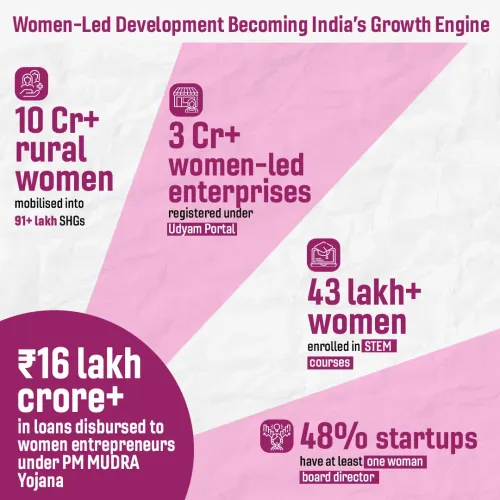
Schemes such as Pradhan Mantri Ujjwala Yojana and MUDRA Yojana have channelled substantial benefits to women beneficiaries under the Nari Shakti umbrella.
Implementation of the Women's Reservation Law remains pending delimitation, keeping it a live political and policy issue ahead of the next Union Budget .
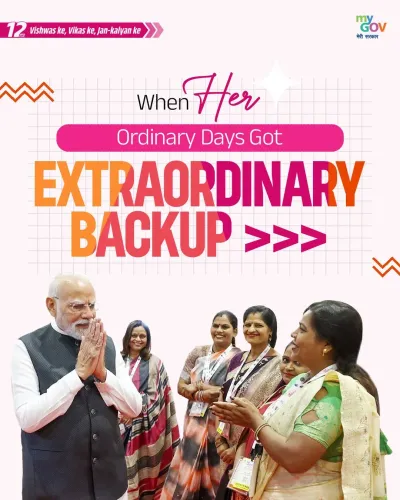
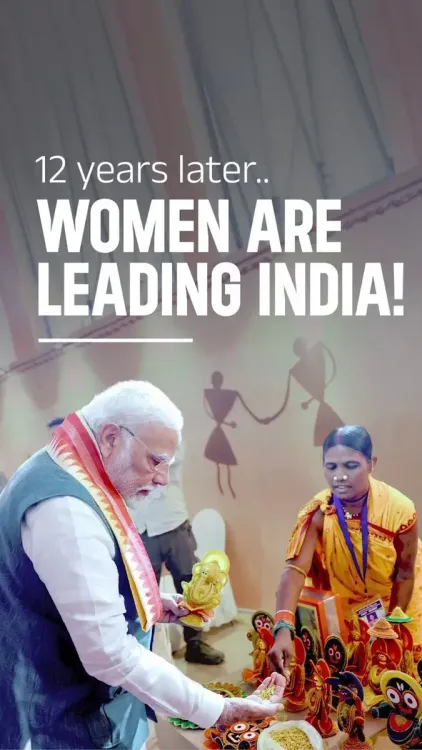
Union Labour and Sports Minister Mansukh Mandaviya on Friday, June 12, 2026, marked twelve years of the BJP-led government's Nari Shakti agenda, sharing a tribute post on X that celebrated women's empowerment milestones under the Modi administration. The post, captioned 'Unstoppable Nari Shakti!' under the hashtag #12YearsOfNariShakti, was accompanied by a video highlighting the government's decade-plus record on gender-focused welfare.
Context
The term Nari Shakti — loosely translated as 'the power of women' — has served as the overarching brand for the National Democratic Alliance government's women-centric policy messaging since 2014. Minister Mandaviya's post marks the completion of twelve years of this sustained narrative, which has encompassed legislative action, flagship schemes, and targeted social-sector spending. The phrase 'Unstoppable Nari Shakti' signals continuity and momentum as the government approaches the midpoint of its third consecutive term.
Mandaviya, who holds the dual charge of the Ministry of Labour and Employment and the Ministry of Youth Affairs and Sports, is among the senior cabinet voices amplifying the ruling party's gender-empowerment messaging on social media. His post joins a chorus of similar commemorations from BJP leaders marking the anniversary of the party's return to power in May 2014.
Policy Backdrop
The Nari Shakti umbrella covers several landmark initiatives. The Beti Bachao Beti Padhao scheme, launched by Prime Minister Narendra Modi in January 2015, was designed to arrest a declining child sex ratio and promote girl-child education across districts with historically skewed gender numbers. Over the following decade, the government expanded women-focused components within schemes such as Pradhan Mantri Ujjwala Yojana (clean cooking fuel) and Pradhan Mantri MUDRA Yojana (micro-credit for small entrepreneurs), a significant share of whose beneficiaries are women.
A defining legislative moment came in September 2023, when Parliament passed the Women's Reservation Bill, reserving one-third of seats in the Lok Sabha and state legislative assemblies for women — a reform that had been pending for nearly three decades. That law is widely cited within the Nari Shakti narrative as its most consequential institutional step.
Stakeholders and Impact
The primary stakeholders of the Nari Shakti agenda are Indian women and the girl child across urban and rural India, with targeted outreach in districts where gender indicators have historically lagged. Welfare economists and civil-society groups have tracked improvements in school enrolment for girls and a gradual improvement in the sex ratio at birth in several states since Beti Bachao Beti Padhao was rolled out, though implementation quality has varied by state.
For the BJP, the Nari Shakti framing also carries electoral weight: women voters have turned out in record numbers in successive general elections, and the party has consistently highlighted gender welfare as a pillar of its governance record. Mandaviya's social-media post, reaching his large follower base, reinforces that messaging at a symbolic twelve-year milestone.
What's Next
Attention now turns to the operationalisation of the Women's Reservation Law of 2023, which is contingent on delimitation of constituencies — a process whose timeline remains a subject of political debate in Parliament. The upcoming Union Budget is also being watched for fresh women-centric allocations that could add substance to the anniversary messaging. Any new scheme announcements or expanded fund flows to existing Nari Shakti programmes would be the clearest signal that the government intends to deepen, rather than merely commemorate, its twelve-year gender-empowerment record.
Point of View
Knitting together twelve years of disparate welfare schemes under a single, emotionally resonant brand. The 'Unstoppable' framing is deliberate — it pre-empts opposition critiques by projecting continuity and scale rather than inviting a scheme-by-scheme audit. With the Women's Reservation Law still awaiting delimitation for activation, the anniversary messaging also serves as a pressure valve, reminding the base of intent without being held to an implementation deadline. Watched over a longer arc, the Nari Shakti narrative has evolved from a campaign slogan into a durable governance identity that successive cabinet ministers now routinely amplify.
NationPress
24 Sept 2026
Frequently Asked Questions
What is Nari Shakti and why is 12 years being celebrated in 2026?
Nari Shakti is the BJP government's umbrella brand for women-empowerment policies launched after the party came to power in May 2014. The '12 years' milestone in 2026 marks twelve years of that sustained agenda, covering schemes like Beti Bachao Beti Padhao and the Women's Reservation Bill.
What did Mansukh Mandaviya post about Nari Shakti?
Union Minister Mansukh Mandaviya posted 'Unstoppable Nari Shakti!' on X on June 12, 2026, under the hashtag #12YearsOfNariShakti, along with a video celebrating the government's women-empowerment record.
What is the Beti Bachao Beti Padhao scheme?
Beti Bachao Beti Padhao is a flagship central government scheme launched by Prime Minister Narendra Modi in January 2015 to improve the child sex ratio and promote education and empowerment of the girl child across India.
Has India passed a Women's Reservation Bill?
Yes. Parliament passed the Women's Reservation Bill in September 2023, reserving one-third of seats in the Lok Sabha and state legislative assemblies for women. Its implementation is linked to the delimitation of constituencies, which has not yet been completed.
What is Mansukh Mandaviya's current role in the government?
Mansukh Mandaviya is currently the Union Minister of Labour and Employment and Youth Affairs and Sports, and is a senior leader of the Bharatiya Janata Party.