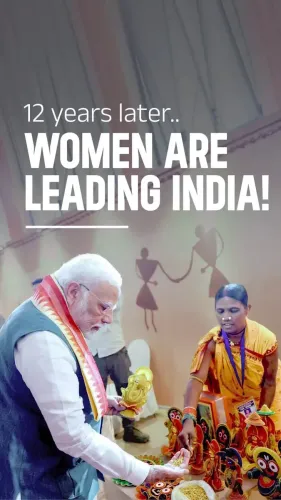
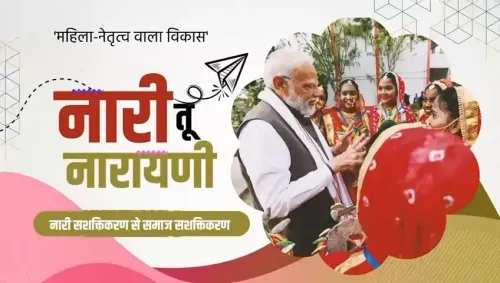
Goyal Marks 12 Years of Nari Shakti, Hails Women's Progress

Synopsis
Commerce Minister Piyush Goyal marked twelve years of the Modi government's Nari Shakti agenda on 12 June 2026, posting a Hindi couplet that frames women's empowerment — backed by schemes like Beti Bachao Beti Padhao and the 2023 Women's Reservation Bill — as the defining identity of the new India.
Key Takeaways
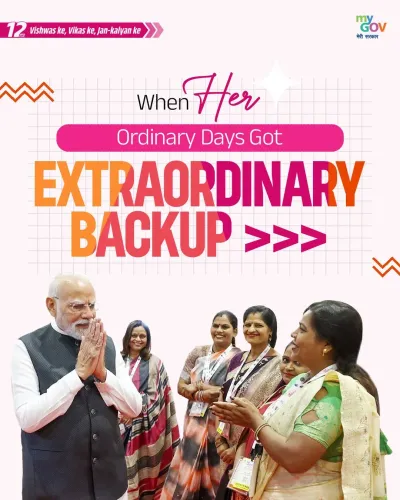
Piyush Goyal posted on 12 June 2026 to mark the #12YearsOfNariShakti milestone of the BJP-led government.
His Hindi couplet translates as: 'Honour to self-respect, wings to dreams — Nari Shakti has become the identity of the new India.' The Beti Bachao Beti Padhao scheme, launched in January 2015 , remains a cornerstone of the Nari Shakti policy umbrella targeting girl-child welfare and education.
Parliament passed the Nari Shakti Vandan Adhiniyam in September 2023 , reserving one-third of seats for women in the Lok Sabha and state assemblies.
Full implementation of the Women's Reservation Bill awaits the completion of a national census and delimitation exercise.
Women voters have been an increasingly decisive electoral bloc for the BJP across elections since 2014 .
Union Commerce and Industry Minister Piyush Goyal on Friday, 12 June 2026 took to X to mark the #12YearsOfNariShakti milestone, saluting the BJP-led government's twelve-year record on women's empowerment with a verse that translates as: 'Honour to self-respect, wings to dreams — Nari Shakti has become the identity of the new India.'
Context
The post, written in Hindi, reads: 'स्वाभिमान को सम्मान, सपनों को उड़ान, नारी शक्ति बनी नए भारत की पहचान' — a rhetorical couplet framing women's empowerment as a defining achievement of the Narendra Modi government since it came to power in May 2014. The hashtag #12YearsOfNariShakti marks a dozen years of that governance arc. Goyal, as Leader of the House in the Rajya Sabha, carries significant institutional weight when amplifying such messaging.
Policy Backdrop
The Nari Shakti banner has served as an umbrella for several flagship interventions. The Beti Bachao Beti Padhao scheme, launched in January 2015, targeted the child sex ratio and pushed for girls' education and welfare across districts where the ratio was most skewed. The scheme combined direct benefit transfers, awareness campaigns and district-level accountability to shift social norms around the girl child.
More recently, Parliament passed the Nari Shakti Vandan Adhiniyam — the Women's Reservation Bill — in September 2023, amending the Constitution to reserve one-third of seats for women in the Lok Sabha and state legislative assemblies. The bill is widely regarded as the most consequential legislative step for women's political representation in independent India's history.
Stakeholders and Impact
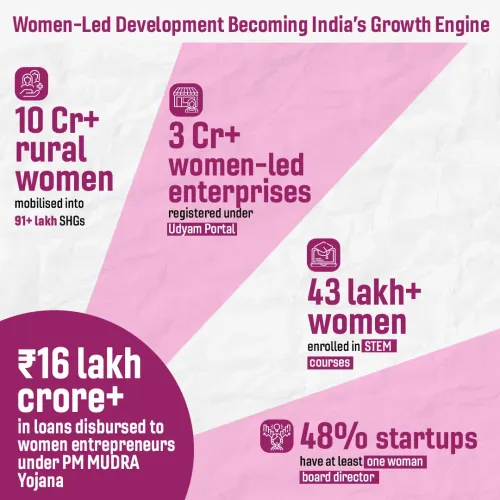
The primary beneficiaries of the Nari Shakti policy arc span a wide demographic: rural women accessing welfare schemes, urban women entrepreneurs leveraging government-backed credit and skilling programmes, and women candidates who will eventually benefit from the constitutional reservation once delimitation and a fresh census unlock its implementation. Indian women — roughly 700 million strong — constitute the broadest stakeholder group any single policy theme can address.
The BJP's framing of gender equity as an indicator of national progress has also carried electoral resonance, with women voters forming a growing and increasingly decisive share of the electorate in successive state and general elections since 2014.
What's Next
The implementation timeline for the Nari Shakti Vandan Adhiniyam remains contingent on the completion of a national census and the subsequent delimitation exercise — both of which are yet to be formally concluded. Budget watchers will also track whether the next Union Budget carries fresh allocations under women-focused heads to sustain the momentum the anniversary messaging projects. As the BJP approaches the next general election cycle, the twelve-year Nari Shakti narrative is expected to remain a central plank of the party's governance record.
Point of View
Emotionally resonant frame. By invoking 'self-respect' and 'dreams,' Goyal's messaging aligns the BJP's welfare architecture with aspirational identity politics rather than dry programme metrics. The timing, ahead of a general election cycle, signals that Nari Shakti will remain a frontline narrative asset for the party. The unresolved implementation of the Women's Reservation Bill, however, offers opposition parties a ready counter-point about the gap between symbolism and structural change.
NationPress
20 Sept 2026
Frequently Asked Questions
What is #12YearsOfNariShakti?
#12YearsOfNariShakti marks twelve years of the BJP-led government's women's empowerment agenda since it came to power in May 2014, encompassing schemes like Beti Bachao Beti Padhao and the passage of the Women's Reservation Bill.
What did Piyush Goyal post about Nari Shakti?
Piyush Goyal posted a Hindi couplet on 12 June 2026 that translates as 'Honour to self-respect, wings to dreams — Nari Shakti has become the identity of the new India,' using the hashtag #12YearsOfNariShakti.
What is the Nari Shakti Vandan Adhiniyam?
The Nari Shakti Vandan Adhiniyam is a constitutional amendment passed by Parliament in September 2023 that reserves one-third of seats for women in the Lok Sabha and state legislative assemblies; its implementation is tied to a fresh census and delimitation.
What is Beti Bachao Beti Padhao?
Beti Bachao Beti Padhao is a central government scheme launched in January 2015 to improve the child sex ratio and promote the education and welfare of the girl child across India.
When will the Women's Reservation Bill be implemented?
The Women's Reservation Bill's seat-reservation provisions will come into force only after the completion of a national census and a subsequent delimitation exercise, both of which are yet to be formally concluded as of mid-2026.