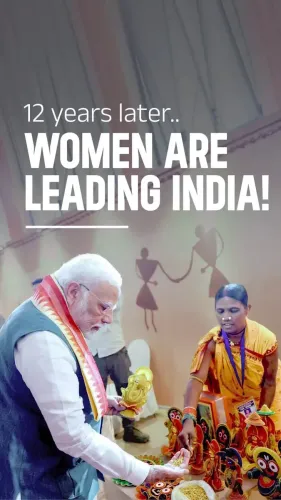
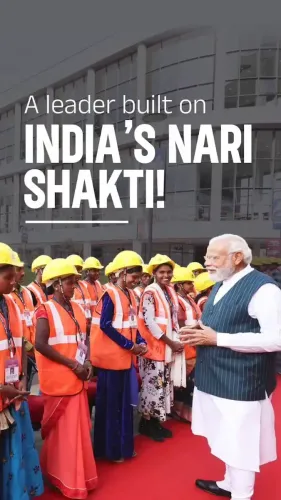
Pradhan Marks 12 Years of Nari Shakti, Cites Women as Force Behind Viksit Bharat
Synopsis
Union Education Minister Dharmendra Pradhan marked twelve years of Nari Shakti on June 12, 2026, calling women both an inspiration for change and the driving force behind India's Viksit Bharat vision, situating the message within a decade-long NDA policy arc on women's empowerment.
Key Takeaways
Union Education Minister Dharmendra Pradhan posted on June 12, 2026 , marking #12YearsOfNariShakti on platform X.
He described Nari Shakti as both an inspiration for change and the strength powering national progress toward Viksit Bharat .
The post references a twelve-year policy emphasis on women's empowerment under the current central government.
Key policy milestones in this arc include the Beti Bachao Beti Padhao scheme (2015) and the Women's Reservation Bill passed in 2023 .
Gender-focused implementation of NEP 2020 and women-centric skilling budgets are the immediate policy areas to watch.
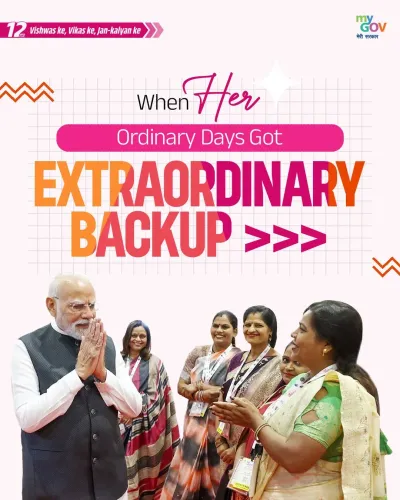
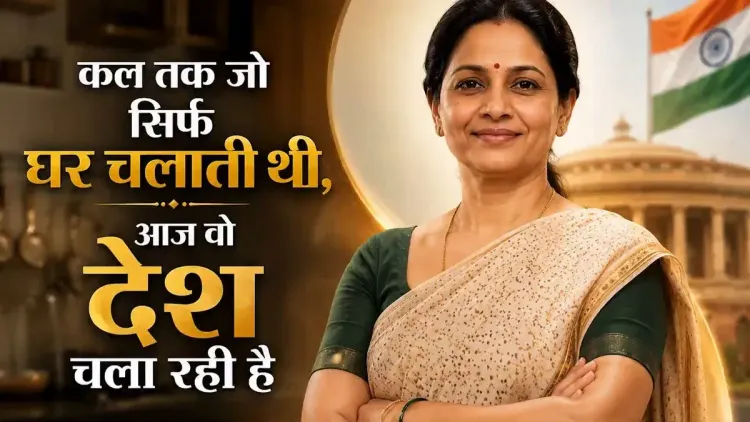
Union Education Minister Dharmendra Pradhan on Friday, June 12, 2026, invoked the concept of Nari Shakti (women's power) as both an inspiration for change and a driving force behind India's national progress, marking the occasion with the hashtag #12YearsOfNariShakti on the social media platform X.
Context
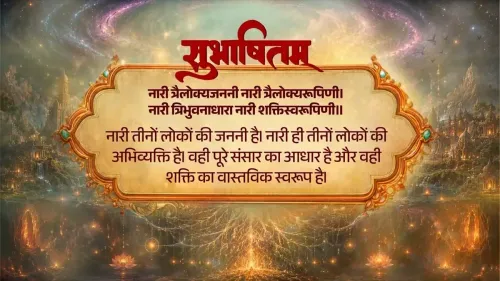
In his post, Pradhan wrote: 'Nari Shakti aaj badlaav ki prerana bhi hai aur rashtra ki pragati ki shakti bhi' — 'Women's power today is both an inspiration for change and the strength behind the nation's progress.' He further described women as Matru Shakti (mother power), leading development across every field and giving shape to the resolve of a Viksit Bharat, or Developed India.
The post is framed around a milestone: twelve years of a sustained political and policy emphasis on women's empowerment under the current central government. The hashtag situates this message within that longer arc, though the precise origin and full scope of the #12YearsOfNariShakti campaign have not been independently confirmed.
Policy Backdrop
The NDA government has, since 2014, pursued a series of women-focused policy interventions. The flagship Beti Bachao Beti Padhao scheme, launched in 2015, was designed to address the declining child sex ratio and promote girls' education and empowerment across districts identified as critically skewed.
More recently, the Women's Reservation Bill, passed in 2023, reserved one-third of seats for women in Parliament and state legislatures — a structural shift that the ruling dispensation has positioned as a landmark democratic reform. Together, these measures form the policy lineage that Pradhan's post draws upon.
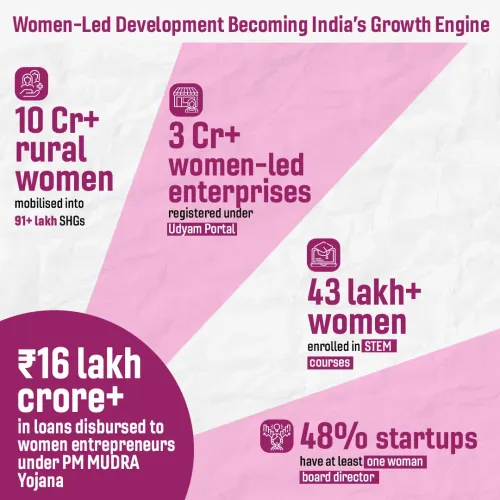
The Viksit Bharat vision — India's goal of becoming a fully developed nation by 2047, the centenary of independence — has increasingly incorporated women's participation as a stated pillar. Government messaging has consistently linked female workforce participation, self-help group expansion, and educational attainment to the broader development target.
Stakeholders and Impact
The primary stakeholders in this framing are women students, female entrepreneurs, self-help group members, and women in elected office — constituencies that government policy has sought to expand and support over the past decade. Pradhan, in his capacity as Union Education Minister, has particular institutional relevance to the female student population, where enrolment gains at higher education levels have been cited by the ministry as a marker of progress.
Gender-focused components of the National Education Policy (NEP) 2020 — including provisions for flexible learning pathways and reduced dropout incentives — are seen as directly bearing on outcomes for girls and women. Civil society groups and women's rights organisations have broadly welcomed the legislative and policy attention, while also calling for faster implementation and stronger accountability mechanisms.
What's Next
Observers will watch for concrete follow-through in the form of fresh budgetary allocations for women-centric skilling programmes and the gender-specific rollout of NEP 2020 implementation at the state level. With the Viksit Bharat 2047 deadline structuring much of the government's medium-term planning, the degree to which women's economic and educational participation metrics improve will increasingly serve as a benchmark for the vision's credibility.
Point of View
Anchoring the BJP's twelve-year record on women's welfare to the forward-looking Viksit Bharat narrative — a framing that serves both retrospective credit-claiming and prospective agenda-setting. By invoking Matru Shakti alongside Nari Shakti, the minister deploys culturally resonant language that blurs the line between civic empowerment and traditional reverence, a rhetorical pattern common in NDA communications. The timing — mid-2026, with state election cycles ongoing in several large states — gives the message an unmistakable electoral undertone even as it stays within the register of developmental aspiration. Whether the milestone translates into measurable policy announcements will determine if this marks a substantive moment or remains a commemorative gesture.
NationPress
21 Sept 2026
Frequently Asked Questions
What is #12YearsOfNariShakti about?
The hashtag marks twelve years of the NDA government's sustained policy focus on women's empowerment, encompassing schemes like Beti Bachao Beti Padhao and the Women's Reservation Bill. Union Education Minister Dharmendra Pradhan used it on June 12, 2026, to highlight women's role in achieving the Viksit Bharat vision.
What is Viksit Bharat and how does it relate to women's empowerment?
Viksit Bharat is the government's vision for India to become a fully developed nation by 2047. Women's participation in education, the workforce, and political representation has been positioned as a central pillar of achieving this goal.
What is the Beti Bachao Beti Padhao scheme?
Beti Bachao Beti Padhao is a flagship government scheme launched in 2015 aimed at improving the child sex ratio and promoting girls' education and empowerment, initially targeting districts with critically low sex ratios.
What did the Women's Reservation Bill 2023 do?
The Women's Reservation Bill, passed in 2023, reserves one-third of seats for women in Parliament and state legislatures, representing a significant structural change to political representation in India.
What role does Dharmendra Pradhan play in education policy for women?
As Union Education Minister, Dharmendra Pradhan oversees implementation of the National Education Policy 2020, which includes gender-focused provisions aimed at reducing dropout rates and expanding higher education access for women and girls.