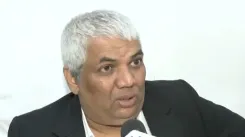
Jal Shakti Minister Paatil Links Sanitation to Women's Empowerment
Synopsis
Union Jal Shakti Minister C. R. Paatil on 12 June 2026 declared sanitation and women's empowerment the twin foundations of a developed India, crediting PM Modi's decade-plus leadership for bringing dignity, safety and confidence to crores of women through schemes such as Swachh Bharat Mission and Pradhan Mantri Ujjwala Yojana.
Key Takeaways
Union Jal Shakti Minister C.
Paatil posted on 12 June 2026 under the hashtag #12YearsOfNariShakti .
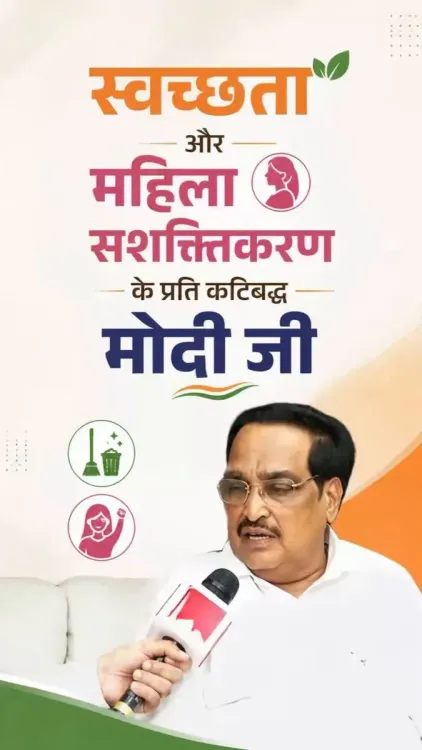
He described sanitation and women's empowerment as 'the strong foundation of a developed India', not merely public-welfare subjects.
The post credits PM Narendra Modi's leadership for bringing dignity, safety and self-confidence to crores of women.
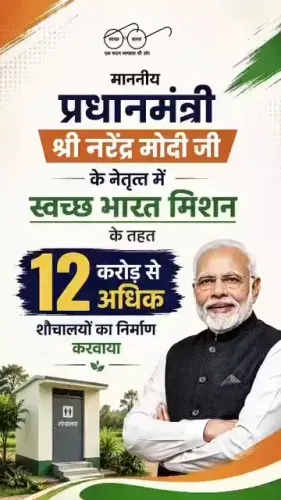
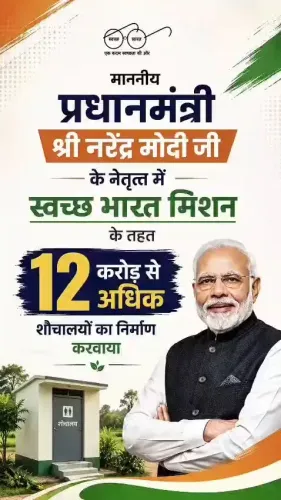
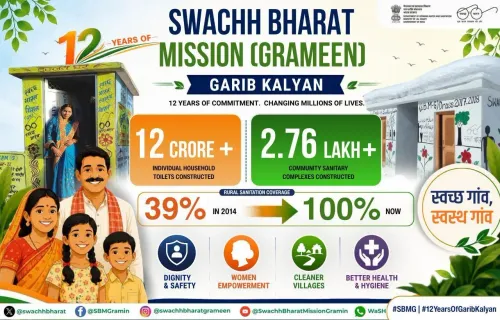
The Swachh Bharat Mission , launched 2 October 2014 , built over 10 crore toilets with an explicit women's-dignity rationale.
The Pradhan Mantri Ujjwala Yojana (2016) extended the empowerment narrative by providing LPG connections to women from below-poverty-line households.
Future focus includes Swachh Bharat Mission Phase-2 targets and potential women-linked water and sanitation components in the next Union Budget .
Union Jal Shakti Minister C. R. Paatil on Friday, 12 June 2026 invoked the twin pillars of sanitation and women's empowerment as foundational to a developed India, crediting the leadership of Prime Minister Narendra Modi for transformative progress in both areas over more than a decade.
Context
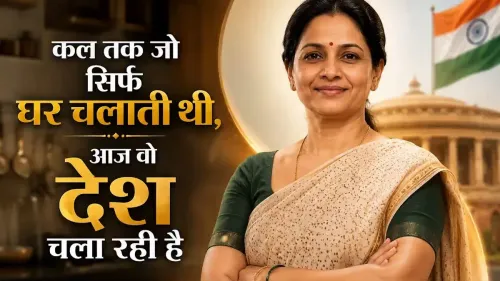
Paatil posted in Hindi, writing that 'स्वच्छता और महिला सशक्तिकरण केवल जनकल्याण के विषय नहीं, बल्कि विकसित भारत की सशक्त नींव हैं' — ('Sanitation and women's empowerment are not merely subjects of public welfare, but the strong foundation of a developed India'). The post was tagged with the hashtag #12YearsOfNariShakti, situating the message within a broader commemoration of over a decade of women-focused governance under the current dispensation.
The minister stated that wide-ranging efforts in these two sectors under PM Modi's leadership have 'infused dignity, safety and self-confidence in the lives of crores of women.'
Policy Backdrop
The remarks draw directly on the legacy of the Swachh Bharat Mission, launched on 2 October 2014, which constructed over 10 crore toilets across India with an explicit focus on ending open defecation and restoring dignity and safety to women. From its inception, the programme was publicly framed not merely as a sanitation drive but as a women's welfare intervention — reducing the physical danger and social drudgery faced by women who lacked household toilet access.
The Pradhan Mantri Ujjwala Yojana, launched in 2016, extended this narrative by providing LPG connections to women from below-poverty-line households, linking clean cooking fuel directly to women's health and empowerment. Subsequent phases of the Swachh Bharat Mission have further broadened the framing to include tap water access, menstrual hygiene facilities and solid-waste management as women-centric development outcomes.
Stakeholders and Impact
The primary beneficiaries of these converging programmes are rural women and household sanitation beneficiaries spread across India's villages and peri-urban settlements. For this constituency, toilet construction, clean water supply and clean cooking fuel have collectively reduced exposure to open spaces at night, indoor air pollution and waterborne disease — outcomes the government has consistently described as prerequisites for women's full participation in economic and social life.
As a senior BJP leader and the minister responsible for the Jal Shakti portfolio — which oversees drinking water and sanitation policy — Paatil's post reinforces the party's long-standing electoral and ideological messaging that physical infrastructure investments are inseparable from social empowerment goals.
What's Next
Attention will now turn to the roll-out of Swachh Bharat Mission Phase-2 targets and any new components that may be announced in the next Union Budget linking water, sanitation and women-specific development indicators. The #12YearsOfNariShakti campaign framing suggests the government intends to consolidate this narrative ahead of upcoming policy announcements, positioning sanitation and gender welfare as an integrated, decade-long achievement rather than discrete programme milestones.
Point of View
The party signals an intent to present over a decade of sanitation and clean-energy schemes as a coherent, cumulative gender-empowerment project rather than a series of standalone programmes. For the Jal Shakti Ministry, which oversees both drinking water and sanitation, this framing is strategically useful ahead of budget cycles where new women-linked targets could be announced. The broader pattern since 2014 has been to anchor physical infrastructure — toilets, taps, gas cylinders — in the language of dignity and safety, a formulation that has proved durable across multiple election cycles.
NationPress
16 Sept 2026
Frequently Asked Questions
What is the Swachh Bharat Mission and how does it help women?
The Swachh Bharat Mission was launched on 2 October 2014 to end open defecation and build household toilets across India. It was specifically framed as a women's welfare measure because access to household toilets reduces the safety risks, indignity and drudgery faced by women who previously had to defecate in the open. Over 10 crore toilets have been constructed under the mission.
What did C. R. Paatil say about women's empowerment on 12 June 2026?
C. R. Paatil , Union Minister of Jal Shakti, posted on 12 June 2026 that sanitation and women's empowerment are 'the strong foundation of a developed India' and credited PM Narendra Modi's leadership for bringing dignity, safety and self-confidence to crores of women through government programmes.
What is the #12YearsOfNariShakti hashtag about?
The #12YearsOfNariShakti hashtag commemorates over twelve years of women-focused governance and welfare schemes under the BJP-led central government since 2014, encompassing programmes such as Swachh Bharat Mission and Pradhan Mantri Ujjwala Yojana.
What is Pradhan Mantri Ujjwala Yojana?
Pradhan Mantri Ujjwala Yojana was launched in 2016 to provide free LPG connections to women from below-poverty-line households. It links clean cooking fuel to women's health, safety and empowerment by eliminating dependence on biomass fuels that cause indoor air pollution.
What is Jal Shakti Ministry responsible for?
The Jal Shakti Ministry oversees India's drinking water supply and sanitation policy, including the implementation of the Swachh Bharat Mission and the Jal Jeevan Mission , which aims to provide tap water connections to every rural household.