Jal Shakti Minister CR Paatil Marks 12 Years of Modi Govt

Synopsis
Union Jal Shakti Minister C. R. Paatil marked 12 years of the Modi government on June 9, 2026, citing the Antyodaya principle and flagship schemes on water, housing, health, and financial inclusion as pillars of inclusive development under the Viksit Bharat vision.
Key Takeaways
Paatil , Union Jal Shakti Minister and senior BJP leader, posted on June 9, 2026 to mark 12 years of the Modi government.
The post invoked the Antyodaya principle — uplifting the last person in the social order — as the governing philosophy of the past 12 years.
Key schemes cited include Pradhan Mantri Jan Dhan Yojana , Pradhan Mantri Awas Yojana , Jal Jeevan Mission , Ayushman Bharat , and Swachh Bharat Mission .
Beneficiary groups highlighted: women, youth, farmers, and the poor and marginalised .
The post is part of the BJP's #12YearsOfSeva social media campaign linking individual ministry work to the Viksit Bharat 2047 national vision.
As Jal Shakti minister, Paatil's own portfolio — particularly Jal Jeevan Mission tap-water targets — is a direct test of the inclusive development claims in the post.
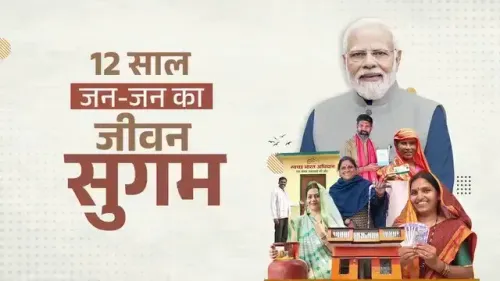
Union Jal Shakti Minister C. R. Paatil on Tuesday, June 9, 2026, took to X to mark 12 years of the Narendra Modi-led central government, highlighting what he described as transformative achievements in inclusive development, financial inclusion, housing, clean drinking water, and social security for crores of Indian citizens.
Context
Paatil's post, written in Hindi, saluted Prime Minister Narendra Modi under the hashtag #12YearsOfSeva, noting '12 वर्ष, निरंतर प्रयास और जनसेवा के प्रति अटूट समर्पण' — '12 years, continuous effort and unwavering dedication to public service.' The minister invoked the Antyodaya principle — the Gandhian and RSS-rooted idea of uplifting the last person in the social order — as the philosophical backbone of a decade-plus of governance.
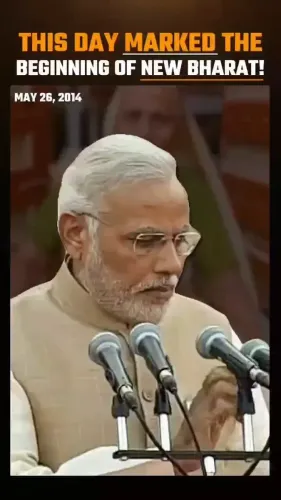
The BJP government completed its twelfth year in office in May 2026, having first assumed power on May 26, 2014. Senior party leaders across ministries have used the occasion to amplify the #12YearsOfSeva campaign on social media, connecting individual ministry mandates to the broader Viksit Bharat 2047 vision of a developed India by the centenary of independence.
Policy Backdrop
The minister's post specifically cited progress across five domains: financial inclusion, housing, clean drinking water, health security, and social security. Each maps directly to a flagship central scheme. Pradhan Mantri Jan Dhan Yojana, launched in August 2014, drove the opening of bank accounts for previously unbanked households. Pradhan Mantri Awas Yojana targeted the construction of pucca (permanent) homes for eligible rural and urban families.
As the minister heading Jal Shakti, Paatil's own portfolio sits at the centre of one of the government's most cited programmes: the Jal Jeevan Mission, announced in August 2019, which aims to deliver functional household tap connections to every rural home. Ayushman Bharat, rolled out in September 2018, extended health insurance coverage to poor and vulnerable families. Swachh Bharat Mission, launched in October 2014, addressed sanitation and rural water supply infrastructure — a precursor to the Jal Jeevan Mission's ambitions.
Paatil wrote that initiatives linked to these domains have brought 'positive transformation in the lives of crores of citizens,' framing the government's record through the lens of Antyodaya — ensuring development reaches the person standing on the last rung of society.
Stakeholders and Impact
The groups explicitly named in the post — women, youth, farmers, and the poor and marginalised — mirror the four pillars that the BJP has consistently cited in its electoral and governance communication since 2014. Women's empowerment through schemes such as Ujjwala (cooking gas) and Jan Dhan accounts in women's names, along with agricultural support measures, form a recurring theme in the party's outreach.
As Jal Shakti minister, Paatil oversees water supply and sanitation policy directly affecting rural households across India. The ministry's work on piped water access is seen as a tangible, household-level metric of the inclusive development narrative the post espouses. Civil society observers and parliamentary committees have tracked both coverage gains and implementation gaps in the Jal Jeevan Mission, making the minister's portfolio a live test of the Antyodaya promise.
What's Next
The #12YearsOfSeva campaign is expected to sustain across BJP social media channels through June 2026, with ministers and party functionaries drawing links between their specific portfolios and the national development narrative. For Paatil's ministry, attention will likely turn to parliamentary committee reviews of Jal Shakti budget utilisation and any mid-term assessment of outstanding Jal Jeevan Mission targets — the hard numbers that will determine whether the Antyodaya rhetoric translates into measurable last-mile delivery.
The post closes with a reference to '140 crore fellow citizens' whose aspirations, Paatil argues, have been connected to 'new energy and new faith' through a governance philosophy anchored in service, good governance, public participation, and national interest — the four pillars he lists as the foundation of the Viksit Bharat journey.
Point of View
A framing that has proved electorally durable since 2014. For Paatil specifically, the post reinforces his dual identity as a Jal Shakti technocrat and a senior BJP organisational figure, keeping him visible in national discourse ahead of any potential legislative or party milestones. The real scrutiny, however, will fall on Jal Jeevan Mission's last-mile numbers — where the gap between stated ambition and ground-level delivery remains the most politically sensitive variable in his portfolio.
NationPress
24 Sept 2026
Frequently Asked Questions
Why is the BJP celebrating 12 years of Modi government in June 2026?
The Modi government completed 12 years in office in May 2026, having first assumed power on May 26, 2014. The BJP launched the #12YearsOfSeva campaign to mark the anniversary, with senior ministers and party leaders sharing posts highlighting governance achievements across their portfolios.
What is the Antyodaya principle that CR Paatil mentioned?
Antyodaya means 'upliftment of the last person' and refers to a governance philosophy that prioritises the poorest and most marginalised citizens. The term has roots in Gandhian thought and is also central to RSS ideology; the Modi government has used it to frame welfare schemes targeting rural households, women, and the poor.
What schemes did CR Paatil's post refer to?
While Paatil did not name specific schemes, his references to financial inclusion, housing, clean drinking water, health security, and social security correspond to Pradhan Mantri Jan Dhan Yojana , Pradhan Mantri Awas Yojana , Jal Jeevan Mission , Ayushman Bharat , and Swachh Bharat Mission respectively.
What is Viksit Bharat and how does it relate to this post?
Viksit Bharat 2047 is the Modi government's vision of making India a developed nation by 2047, the centenary of independence. Paatil's post frames the 12-year governance record as part of the ongoing journey toward this goal, linking welfare delivery today to the long-term national ambition.
What is CR Paatil's role and background?
C. R. Paatil is the Union Minister of Jal Shakti, overseeing water supply and sanitation policy including the Jal Jeevan Mission . He is a senior BJP leader and former president of the BJP's Gujarat state unit, making him one of the party's most prominent organisational figures in western India.