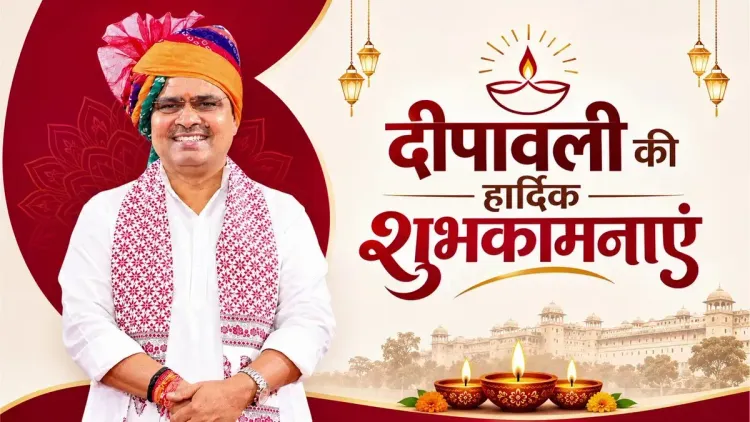
CM Bhajan Lal Sharma urges eco-friendly Diwali, support for local artisans
Synopsis
Rajasthan Chief Minister Bhajan Lal Sharma extended Diwali greetings on 8 November 2026, urging citizens to celebrate eco-consciously and shop from local artisans and small traders — echoing the Atmanirbhar Bharat spirit of supporting indigenous enterprise.
Key Takeaways
CM Bhajan Lal Sharma posted Diwali greetings on 8 November 2026 , combining seasonal wishes with a civic appeal.
He called for an eco-friendly Diwali , urging reduced environmental impact during the festival.
Sharma specifically asked citizens to shop from local artisans and small shopkeepers to support their livelihoods.
The message aligns with the national Atmanirbhar Bharat initiative launched in 2020 , which promotes indigenous goods and local enterprise.
The appeal reflects a consistent BJP state-government pattern of combining festival greetings with calls for local procurement and pollution reduction.
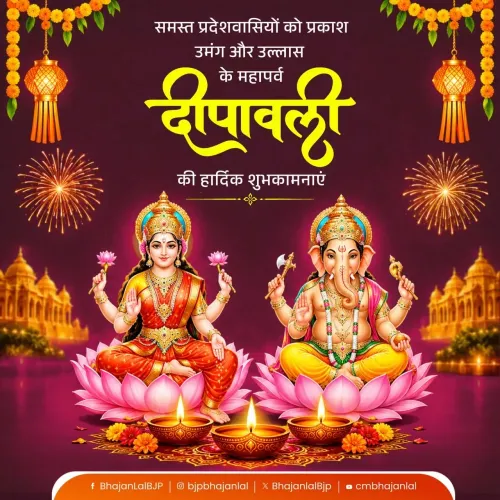
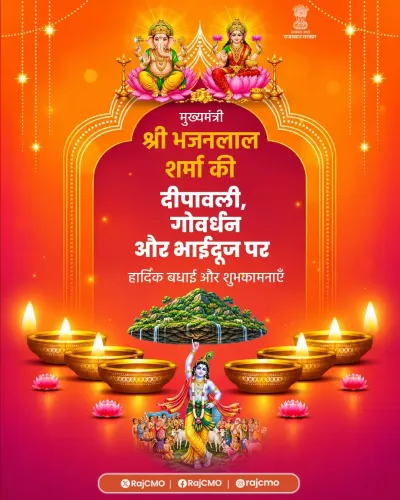
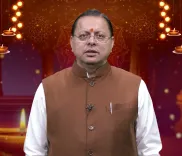
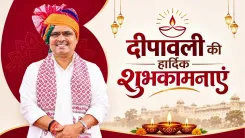
As the glow of Diwali lights up homes across Rajasthan, Chief Minister Bhajan Lal Sharma marked the festival with a call that goes beyond season's greetings — asking citizens to celebrate responsibly and spend with purpose. The message, posted on 8 November 2026, blends cultural warmth with a pointed nudge toward greener choices and grassroots economic support.
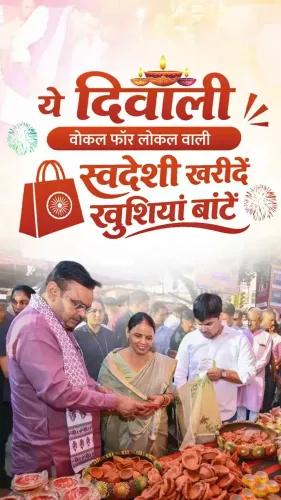
Writing in Hindi, Sharma described Diwali as 'प्रकाश, उल्लास और आत्मीयता का पर्व' — 'a festival of light, joy and togetherness' — one that fills every home and courtyard with happiness. But the Chief Minister's post quickly moved from celebration to civic appeal: 'Let us celebrate an eco-friendly Diwali this holy occasion, and by shopping from local artisans and small shopkeepers, spread the light of happiness in their lives too. This small effort of ours can make their festival even more special.'
A festival wish with an economic edge
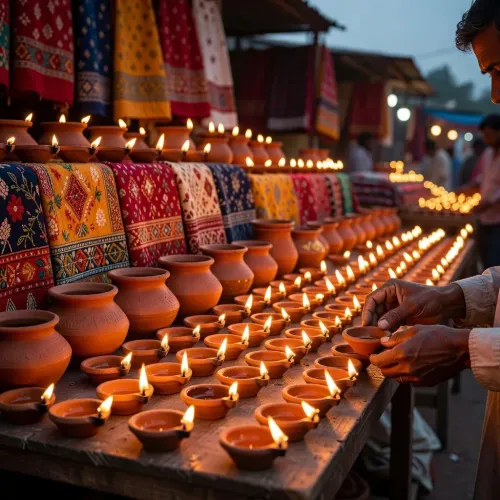
The appeal to 'buy local' this Diwali slots neatly into a broader national posture that has been building since the Atmanirbhar Bharat initiative of 2020, which explicitly encouraged consumers to support indigenous artisans and small traders over imported goods. BJP-governed states have consistently amplified this message around major festivals, when discretionary spending spikes and the symbolic weight of a purchase — a clay diya over a plastic one, a handwoven textile over a mass-produced import — carries real cultural resonance.
For the lakhs of potters, weavers, confectioners and neighbourhood shopkeepers who depend on the Diwali season for a significant share of their annual income, the signal from the Chief Minister's office carries weight. A single season of redirected consumer spending can meaningfully lift household earnings for artisans who operate outside formal retail chains.
Green Diwali: rhetoric or roadmap?
The eco-friendly Diwali message is one that state governments across India have leaned into in recent years, as urban air-quality concerns around firecracker use intensify. Sharma's post does not announce specific guidelines or enforcement measures — it is an appeal to individual conscience rather than a policy directive. Still, it positions the Rajasthan government visibly on the side of reduced pollution, a stance that resonates in cities like Jaipur, Jodhpur and Kota where post-Diwali air quality has drawn attention in recent seasons.
The Chief Minister closed with a warm benediction: 'Heartfelt Diwali wishes to all of you. May this holy festival bring happiness, prosperity and well-being into your lives.' Simple words — but paired with the economic and environmental appeal, they frame Diwali not just as a private celebration but as a collective civic act.
How many Rajasthanis actually shift their shopping baskets toward the local potter or the lane-side mithai shop this season is impossible to measure. But the message is out — and in a festival built on the symbolism of small flames driving away darkness, even a small nudge can count.
Point of View
He reinforces the BJP's Atmanirbhar Bharat economic nationalism at a consumer level, bypassing the need for a formal scheme. The eco-friendly framing also inoculates the government against criticism over urban air quality without committing to enforceable restrictions. Taken together, the post does political work well above its ceremonial surface.
NationPress
8 Nov 2026
Frequently Asked Questions
What did Rajasthan CM Bhajan Lal Sharma say about Diwali 2026?
CM Bhajan Lal Sharma extended Diwali greetings on 8 November 2026 and urged citizens to celebrate in an eco-friendly manner while shopping from local artisans and small shopkeepers to support their incomes during the festive season.
What is the Atmanirbhar Bharat connection to Diwali shopping appeals?
Atmanirbhar Bharat, announced in 2020, encourages Indians to buy locally made goods to support domestic artisans and small traders. Diwali appeals by BJP leaders to 'buy local' directly echo this initiative, channelling festival-season spending toward indigenous products.
Why do BJP chief ministers promote eco-friendly Diwali?
BJP chief ministers, including Bhajan Lal Sharma, promote eco-friendly Diwali to address growing concerns about firecracker-related air pollution in urban areas, aligning state messaging with environmental responsibility without imposing formal restrictions.
How does buying from local artisans on Diwali help them?
The Diwali season accounts for a significant share of annual income for potters, weavers, confectioners and small shopkeepers. Consumers choosing local vendors over large retail chains or imported goods directly boosts artisan household earnings during this critical period.
When did Bhajan Lal Sharma become Chief Minister of Rajasthan?
Bhajan Lal Sharma assumed office as Chief Minister of Rajasthan in December 2023 as a BJP leader, following the party's victory in the state assembly elections.