CM Bhajan Lal Sharma pens Diwali op-ed on Ram's ideals
Synopsis
Rajasthan Chief Minister Bhajan Lal Sharma used Diwali 2026 to publish a newspaper op-ed connecting Lord Ram's ideals of truth and righteousness to his government's 'Viksit Rajasthan' and 'Viksit Bharat' development vision, urging citizens to actively participate in building a developed India.
Key Takeaways
Bhajan Lal Sharma published a signed op-ed in a Rajasthan newspaper on Diwali, November 8, 2026 .
He described Diwali as the festival of three victories: light over darkness, truth over falsehood, and righteousness over adharma .
The piece invokes Lord Shri Ram's ideals — satya , maryada , and sadachar — as a moral compass for citizens.
The op-ed explicitly links the festival's themes to the government's 'Viksit Rajasthan' and 'Viksit Bharat 2047' pledges.
Sharma called for citizens' 'active participation' in national development, moving beyond routine festive greetings.
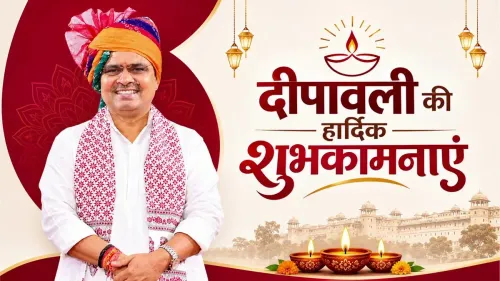
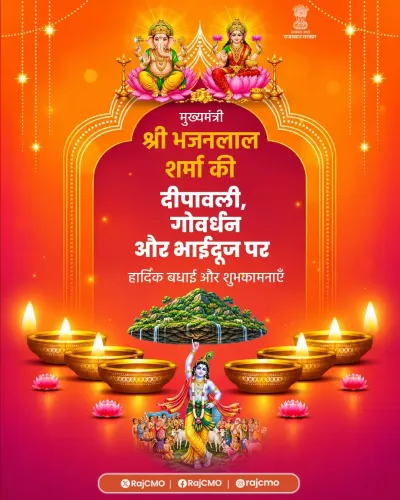
On the morning of Diwali 2026, Rajasthan Chief Minister Bhajan Lal Sharma stepped beyond the customary social-media greeting and published a full op-ed in a leading Rajasthan daily — weaving the festival's spiritual symbolism directly into the state's development agenda.
In his post, the Chief Minister described Diwali as 'ek anuttha parv' — 'a uniquely special festival' — that carries light into life, joy into the mind, and harmony into society. He framed the occasion as a celebration of three eternal victories: 'light over darkness, truth over falsehood, and righteousness over adharma.'
Lord Ram's ideals as a governance compass
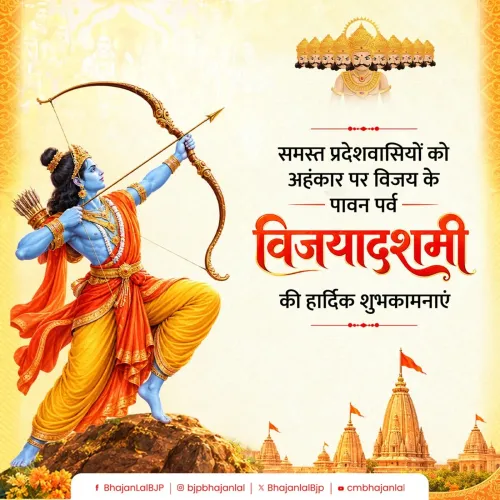
Sharma urged citizens to internalise the ideals of Lord Shri Ram — specifically the values of satya (truth), maryada (dignity), and sadachar (righteous conduct). The choice of Ram as the moral anchor is deliberate: in BJP political messaging, Ram's return to Ayodhya after fourteen years of exile is the defining metaphor for Diwali, and invoking his ideals in a governance context is a recurring rhetorical bridge between cultural identity and state policy.
Diwali as a launch-pad for 'Viksit Rajasthan'
The op-ed's most substantive passage links the festival's themes of renewal and light to the BJP government's twin development pledges — 'Viksit Rajasthan' (Developed Rajasthan) and 'Viksit Bharat' (Developed India by 2047). Sharma called on readers to translate the festival's spirit of samarasata (social cohesion) into 'active participation in building a developed India.' The framing positions cultural celebration and economic ambition as two sides of the same coin — a signature tactic in BJP state communications ahead of budget and policy cycles.
Writing in the press on a public holiday
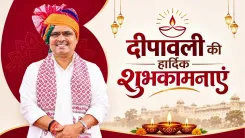
Publishing a signed op-ed on Diwali itself — rather than a brief greeting — is an uncommon choice that signals the administration's intent to use the festive moment for substantive outreach. By directing followers to read the full article, Sharma extends the conversation beyond the character limits of social media and into a more detailed policy-and-values register. The post carries one image, presumably of the published article, giving the message visual authority.
As millions of lamps are lit across Rajasthan tonight, the Chief Minister's message is clear: the festival's ancient promise of light is, in his government's telling, inseparable from the state's modern promise of development.
Point of View
' the Chief Minister reinforces a governance brand that presents Hindu civilisational values and modern economic ambition as mutually reinforcing — a framing central to BJP state-level communication ahead of budget cycles. The appeal to 'active participation' also gestures toward citizen mobilisation, which serves both political and administrative goals. Whether the op-ed shifts policy discourse or remains ceremonial outreach depends on what concrete announcements follow in the days after the festival.
NationPress
8 Nov 2026
Frequently Asked Questions
What did Rajasthan CM Bhajan Lal Sharma write in his Diwali op-ed?
CM Bhajan Lal Sharma wrote about Diwali as the festival of light over darkness, truth over falsehood, and righteousness over adharma. He connected Lord Ram's ideals of truth, dignity, and righteous conduct to his government's 'Viksit Rajasthan' and 'Viksit Bharat' development vision, urging citizens to participate actively in building a developed India.
What is 'Viksit Rajasthan' that CM Sharma mentioned in his Diwali message?
'Viksit Rajasthan' (Developed Rajasthan) is the BJP government's state-level development pledge, aligned with the central government's 'Viksit Bharat' (Developed India by 2047) programme. CM Sharma frames it as a goal that citizens should actively work toward alongside the federal development vision.
Why did CM Bhajan Lal Sharma write a newspaper article on Diwali 2026?
By publishing a signed op-ed rather than a brief social-media greeting, CM Sharma used the festive occasion to deliver a more detailed message linking Diwali's spiritual themes to governance goals, extending his reach beyond social media to newspaper readers across Rajasthan.
How does BJP use Diwali messaging in political communication?
BJP leaders frequently use Diwali to invoke the symbolism of Lord Ram's return to Ayodhya as a metaphor for truth and good governance. This allows them to blend cultural and religious identity with development-oriented policy messaging, reinforcing their core political brand.
When did Bhajan Lal Sharma post his Diwali op-ed on X?
CM Bhajan Lal Sharma posted his Diwali op-ed announcement on X (formerly Twitter) on the morning of Sunday, November 8, 2026 , at approximately 9:49 AM IST.