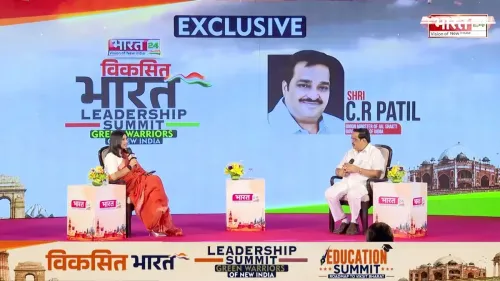
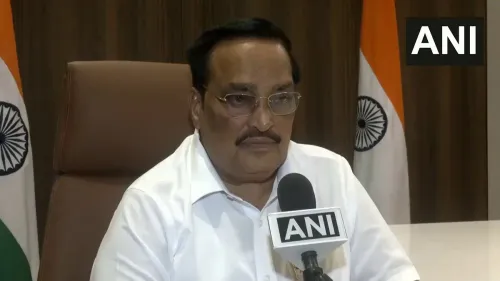
Jal Shakti Minister Paatil marks 12 years of Modi govt
Synopsis
Union Jal Shakti Minister C. R. Paatil marked 12 years of the Modi government on 26 May, highlighting the Jal Jeevan Mission and modern infrastructure as cornerstones of India's self-reliance journey under the Viksit Bharat vision.
Key Takeaways
Paatil , Union Minister of Jal Shakti, posted on X on 26 May to mark the 12th anniversary of the Modi government.
The post invokes the Jal Jeevan Mission — launched in August 2019 — as a symbol of rural water security under the current government.
Paatil cited Digital India , modern infrastructure, and the Atmanirbhar Bharat initiative as pillars of a self-reliant New India.
The Viksit Bharat 2047 vision frames the government's long-term development ambition, targeting developed-nation status within the next two decades.
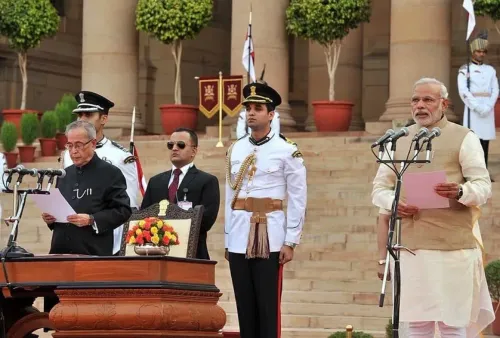
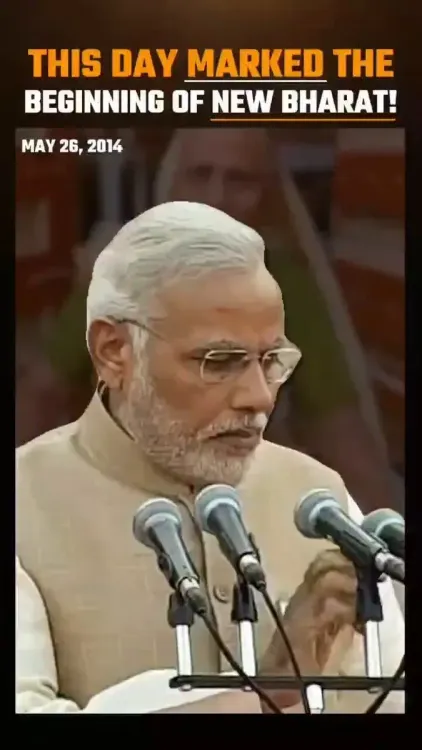
Narendra Modi was first sworn in as Prime Minister on 26 May 2014 , making this date a recurring marker for BJP's development narrative.
Updated Jal Jeevan Mission coverage data and Union Budget infrastructure outlays are the key metrics to watch going forward.
Union Jal Shakti Minister C. R. Paatil on Tuesday, 26 May marked the 12th anniversary of the Narendra Modi government, invoking the twin pillars of water security and modern infrastructure as evidence of a transformed India. The minister posted on X, tagging Prime Minister Narendra Modi and the PMO India handle, framing the occasion as a milestone in the country's journey toward self-reliance.
Context
Narendra Modi was sworn in as Prime Minister on 26 May 2014, marking the start of the current National Democratic Alliance government. Paatil's post, written in Hindi, opens with a motivational couplet — 'Manzilein unhi ko milti hain, jinke sapnon mein jaan hoti hai, pankhon se kuch nahi hota, hauslon se udaan hoti hai' ('Destinations are reached only by those whose dreams have life; wings alone mean nothing — it is courage that gives flight') — before pivoting to a development narrative.
The post states: 'From Jal Jeevan to cutting-edge infrastructure... a proud picture of New India!' It goes on to say that the vision launched on 26 May 2014 has carried development to every corner of the country, whether clean drinking water in villages or a modern national infrastructure, adding that 'today's India is becoming self-reliant on every front.'
Policy Backdrop
The Jal Jeevan Mission, launched in August 2019, is the flagship scheme under Paatil's own ministry, aiming to provide functional household tap connections for drinking water to every rural home across India. The programme sits at the intersection of basic rural services and the government's broader infrastructure push, making it a natural centrepiece for any anniversary messaging by the Jal Shakti portfolio.
The Digital India programme, launched in 2015, expanded broadband access and e-governance infrastructure, while the Atmanirbhar Bharat initiative, announced in 2020, explicitly linked capital-intensive infrastructure creation to national self-reliance goals. The Viksit Bharat vision — India as a fully developed nation by 2047 — has since become the overarching frame under which these individual programmes are presented.
Successive Union Budgets since 2014 have steadily raised capital expenditure on water supply, roads, ports, and digital networks. The 26 May anniversary has become a recurring occasion for senior BJP leaders and ministers to consolidate these threads into a single development narrative.
Stakeholders and Impact
The primary beneficiaries cited in the post are rural households — the intended recipients of piped drinking water under the Jal Jeevan Mission — and, more broadly, citizens who interact daily with upgraded roads, digital services, and public utilities. Infrastructure developers and contractors involved in large-scale public works are also direct stakeholders in the capital expenditure cycle the post celebrates.
For Paatil personally, the post underscores his ministry's centrality to the government's rural-development story. As a senior BJP leader and former Gujarat BJP state president, his public communications on such anniversaries carry both administrative and political weight, reinforcing the party's record ahead of ongoing state and national electoral cycles.
What's Next
Updated coverage data for the Jal Jeevan Mission and the scale of infrastructure outlays in the next Union Budget will be closely watched as concrete indicators of whether the self-reliance narrative translates into measurable on-ground outcomes. As the government moves deeper into its current term, the Viksit Bharat 2047 roadmap is expected to serve as the primary benchmark against which these anniversary claims will be evaluated by policymakers, opposition parties, and civil-society groups alike.
Point of View
Voter-proximate deliverables in the current government's portfolio, and Paatil, as the minister responsible, has a direct stake in its salience. The motivational couplet at the opening signals that the communication is aimed at a mass Hindi-speaking audience rather than a policy community, suggesting this is as much an electoral-cycle refresh as it is an administrative update. Framed against the Viksit Bharat 2047 horizon, the post also signals that the government intends to keep these themes central to its identity well beyond the current term.
NationPress
21 Sept 2026
Frequently Asked Questions
What is the Jal Jeevan Mission and what has it achieved?
The Jal Jeevan Mission is a central government scheme launched in August 2019 with the goal of providing functional household tap connections for drinking water to every rural home in India. It is administered by the Union Ministry of Jal Shakti under Minister C. R. Paatil and is one of the flagship programmes cited in the government's rural development narrative.
Why is 26 May significant for the Modi government?
26 May marks the anniversary of Narendra Modi's swearing-in as Prime Minister in 2014, beginning the current NDA government. Senior BJP leaders and ministers regularly use the date to highlight development milestones and reaffirm the government's policy vision.
What is Viksit Bharat 2047?
Viksit Bharat, meaning 'Developed India', is the Modi government's stated vision for India to achieve developed-nation status by 2047, the centenary of independence. The framework encompasses infrastructure expansion, rural services, digital connectivity, and economic self-reliance.
What is the Atmanirbhar Bharat initiative?
Atmanirbhar Bharat, or 'Self-Reliant India', was announced in 2020 as a policy initiative linking large-scale infrastructure investment with goals of domestic manufacturing and reduced import dependence. It has since been integrated into the broader Viksit Bharat narrative.
What is C. R. Paatil's political background?
C. R. Paatil is a senior BJP leader who previously served as the BJP's Gujarat state president. He currently serves as the Union Minister of Jal Shakti in the Modi government and is among the party's prominent organisational figures.