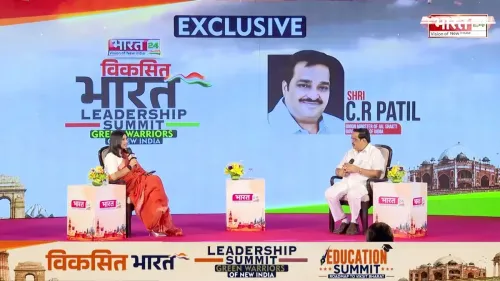
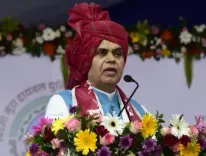
Jal Shakti Minister Paatil marks 12 years of BJP governance
Synopsis
Union Jal Shakti Minister C. R. Paatil marked the BJP government's twelve-year anniversary on 13 June 2026, invoking public cooperation as the driving force behind India's development story — from the Swachh Bharat Mission to the Jal Jeevan Mission.
Key Takeaways
Paatil , Union Minister of Jal Shakti, posted on 13 June 2026 to mark #12YearsOfSeva of BJP-led governance.
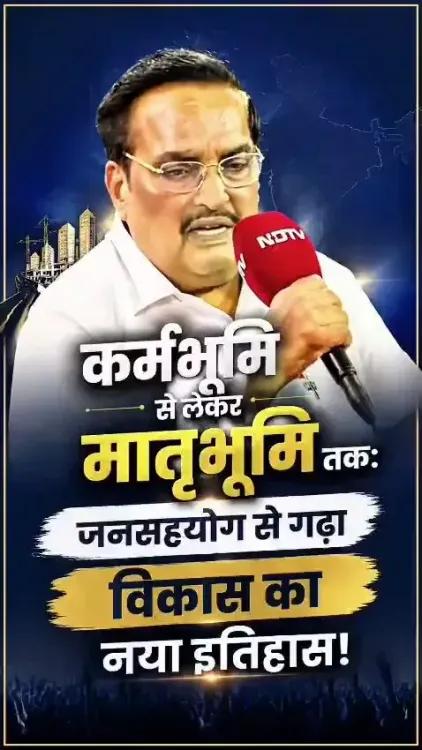
His Hindi post translates to: 'From the land of one's work to the motherland: a new history of development forged through public cooperation.' The Jal Shakti Ministry was formed in 2019 by merging the water resources and drinking water departments.
The Jal Jeevan Mission (2019) and Swachh Bharat Mission (2014) are the two flagship schemes underpinning the ministry's development narrative.
Paatil previously served as Gujarat BJP state president , and Gujarat is frequently cited as a model for water conservation.
Rural households and farmers — particularly in Gujarat — are among the primary beneficiaries of the government's water and sanitation programmes.
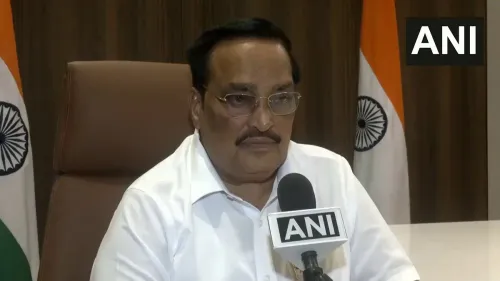
Union Jal Shakti Minister C. R. Paatil on Saturday, 13 June 2026, marked twelve years of BJP-led governance at the Centre with a social media post invoking the spirit of public participation in national development, using the hashtag #12YearsOfSeva.
Paatil's post, written in Hindi, declared: 'Karmabhoomi se lekar matrubhoomi tak: jansahyog se gadha vikas ka naya itihas!' — translating to 'From the land of one's work to the motherland: a new history of development forged through public cooperation!' The message frames twelve years of BJP rule as a story written jointly by the government and citizens.
Context
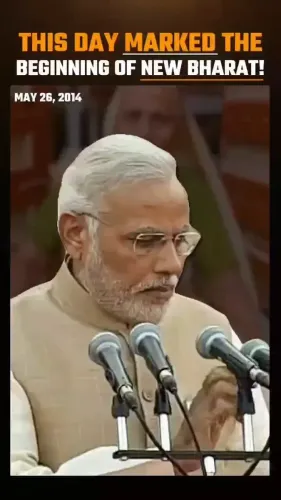
The hashtag #12YearsOfSeva marks the anniversary of Prime Minister Narendra Modi's first oath of office on 26 May 2014, when the BJP-led National Democratic Alliance came to power at the Centre. BJP leaders across the country have used the occasion to highlight flagship programmes launched over the past twelve years. Paatil, who served as Gujarat BJP state president before being elevated to the Union Cabinet, has consistently linked his state-level administrative experience with the broader national development narrative.
Policy Backdrop
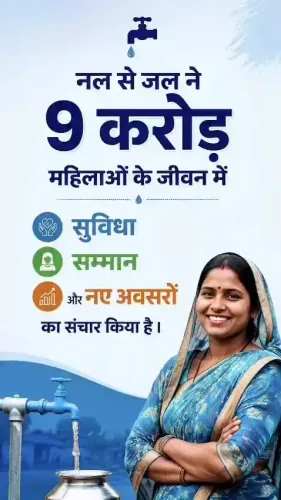
Two programmes sit at the heart of the #12YearsOfSeva messaging in the water and sanitation space. The Swachh Bharat Mission, launched in 2014, emphasised jan bhagidari — people's participation — as the engine of sanitation outcomes. The Jal Jeevan Mission, rolled out in 2019 following the creation of the Jal Shakti Ministry through a merger of the water resources and drinking water departments, set an ambitious target of delivering functional household tap connections to every rural home in India.
Together, these schemes represent the BJP government's argument that durable development requires community ownership rather than top-down delivery. Paatil's phrase 'new history of development forged through public cooperation' directly echoes this framing, positioning jansahyog (public cooperation) as the defining method of the last twelve years.
Stakeholders and Impact
Rural households and Gujarat farmers are among the primary beneficiaries cited in the government's own accounts of water and sanitation progress. Gujarat, the minister's home state, has been held up repeatedly as a model for water conservation and rural infrastructure delivery. The Jal Shakti Ministry's outreach has centred on improving tap-water access in villages where women and girls historically bore the burden of fetching water over long distances, making the mission's social impact extend beyond infrastructure alone.
For BJP workers and supporters, the anniversary post serves an organisational function as well — reinforcing party identity and continuity between the Modi government's first term in 2014 and its current tenure.
What's Next
Attention will now turn to updated coverage figures for the Jal Jeevan Mission and any new Gujarat water conservation project announcements that may follow the anniversary period. As the government approaches the next phase of water infrastructure planning, the minister's emphasis on public cooperation signals that community-led models are likely to remain central to the ministry's communication and implementation strategy going forward.
Point of View
The messaging deflects credit from the state alone and distributes it to citizens, making the achievement harder to contest politically. For a minister who rose through Gujarat — the laboratory for many of these models — the post also quietly asserts a personal continuity between state and national governance. As the BJP enters the next phase of its water infrastructure agenda, this kind of anniversary communication helps consolidate the ministry's identity ahead of any policy announcements.
NationPress
20 Sept 2026
Frequently Asked Questions
What is the #12YearsOfSeva hashtag about?
#12YearsOfSeva marks twelve years since the BJP-led National Democratic Alliance under Prime Minister Narendra Modi came to power at the Centre in May 2014. BJP leaders have used the hashtag to highlight flagship programmes launched during this period.
What did C. R. Paatil post on 13 June 2026?
C. R. Paatil posted a Hindi message translating to 'From the land of one's work to the motherland: a new history of development forged through public cooperation,' celebrating twelve years of BJP governance under the #12YearsOfSeva hashtag.
What is the Jal Jeevan Mission?
The Jal Jeevan Mission is a central government scheme launched in 2019 that aims to provide functional household tap connections to every rural home in India. It is administered by the Jal Shakti Ministry.
What is the Jal Shakti Ministry?
The Jal Shakti Ministry is a Union ministry formed in 2019 by merging the Ministry of Water Resources and the Ministry of Drinking Water and Sanitation. C. R. Paatil currently serves as its Union Minister.
What is C. R. Paatil's political background?
C. R. Paatil is a senior BJP leader who previously served as Gujarat BJP state president before being appointed Union Minister of Jal Shakti. Gujarat is his home state and has been a BJP stronghold for several decades.