Paatil Hails 12 Years of Modi Govt as People's Movement
Synopsis
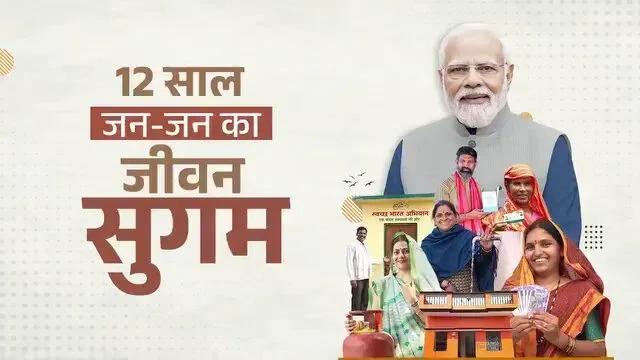
Union Jal Shakti Minister C. R. Paatil has hailed twelve years of the Modi government as a people's movement, crediting welfare schemes targeting farmers, women, youth and marginalised communities with bringing positive change to crores of Indian citizens.
Key Takeaways
Union Jal Shakti Minister C.
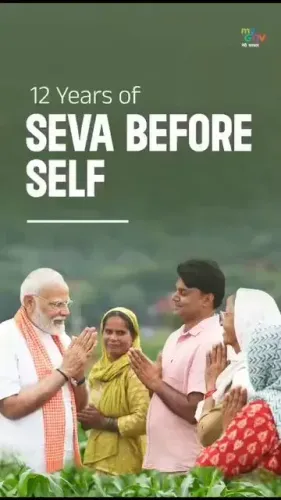
Paatil posted on 9 June 2026 under #12YearsOfSeva to mark twelve years of the Modi government.
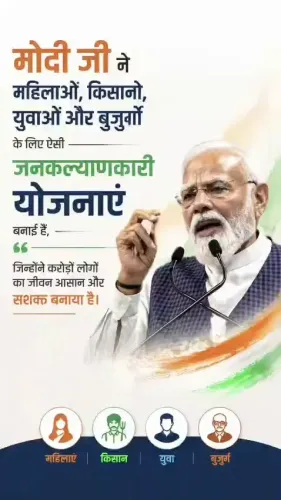
Paatil described the government's policies as transforming development into a 'people's movement' centred on the poor, farmers, women, youth and marginalised groups.
Key flagship schemes cited in the research context include Pradhan Mantri Ujjwala Yojana (2016), Jal Jeevan Mission (2019) and PM-KISAN (2019).
The post reflects the BJP's 'Sabka Saath, Sabka Vikas' framework, presenting welfare delivery as participatory rather than top-down.
The Jal Jeevan Mission , administered by Paatil's ministry, targets piped drinking water for every rural household in India.
The messaging is part of a broader BJP communications drive marking the anniversary of the government that first took office in May 2014 .
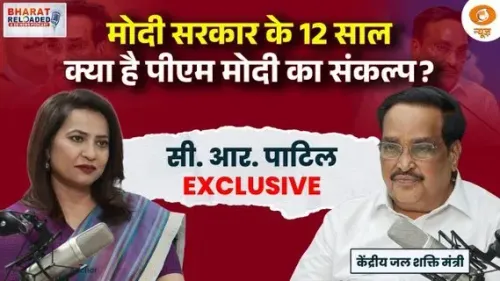
Union Jal Shakti Minister C. R. Paatil on Tuesday, 9 June 2026 credited Prime Minister Narendra Modi's twelve years in office with transforming welfare governance into a mass movement, saying policies centred on the poor, farmers, women, youth and marginalised communities have brought positive change to the lives of crores of citizens.
Context
Posting under the hashtag #12YearsOfSeva ('12 years of service'), Paatil wrote that 'good governance and public welfare under the leadership of Prime Minister Shri Narendra Modi over the past 12 years have given development the form of a people's movement.' The post is part of a wider BJP communications drive marking the anniversary of the Modi-led government, which first took office in May 2014.
Paatil argued that the schemes born of these policies are 'not merely government initiatives but have become the cornerstone of trust, opportunity and inclusive development of a new India.' The remarks reflect the ruling party's framing of its welfare agenda as a bottom-up, participatory model rather than a top-down programme.
Policy Backdrop
The twelve-year period Paatil references has seen several flagship welfare programmes rolled out across energy, water, agriculture and direct-benefit transfers. Pradhan Mantri Ujjwala Yojana, launched in 2016, extended LPG connections to women in below-poverty-line households, directly targeting energy access for rural women.
The Jal Jeevan Mission, announced in 2019 and administered by Paatil's own ministry, aims to deliver piped drinking water to every rural household in India — a programme that places the Jal Shakti Ministry at the centre of the government's last-mile inclusion drive. The PM-KISAN income-support scheme, also introduced in 2019, provides direct financial assistance to landholding farmer families. Together these programmes represent the government's stated 'Sabka Saath, Sabka Vikas' ('Together with all, development for all') framework.
Stakeholders and Impact
The four groups Paatil specifically names — farmers, women, youth and the marginalised — correspond closely to the target beneficiaries of the government's core welfare schemes. Direct-benefit transfer architecture, which routes subsidies and payments digitally into beneficiary accounts, has been a structural feature linking these programmes.
For Paatil personally, the anniversary messaging reinforces his dual identity: as the Union minister responsible for water security and as a senior BJP leader who has held the party's state presidency in Gujarat. The post signals continued alignment between the ministry's on-ground work and the party's broader political narrative ahead of future electoral cycles.
What's Next
Attention will now turn to whether the anniversary communications are accompanied by fresh policy announcements, updated coverage data for the Jal Jeevan Mission, or new welfare allocations in forthcoming budget discussions. Progress on rural piped-water connectivity and any expansion of existing direct-benefit schemes will be closely watched by policymakers and civil-society groups monitoring last-mile delivery across India's states.
Point of View
Women, youth, the marginalised), the message maps directly onto the BJP's core voter-outreach constituencies, blending ministerial credibility with party messaging. The invocation of schemes like Jal Jeevan Mission is particularly pointed given Paatil's own portfolio, lending the tribute an institutional weight beyond routine political congratulation. Analysts will note that such communications increasingly frame government programmes not as policy outputs but as social contracts — a rhetorical shift designed to deepen citizen identification with the ruling dispensation.
NationPress
25 Oct 2026
Frequently Asked Questions
What is #12YearsOfSeva and why is it trending?
#12YearsOfSeva marks twelve years since the Narendra Modi-led BJP government came to power in May 2014. The hashtag is part of a coordinated BJP communications campaign on social media to highlight the government's welfare and governance record.
What did C. R. Paatil say about the Modi government's 12 years?
C. R. Paatil said that good governance and public welfare under PM Modi's leadership over twelve years have given development the form of a people's movement, and that policies focused on the poor, farmers, women, youth and marginalised communities have brought positive change to crores of citizens.
What is the Jal Jeevan Mission and who oversees it?
The Jal Jeevan Mission is a central government scheme announced in 2019 that aims to provide piped drinking water connections to every rural household in India. It is administered by the Union Ministry of Jal Shakti, currently headed by Minister C. R. Paatil.
Who is C. R. Paatil?
C. R. Paatil is the Union Minister of Jal Shakti in the Modi government and a senior BJP leader. He previously served as the BJP's state president in Gujarat and is a member of the Lok Sabha.
What welfare schemes has the Modi government launched since 2014?
Key schemes launched since 2014 include Pradhan Mantri Ujjwala Yojana (2016) for LPG connections to BPL women, Jal Jeevan Mission (2019) for rural piped water, and PM-KISAN (2019) for direct income support to farmer families, among several others targeting last-mile inclusion.