Jal Shakti Minister Paatil hails 12 years of farm welfare schemes
Synopsis
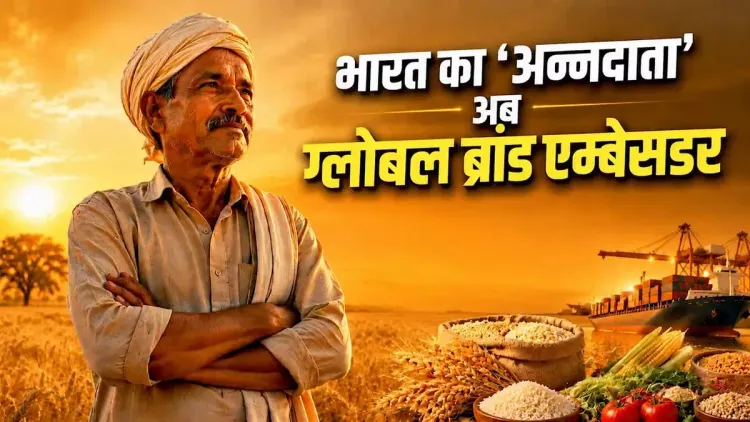
Union Jal Shakti Minister C. R. Paatil has lauded 12 years of Modi government farm welfare, highlighting PM-Kisan, Pradhan Mantri Fasal Bima Yojana, PM-KUSUM, and agri-infrastructure schemes as pillars of farmer empowerment and self-reliance under the Viksit Bharat vision.
Key Takeaways
Union Jal Shakti Minister C.
Paatil posted on 11 June 2026 marking 12 years of Modi government farm welfare initiatives.
PM-Kisan Samman Nidhi provides ₹6,000 per year per eligible farm family via direct benefit transfer, launched in February 2019 .
Pradhan Mantri Fasal Bima Yojana , introduced in 2016 , replaced the older national crop insurance scheme with broader risk coverage and faster settlements.
PM-KUSUM , approved in 2019 , links solar energy to agricultural irrigation, reducing diesel dependence for farmers.
The post was part of a coordinated #12YearsOfKisanSamriddhi and #ViksitBharat campaign across ruling-party ministerial accounts.
Upcoming Agriculture Ministry performance reports will provide data benchmarks against the welfare claims highlighted in the post.
Union Jal Shakti Minister C. R. Paatil on Thursday, 11 June 2026, credited the Narendra Modi-led government with transforming Indian agriculture over the past 12 years, citing landmark schemes that have provided economic security, modern technology access, and renewable-energy linkages to farmers across the country.
Context
Paatil posted in Hindi, stating that under Prime Minister Modi's leadership, 'bhartiya krishi kshetra ne sashaktikaran, navachar aur aatmanirbharta ki nayi disha prapt ki hai' ('the Indian agricultural sector has attained a new direction of empowerment, innovation, and self-reliance') over the last 12 years. The post was tagged #12YearsOfKisanSamriddhi and #ViksitBharat, situating it within a broader ruling-party communication campaign marking a governance milestone.
The minister specifically named four flagship programmes: PM-Kisan Samman Nidhi, Pradhan Mantri Fasal Bima Yojana, PM-KUSUM, and agricultural infrastructure schemes, saying these had given 'nayi shakti aur naya vishwas' ('new strength and new confidence') to crores of annadata (food-providers) in the country.
Policy Backdrop
PM-Kisan Samman Nidhi, launched in February 2019, provides eligible landholding farmer families with ₹6,000 per year in three equal instalments through direct benefit transfer, aimed at addressing rural income volatility. The scheme was announced in the 2019 Union Budget as a direct liquidity support measure for farm households.
Pradhan Mantri Fasal Bima Yojana, introduced in 2016, replaced the earlier National Agricultural Insurance Scheme with expanded risk coverage, subsidised premiums, and faster claim settlement for weather- and pest-related crop losses. PM-KUSUM, approved in 2019, promotes solarisation of agricultural pumps and grid-connected solar plants, directly reducing farmers' dependence on diesel for irrigation and cutting input costs.
Together, these programmes reflect a central policy design that combines direct income transfers, risk mitigation, and renewable-energy integration to raise farm profitability — a framework that has been reinforced across multiple Union Budget cycles since 2014.
Stakeholders and Impact
The primary beneficiaries of the schemes cited by Paatil are rural farm households, particularly small and marginal landholders who are most exposed to income shocks from erratic monsoons, price volatility, and high input costs. Agricultural infrastructure schemes mentioned in the post further target supply-chain and storage gaps that erode post-harvest earnings.
The framing of the post — invoking aatmanirbharta (self-reliance) and sashaktikaran (empowerment) — aligns with the government's broader Viksit Bharat (Developed India) vision, which positions agricultural modernisation as a pillar of long-term national development. The hashtag campaign suggests coordinated outreach across the ruling party's ministerial ranks to mark the 12-year governance anniversary.
What's Next
The Agriculture Ministry periodically releases scheme-performance reports detailing beneficiary counts, disbursement figures, and coverage under each programme; the next such cycle will offer a data check on the claims embedded in this political communication. Any new budget provisions for scheme expansion, convergence of PM-KUSUM with irrigation mandates under the Jal Shakti Ministry, or revised PM-Kisan eligibility norms would be key developments to watch.
As the government approaches the conclusion of its third consecutive term's first full year, messaging around agricultural welfare milestones is expected to intensify, with ministers across portfolios likely to amplify the #12YearsOfKisanSamriddhi narrative ahead of state assembly election cycles.
Point of View
Fasal Bima Yojana, PM-KUSUM, and agri-infrastructure — the minister signals a shift from generic development claims to scheme-level accountability messaging. The invocation of 'Viksit Bharat' ties short-term farmer welfare to a long-horizon national ambition, a framing that serves both electoral and governance branding purposes. The post also hints at potential convergence between the Jal Shakti Ministry's water mandate and PM-KUSUM's solar-irrigation component, a policy linkage worth watching.
NationPress
24 Sept 2026
Frequently Asked Questions
What is PM-Kisan Samman Nidhi and how much do farmers get?
PM-Kisan Samman Nidhi is a central government scheme launched in February 2019 that provides eligible landholding farmer families with ₹6,000 per year in three equal instalments of ₹2,000 each, transferred directly to bank accounts.
What did C. R. Paatil say about farmers on 11 June 2026?
Union Jal Shakti Minister C. R. Paatil posted on X crediting the Modi government with 12 years of agricultural empowerment, specifically naming PM-Kisan, Pradhan Mantri Fasal Bima Yojana, PM-KUSUM, and agri-infrastructure schemes as transformative for crores of farmers.
What is PM-KUSUM scheme for farmers?
PM-KUSUM, approved in 2019, is a central scheme to install solar-powered pumps and grid-connected solar plants for farmers, helping reduce dependence on diesel for irrigation and lowering agricultural input costs.
What is Pradhan Mantri Fasal Bima Yojana?
Pradhan Mantri Fasal Bima Yojana is a crop insurance programme launched in 2016 that replaced the older national insurance scheme, offering farmers subsidised premiums and yield-based compensation for losses caused by weather events and pests.
What is the Viksit Bharat campaign linked to farm welfare?
Viksit Bharat, meaning 'Developed India', is the Modi government's long-term national development vision; agricultural self-reliance and farmer welfare schemes like PM-Kisan and PM-KUSUM are positioned as foundational pillars of this broader goal.