Rubio Declares US-China Relations at 'Strategic Stability' Amid Supply Chain Concerns
Synopsis
US Secretary of State Marco Rubio has announced a level of 'strategic stability' in US-China relations, despite ongoing concerns about supply chains and nuclear arsenals. He emphasizes the importance of dialogue to address common challenges.
Key Takeaways
US-China relations are currently at a level of 'strategic stability.' Concerns over supply chains and technology access remain significant.
Dialogue between the two nations is deemed essential for managing conflicts.
China's nuclear stockpile is increasing, necessitating arms control discussions.
Limited progress has been made on issues like fentanyl precursor scheduling.
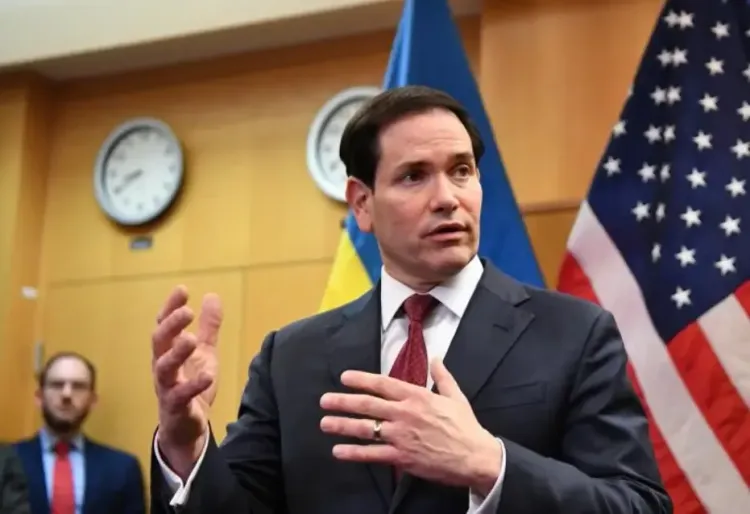
Washington, Feb 26 (NationPress) US Secretary of State Marco Rubio has declared that the relationship between the United States and China has achieved a level of “strategic stability”, despite ongoing concerns in Washington regarding reliance on supply chains, access to technology, and China’s growing nuclear arsenal.
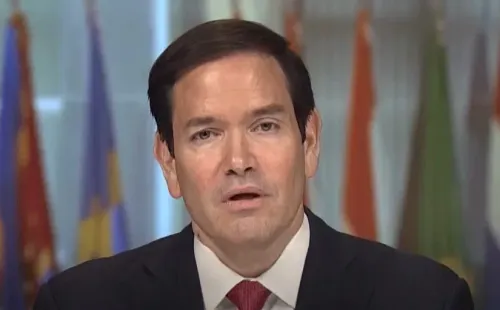
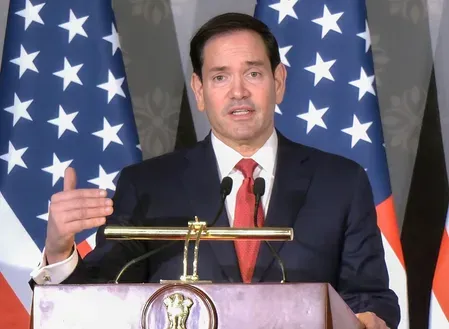
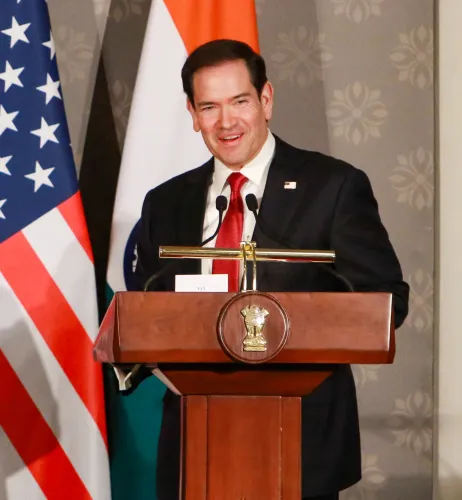
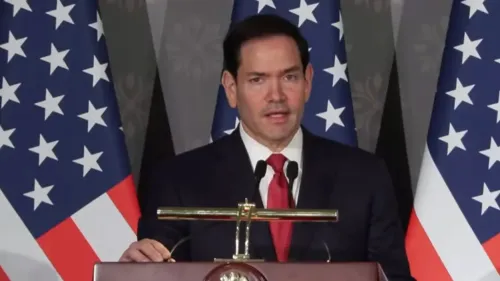
During a press briefing in Saint Kitts and Nevis on Wednesday (local time), Rubio emphasized that both nations are aware of the potential for escalation. “I believe both countries have recognized that a total trade war between the United States and China would be highly detrimental to both parties and the global community,” he noted.
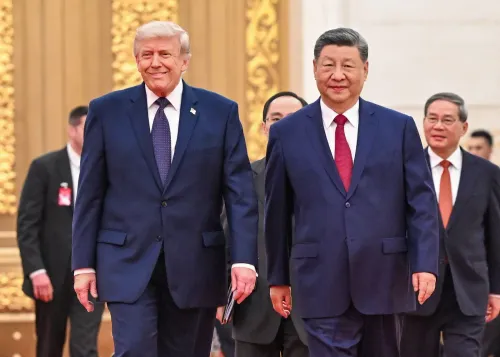
He acknowledged that there are still points of contention. “There are unresolved issues that we will need to address in the long term, which may create friction in our relationship,” he added, with Trump planning a visit to China in about four weeks.
Rubio pointed out that the US does not consider it viable to heavily rely on any single nation for essential goods. “We believe it is unsustainable to depend on one country for 90 percent of any resource, whether it concerns supply chains, critical minerals, or pharmaceuticals,” he stated.
Furthermore, he expressed the intention to diversify critical supply chains, emphasizing its importance for national security.
On the topic of technology, Rubio acknowledged worries about Chinese access to advanced US chips and the risk of technology transfer. “Every deal made by the President has undergone a thorough national security review to minimize risks,” he said.
He warned that “no measures are foolproof,” highlighting that China has been developing its own capabilities, sometimes using information obtained from other nations.
Rubio underscored the importance of maintaining dialogue between the two largest economies in the world, both of which possess nuclear weapons. “It is essential for the US and China to communicate and interact,” he asserted.
“It would be reckless and irresponsible not to engage in discussions; it is foolish and potentially dangerous to avoid a relationship with them, even as we have areas of conflict and disagreement,” he added.
Rubio also discussed the topic of nuclear arms control, asserting that any significant arms control agreement in the 21st century must include China. “For a legitimate arms control agreement to exist, China must be involved,” he stated.
He mentioned the significant increase in China’s nuclear stockpile, arguing that its claim of lagging behind the US and Russia is “irrelevant.” He stated that China is capable of catching up and is “well on its way to doing so.”
Rubio acknowledged China’s public stance against entering a trilateral arms control agreement. “We cannot force their hand,” he remarked. “While we can incentivize them, we cannot compel them.”
He added, “If they choose not to engage, then we will continue on our path and do what is necessary.”
Rubio pointed out that the two nations have made limited progress in other areas. “We have managed to get them to schedule more fentanyl precursors, which is crucial. Now we need them to take action on it,” he noted, adding that China has increased its imports of American agricultural products.
The relationship between the US and China has been characterized by intense competition over trade, technology, Taiwan, and security concerns in recent years. Washington has tightened export regulations on advanced semiconductor technology for national security reasons while striving to maintain open high-level communication channels.
In response, China has bolstered its military capabilities and nuclear arsenal, leading to calls in Washington for broader arms control discussions that extend beyond the traditional US-Russia framework.
Point of View
It is clear that US-China relations are at a pivotal juncture. While Secretary Rubio highlights a level of strategic stability, the underlying issues of supply chain dependence and nuclear expansion remain pressing challenges that require ongoing diplomatic engagement.
NationPress
2 Oct 2026
Frequently Asked Questions
What does 'strategic stability' mean in US-China relations?
'Strategic stability' refers to a balanced and stable relationship between the two superpowers that minimizes the risk of conflict, particularly in terms of trade and military engagements.
What are the main concerns the US has regarding China?
The US is primarily concerned about supply chain dependence, access to technology, and China's expanding nuclear capabilities.
How does Rubio view the current trade relationship with China?
Rubio believes that a complete trade war would harm both nations and emphasizes the importance of diversifying supply chains for national security.
Is there a potential for arms control discussions with China?
Rubio asserts that any meaningful arms control agreement must include China, despite their current reluctance to engage in trilateral negotiations.
What steps has the US taken regarding semiconductor technology?
The US has imposed tighter export controls on advanced semiconductor technology to safeguard national security while maintaining communication with China.